


Best At Home Exercises You Can Do to Build Strength
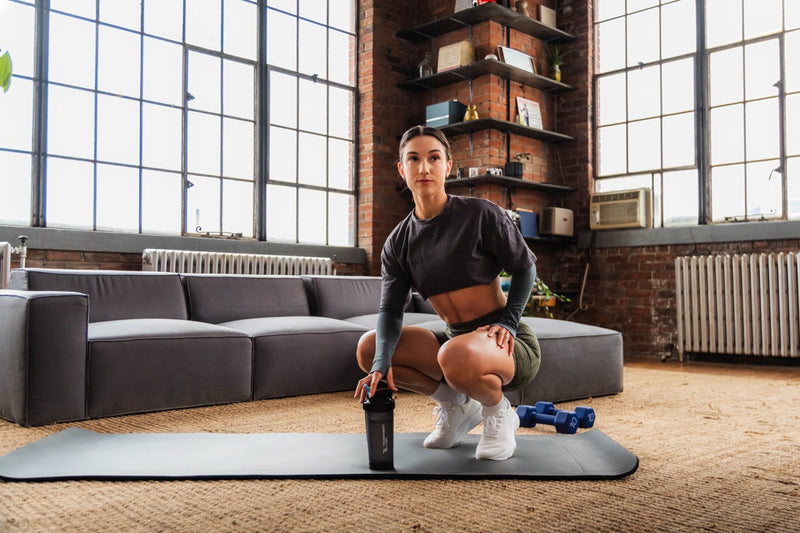
Two of the biggest factors stopping many people from committing to a strength-training lifestyle are getting a gym membership and buying substantial equipment to train at home. Even in 2026, there is a popular myth that you have to train in a gym or with a lot of equipment and machines to get in better shape.
Let’s establish this once and for all: You do NOT need a gym to get stronger. You do NOT need a bunch of bars, plates, and racks, either. Those are great, and I’m certainly not knocking them, but many people can use their own bodyweight and a few simple items to put together a sound program that will help them get stronger in their own homes.
Don’t believe me? Then let’s get into this together. We will discuss what it does take to get stronger, the best exercises to make those goals a reality, and even throw in a sample program for you to try for yourself.
Can You Actually Build Strength Without a Gym?
You know our position on this now, yes you can, but you may be asking yourself how? The key is not what you’re using but how you’re using it. Your muscles don’t see a 45-pound plate, a barbell, or anything else you may be using. What it recognizes are tension and activation. Research validated that if muscular activation (EMG) and relative intensity are matched, bodyweight exercises and band variations can yield the exact same strength results as heavy gym equipment. (1)
Progressive Overload is the Secret Weapon
How can you maximize activation with limited equipment? Progressive overload. Overloading the muscles doesn’t only mean working your way up a dumbbell rack or loading more plates. That overload can in the form of more reps or sets, more time under tension, or even by decreasing rest time to increase work time. If strength is a goal, then you may want to skip that last one, but it can help those who are focusing on endurance.
Now, changing the resistance itself can be great, but you just have to be creative in how you do it. Using different angles, combining resources, or altering the range of motion can help overload the working muscles so you get stronger.
In 2026, the American College of Sports Medicine (ACSM) published a landmark Position Stand that shifted how the scientific community defines progressive overload—making it incredibly relevant to home-based or limited-equipment training. In short, proximity to failure matters more than weight, consistency trumps complexity, and performing over 10 sets per muscle group per week, with a particular benefit found in emphasizing the eccentric (lowering) phase of the lift are keys to maximizing progressive overload. (2)

What Makes an Exercise Good for Strength?
Any exercise that makes multiple muscle groups work together is going to serve you well if strength is a priority. That means multi-joint, compound exercises that can allow you to creatively overload the muscles and recruit more muscle groups are going to matter more than any isolation movements.
When you’re training for strength, you should think more of function than isolation. A pushup is going to serve you better than a flye because the pushup will target the chest, shoulders, and triceps at the same time, whereas the flye will isolate the pecs. A pullup or row will work the back and biceps, whereas a curl will only focus on the biceps alone. When training for strength at home, do your best to get the best bang for your buck.
The Best Bodyweight Exercises for Strength
It could be a challenge to create a full-body workout program with only the body. It is hard to train the upper back without some form of pullup bar or apparatus you can do a pulling exercise with. That said, it may not be as challenging to create a full-body training program as you think it is. We have several exercises and variations here that could be assembled into multiple sound training programs for at-home strength gainers.
The exercises below are grouped by function and range in order from easiest to hardest.
Push-Up and Variations
The pushup will be suitable for most fitness enthusiasts, but there are options for those that need alternatives. The options below can be used alone or together depending on individual training levels and needs. All of these variations can work the chest, shoulders, and triceps together.
Hands Elevated - Hands higher than feet with slower contractions until strength improves. Doing basic pushups with the knees on the floor instead of toes also works for beginners.
Archer - Hands are very wide with the goal being to lower yourself to either side instead of straight down. Pushup and repeat to the opposite side.
Incline - Placing your feet on a higher surface like a chair or step shifts the focus to the upper pecs and front delts. This could be more challenging than the standard version.
Weighted - Perform pushups or elevated pushups with a loaded backpack or weighted vest for extra resistance.
Dips - If you have access to parallel bars or two solid chairs, you can do dips instead of pushups. The standard version will still hit the pecs and delts, but the version with the arms behind you can isolate the triceps. You could start with the chair triceps version and work up to parallel dips as a form of overload.
Progressive overload can be used in multiple ways here. You can either start with an easier version and graduate to heavier versions, or you can do bodyweight only, followed by more time under tension, followed by increasing load by raising the feet or adding weight to your body.
Pull-Up or Inverted Row
The pull-up is the premiere exercise for the upper back, rear delts, and even the biceps. You can manipulate which muscle groups do the most work with the choice of grip you use. These variations all require a pull-up bar of some form. Many doorframe bars are affordable, but most parks have monkey bars or some form of bar you could use as well. Below are a few options based on your fitness level.
Inverted Row - The inverted row calls for you to lie on the floor with a bar above you that you can hold. You then pull your upper body up until your chin clears the bar while your feet are still on the floor. This is commonly performed with a barbell in a squat rack, but it can be done with gymnastic rings or any solid bar that is close to the ground.
Jumping Pullups - Regardless of the grip, if you can’t do pullups, you can jump to start the movement, then slowly lower yourself to still reap the eccentric benefits of the exercise.
Underhand Grip - This will work more of the biceps in place of doing curls, but the back and shoulders will still be active throughout the movement.
Neutral Grip - A neutral grip will emphasize the lats while also working the brachialis and forearms.
Overhand Grip - This is the standard advanced version. The upper back will do the majority of the lifting (literally), but the other pulling muscles will work in supportive roles.

As with the pushups, a backpack or vest can be used to provide extra resistance if you’re strong enough to do several reps with your bodyweight alone.
Squat Variations
Squatting is a must for lower body training when you have limited options, but even this exercise has ways that you can make it suitable for your level of expertise. These variations will also work the quadriceps and glutes as well as the hamstrings in a secondary role.
Bodyweight Box Squats - If you can’t do full range of motion squats, then set a box behind you that matches the depth you can go down to. Lower yourself until your glutes touch the box (do not sit), and stand back up.
Jump Squats - Jumping not only adds a twist to a basic exercise, but the benefits can transfer to your overall agility. Once you lower yourself into the hole, come up and jump with max force. Land on your feet and reposition yourself for the next rep.
Bulgarian Split Squats - This advanced version is worth its weight in gold. Bulgarian split squats are proven to be just as good as barbell squats for building leg strength (3). Yes, they are tough but will be worth it when it comes to strength and size in the thighs.
Pistol Squat - This is the final boss of squats; a strict, one-legged squat where your non-working leg is held straight out in front of you, parallel to the floor, as you lower your hips all the way to your heel.
Hip Hinge Exercises
The posterior chain is vital for strength and performance, but there are limited options when it comes to hip hinging movements. These three will definitely serve their purpose for you, and you will feel the effects of them sooner rather than later.
Glute Bridge - This is technically a hip extension exercise rather than a traditional standing hip hinge, but it is widely considered the foundational floor-based equivalent of a hip hinge. Biamechanically, the glute bridge targets the exact same posterior chain muscles (the glutes and hamstrings) with almost zero lower-back strain. If you are concerned about your back, this is your go-to movement.
Single-Leg Romanian Deadlift - Doing this deadlift variation with one leg at a time will make up for the lack of weight. Balance and coordination are key. Don’t use weight until you can master this with bodyweight alone.
Good Mornings - If you have a strong lower back and can handle the good morning, it’s worth adding to the rotation. This can be done with a loop resistance band by standing on one end and placing the other around the shoulders. Tension decreases as you lower yourself and increases as you stand.
Core Exercises
There are several bodyweight exercises for the abs such as crunches, oblique twists, and lying leg raises, but if you’re thinking strength, you need to think of the entire core. That means emphasizing static holds for stability and trunk strength, and these two exercises are the kings for that.
Plank - This is more than a standard ab hold. It is a foundational movement for injury prevention, spinal health, and force transfer. It will teach spinal bracing and has higher muscle activation than crunches.
Hollow Body Hold - Gymnasts consider this a foundational move, but it will be great for home gym athletes as well. Lie on your back, then lift your head, shoulder blades, and legs slightly off the ground, pinning your lower back forcefully into the floor. Hold for time.
Best At-Home Exercises With Minimal Equipment
For many people, the bodyweight exercises alone will be a great starting point, but the goal is to get stronger, meaning they will eventually need some form of resistance options to continue that trajectory. These three equipment options require minimal investment, won’t take up much space, and will extend the life of your workout plans much longer than bodyweight alone.
Resistance Bands - There are two popular versions of resistance bands. Some have handles that can be used for a variety of exercises. Others are loops that are also used for barbells to add accommodating resistance. Whichever kind you prefer is up to you, but they can be beneficial for rows, pull-aparts, banded squats, and much more. They can be bought in sets with different levels of resistance at most sporting good stores, they are inexpensive compared to other forms of equipment, but they add a lot of value and variety to your training plan.
Dumbbells - Adjustable dumbbells can provide several weights without needing an extra rack or a lot of space. They can add resistance to many of the bodyweight exercises we covered and add more options including the goblet squat, single-arm row, presses, and others. If you own one pair, use them.

Backpack Loading - This is a cheap and effective progressive overload hack for push-ups, squats, and rows. It can also be used for your cardio. Instead of basic walking, you can use the backpack for rucking, which burns more calories while training the core and lower back at the same time.
How to Program These for Strength Gains
Training for strength requires lower reps with more weight. Since you’re training from home with limited exercises, more sets will also serve you well. Once you warm-up, aim for three to four working sets of each exercise with rep ranges of 4-8. If you can do nine reps, find a way to make the next set more challenging with either more weight, slower rep speed, or longer pauses in the stretched and contracted positions.
Rest between sets is a must. You should rest for three minutes between each set. During that set, make sure you stay hydrated and take deep breaths to provide as much oxygen to the blood and muscles as possible.
This sample routine only includes bodyweight exercises, but you can replace them with other options you have access to if you like, as long as they are equal or more challenging. If you go with the bodyweight movements, pick from the lists above based on the level you need. Some people may be able to do full overhand pullups while having to settle for bodyweight box squats. That is okay as long as you feel challenged but capable to do the exercises you select. Train every other day with a rest day between each workout.
Day 1 Workout

Day 2 Workout

Day 3 Workout
 Nutrition and Supplementation to Support Home Training
Nutrition and supplementation are going to be crucial for strength gains. Each meal and serving will get you one step closer to your goals, and having these at your disposal will help you fulfill your potential.
Protein - Getting in one gram of protein per pound of bodyweight will help your muscle fibers and tissue rebuild once the training is done. Food is obviously the main focus, including lean meats, eggs, and fish, but a quality protein powder can be a convenient option for pre or post-workout nutrition.
Pre-Workout - One aspect of home gym workouts to consider is that you’re responsible for the atmosphere and energy. You can’t rely on those around you for motivation because you will likely be alone. Having a pre-workout supplement like Bulk will provide the energy to start. Good music and visual inspiration around you can keep that energy going when the sets get tougher.
Creatine - If you can only get one supplement to help with your strength goals, creatine should be it. There have been numerous studies to verify that creatine is safe, but research in 2017 that focused on trained and untrained individuals confirmed creatine supplementation increases strength output by around 8% on average for both groups. (4)

Frequently Asked Questions
Can I change the order of exercises if I like?
Yes, you can change the order of exercises to suit your individual preferences. Sometimes, changing the order can actually be productive in breaking a plateau or sticking point in your training.
How long will I be able to use this before I have to go to a gym?
You don’t have to commit to a gym membership, but at some point you may need to buy extra equipment to accommodate for the progress you make. At the end of the day, that should be a goal if strength is what you’re trying to achieve.
Can I add more exercises to this?
You can definitely add more, but don’t add so much that you risk overtraining. Keep the exercises to eight per session if you continue to train with a full-body program like this. If you want to do more than that, split the workouts up into upper body and lower body with core included for both sessions. This allows you to add more movements while keeping each session limited in time and volume.
References
-
Calatayud, J., Borreani, S., Colado, J. C., Martin, F., Tella, V., & Andersen, L. L. (2015). Bench press and push-up at comparable levels of muscle activity results in similar strength gains. The Journal of Strength & Conditioning Research, 29(1), 246–253. https://doi.org/10.1519/JSC.0000000000000589
-
American College of Sports Medicine. (2026). Resistance training prescription for muscle function, hypertrophy, and physical performance in healthy adults: An overview of reviews. Medicine & Science in Sports & Exercise, 58(4).
-
Speirs, D. E., Bennett, M. A., Finn, C. V., & Turner, A. P. (2016). Unilateral vs. bilateral squat training for strength, sprints, and agility in academy rugby players. The Journal of Strength & Conditioning Research, 30(2), 386–392. https://doi.org/10.1519/JSC.0000000000001096
-
Lanhers, C., Pereira, B., Naughton, G., Trousselard, M., Lesage, F. X., & Dutheil, F. (2017). Creatine supplementation and lower limb strength performance: A systematic review and meta-analyses. Sports Medicine, 47(7), 1285–1294. https://doi.org/10.1007/s40279-016-0662-y
Featured Product


