


Benefits of Strength Training Beyond Muscle Growth
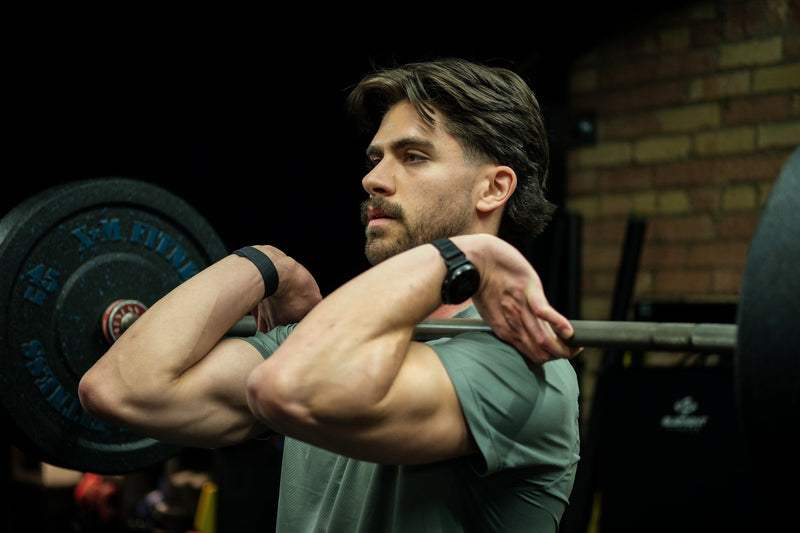
The physical benefits of strength training are usually simplified down to how it can improve the size and strength of your muscles. This is the case whether they’re being forced to struggle against weight, rubber, gravity, or any other objects that can provide them with resistance.
Without question, your muscles are the greatest contributors to your physical might, and they provide your body with the features that instinctively pop into our minds when we think about aesthetic beauty. Even so, there are several other systems and structures at work within your body while you’re busy performing deadlifts, pull-ups, and squats, and your strength training sessions affect these portions of your anatomy as well.
In light of this, the next time you’re doing lunges, curls, or any other resistance exercises, please keep in mind these five other areas that are being affected by your training aside from your muscles.
1. Your bones get stronger
Similar to how your muscle protein synthesis rebuilds your muscles in a stronger form after so that they are better prepared to contend with the same type of resistance the next time around, strength training also stimulates your bones to create new cells and remodel themselves to better serve you.
These helpful changes occur in two ways. First, the bones reinforce themselves by acquiring more bone mineral density. Second, the bones literally break themselves down and your body clears away the old bone residue by releasing calcium and phosphorus into your bloodstream, and cleaning away the rest. Through this process, your body sweeps away the old, brittle bones, and replaces them with newer, stronger material.
To be clear, your bones aren’t in the business of directly contributing force to your workouts. However, they specialize in providing your body with its rigid support base, and amplify the force of muscle contraction by giving your muscles stable internal objects to anchor themselves against.
2. Your tendons become stiffer
While your muscles become larger and stronger from resistance training, your tendons adapt to the same stress by becoming stiffer, and to some extent, thicker. These are considered positive changes, because the stiffer and less supple a tendon is, the greater that transfer of force from bones to muscles becomes.

For your purposes, what’s particularly interesting about tendon adaptations is the degree to which they lag behind muscles in their rate of transformation. This is because tendons are less sensitive to blood flow than muscles.
As far as the real world applications are concerned, tendon stiffening can take a full month longer to occur than muscle strengthening. This means that your strength may seem to grow sharply after three or four months of training; this is more likely due to greater tendon stiffness beginning to become a factor in your physical output.
3. Your joints become healthier and more efficient
Contrary to what was once thought about the effects of strength training on joint health, working your appendages against resistance actually strengthens your joints and makes them more stable.
Interestingly, training your body to move against the force of resistance actually requires your joints to find the most optimal movement path against the stress that it’s acting against. Consequently, your joints compensate by helping your limbs subtly realign themselves so that they can move more efficiently.
Just as important, resistance training is possibly the best means of preserving the health of your joints’ cartilage. As you strength train, the compression squeezes old synovial fluid out of your cartilage and provides it with an opportunity to draw in fresh fluid. This process helps your cartilage to acquire nutrients and re-lubricate itself, making it healthier in general, and prolonging its functionality.
4. Your cardiovascular system becomes healthier
Even if you performed no direct cardiovascular training whatsoever, studies show that engaging in at least 30 minutes of strength training per week would significantly upgrade the efficiency of your cardiovascular system. The extent of these upgrades would be so substantial that you could expect regular strength training to lower both your all-cause mortality risk and your risk of cardiovascular disease by at least 15 percent.
Among the reasons for this are the fact that strength training leads to a direct reduction of blood pressure, directly lowers LDL cholesterol levels, enhances the functionality of blood vessels, and lowers inflammation. On top of that, strength training even increases insulin sensitivity, helping to reduce your risk of type 2 diabetes.
While these cardiovascular benefits of strength training are exciting in and of themselves, they are dramatically increased when you also indulge in regular cardio. Therefore, while these cardiovascular improvements are phenomenal in and of themselves, they are best thought of as providing a steady foundation for more focused cardio sessions later on.
5. Your brain gets smarter
When you hoist weights in the air, the last thing on your mind is how the act of training is probably going to make you more productive at school or at the workplace. Yet, all evidence indicates that is precisely what’s happening to your brain while you’re cranking out reps on the weight bench.
Strength training makes your brain smarter and more efficient by thickening your frontal lobe, promoting the creation of new brain cells for information storage, decreasing the size of lesions that might otherwise interfere with your brain’s signaling processes, and releases chemicals that alleviate depressive symptoms and enhance your feelings of well being.
In short, strength training is a far more reliable means of boosting your brain’s processing power than any of the supposed IQ-boosters and other cognitive games that advertisements on your phone have tried to lure you into purchasing.
The one-stop shop for total-body improvement
With all due respect to what countless advertisements have promised you over the years, there’s really only one course of action that can predictably provide you with head-to-toe improvements right down to the potential of your bones and your brain. This fact makes strength training an activity that can revitalize your physical and mental functionality on a deeper level, just as reliably as it reshapes your muscles.

Summary
-
Strength training improves far more about the functionality of your body than merely the size and strength of its muscle tissue.
-
As a result of strength training, bones are revitalized with fresher materials to become thicker and stronger.
-
By working against resistance, tendons become stiffer, and contribute prominently to the production of strength.
-
Strength training forces your joints to become more stable and efficient, while allowing your cartilage to replenish its nutrients and extend its shelf life.
-
The act of forcing your body to work against resistance produces similar cardiovascular benefits to dedicated cardio, thereby reducing your susceptibility to several health-related illnesses.
-
Simply by lifting weights or performing other forms of strength training, you prompt hormonal activities in your body that strengthen and fortify your entire nervous system, including your brain, making you functionally smarter, and reducing depressive symptoms.
RT is not only safe but highly beneficial for joints, countering the outdated myth that it harms them.
-
In knee osteoarthritis (OA), meta-analyses and reviews show RT reduces pain, improves function, strength, mobility, and quality of life. It enhances shock absorption via stronger muscles (e.g., quadriceps), reduces abnormal joint stress/loading, and may slow progression. Large cohort data link lifetime strength training history to 17–23% lower odds of frequent knee pain, radiographic OA, and symptomatic OA.
-
Low-load RT with blood flow restriction (BFR) is effective with minimal joint stress. Benefits extend to stiffness reduction and better proprioception/stability.
-
Cartilage: Cyclic loading/unloading promotes nutrient diffusion (synovial fluid) into avascular cartilage. Stronger surrounding muscles protect cartilage by optimizing joint mechanics and reducing inflammatory stress.
Here is a comparison of normal vs. osteoarthritic knee joint structures:

Osteoarthritis: pathogenic signaling pathways and therapeutic targets | Signal Transduction and Targeted Therapy
Mechanisms: Reduced joint loading variability, anti-inflammatory systemic effects, and improved neuromuscular control. RT is a core recommended intervention in OA guidelines.
Tendons transmit force and adapt to loading by becoming stiffer and sometimes larger, improving injury resilience and performance.
-
A meta-analysis of training studies found moderate increases in tendon stiffness (SMD 0.74), large increases in Young’s modulus (material stiffness, SMD 0.82), and small increases in cross-sectional area (CSA, SMD 0.22). Modulus changes are the primary driver of stiffness gains. Resistance training (especially high localized tendon strain protocols) produces greater adaptations than other modalities.
-
Collagen synthesis increases (acute post-exercise markers rise within 24 hours; chronic training elevates turnover and cross-linking via enzymes like lysyl oxidase). High-load or high-strain RT is particularly effective.
-
Ligaments and broader connective tissue matrix (including fascia) benefit from similar loading principles, contributing to joint stability. Adaptations help match increased muscle force output, reducing excessive tendon strain.
Mechanisms: Mechanical strain deforms tenocytes (tendon cells) via the extracellular matrix, triggering gene expression for collagen production, remodeling, and matrix stiffening. This is a protective adaptation.
Here is a diagram of tendon cell biology and adaptation to mechanical loading:

Tendon Cell Biology: Effect of Mechanical Loading
Relevance: Better tendon properties reduce tendinopathy risk, improve force transmission (e.g., running economy or lifting efficiency), and support joint health. Heavy slow resistance training is evidence-based for managing tendinopathy. Some studies suggest collagen supplementation (15–30 g with vitamin C) may enhance tendon remodeling when paired with high-intensity RT.
Strength training (resistance training, RT) improves joints, connective tissues, bones, and various organs/systems through mechanical loading (mechanotransduction), muscle-derived signaling molecules (myokines), reduced chronic inflammation, hormonal responses, and better metabolic/vascular health. These effects go far beyond muscle hypertrophy or strength gains.
Evidence comes from randomized controlled trials (RCTs), systematic reviews, meta-analyses, and mechanistic studies. Benefits are particularly well-documented in older adults and postmenopausal women but apply across the lifespan with proper progressive loading.
1. Bones (Increased Bone Mineral Density and Strength)
Mechanical loading from RT stimulates osteoblasts (bone-building cells) and bone remodeling per Wolff’s law — bone adapts to the loads placed upon it.
-
Multiple meta-analyses and network metas in postmenopausal women and older adults show RT significantly improves bone mineral density (BMD) at key sites: lumbar spine (LS), femoral neck (FN), and total hip (TH). Effect sizes are positive (e.g., SMD ~0.3–0.9 depending on site and protocol); moderate-to-high intensity (≥60–70% 1RM), 3 sessions/week, and longer durations (≥48 weeks or up to 1+ year) often rank as most effective. Combined aerobic + RT can be superior in some rankings.
-
Benefits include not only higher BMD but also improved bone structure/architecture and strength, independent of density changes in some cases. Power training (explosive) may outperform pure strength training for BMD maintenance in some postmenopausal studies.
-
Mechanisms: Strain from loading triggers fluid flow/shear stress in bone canals (canaliculi), activating osteocytes that signal osteoblasts. This promotes modeling/remodeling, increased mineralization, and better trabecular/cortical architecture.
Here is an illustration of bone remodeling in response to mechanical loading (Wolff’s law principles):

Boning up on Wolff's Law: Mechanical regulation of the cells that make and maintain bone - ScienceDirect
(Another common depiction shows the cycle: applied load → strain sensing → cell activation → growth response.)
RT helps combat age-related bone loss (osteopenia/osteoporosis) and reduces fracture risk when combined with adequate nutrition (calcium, vitamin D, protein).
2. Tendons, Ligaments, and Connective Tissues
Tendons transmit force and adapt to loading by becoming stiffer and sometimes larger, improving injury resilience and performance.
-
A meta-analysis of training studies found moderate increases in tendon stiffness (SMD 0.74), large increases in Young’s modulus (material stiffness, SMD 0.82), and small increases in cross-sectional area (CSA, SMD 0.22). Modulus changes are the primary driver of stiffness gains. Resistance training (especially high localized tendon strain protocols) produces greater adaptations than other modalities.
-
Collagen synthesis increases (acute post-exercise markers rise within 24 hours; chronic training elevates turnover and cross-linking via enzymes like lysyl oxidase). High-load or high-strain RT is particularly effective.
-
Ligaments and broader connective tissue matrix (including fascia) benefit from similar loading principles, contributing to joint stability. Adaptations help match increased muscle force output, reducing excessive tendon strain.
Mechanisms: Mechanical strain deforms tenocytes (tendon cells) via the extracellular matrix, triggering gene expression for collagen production, remodeling, and matrix stiffening. This is a protective adaptation.
Here is a diagram of tendon cell biology and adaptation to mechanical loading:

Tendon Cell Biology: Effect of Mechanical Loading
Relevance: Better tendon properties reduce tendinopathy risk, improve force transmission (e.g., running economy or lifting efficiency), and support joint health. Heavy slow resistance training is evidence-based for managing tendinopathy. Some studies suggest collagen supplementation (15–30 g with vitamin C) may enhance tendon remodeling when paired with high-intensity RT.
3. Joints and Articular Cartilage (Especially in Osteoarthritis)
RT is not only safe but highly beneficial for joints, countering the outdated myth that it harms them.
-
In knee osteoarthritis (OA), meta-analyses and reviews show RT reduces pain, improves function, strength, mobility, and quality of life. It enhances shock absorption via stronger muscles (e.g., quadriceps), reduces abnormal joint stress/loading, and may slow progression. Large cohort data link lifetime strength training history to 17–23% lower odds of frequent knee pain, radiographic OA, and symptomatic OA.
-
Low-load RT with blood flow restriction (BFR) is effective with minimal joint stress. Benefits extend to stiffness reduction and better proprioception/stability.
-
Cartilage: Cyclic loading/unloading promotes nutrient diffusion (synovial fluid) into avascular cartilage. Stronger surrounding muscles protect cartilage by optimizing joint mechanics and reducing inflammatory stress.
Here is a comparison of normal vs. osteoarthritic knee joint structures:

Osteoarthritis: pathogenic signaling pathways and therapeutic targets | Signal Transduction and Targeted Therapy
Mechanisms: Reduced joint loading variability, anti-inflammatory systemic effects, and improved neuromuscular control. RT is a core recommended intervention in OA guidelines.
4. Cardiovascular System and Blood Vessels
RT provides meaningful cardiometabolic benefits beyond aerobic exercise.
-
Meta-analyses show RT lowers resting blood pressure (SBP and DBP reductions of ~3–9 mmHg in various populations; clinically relevant in hypertensives). Moderate-to-vigorous intensity ( >60% 1RM), 2–3 sessions/week, and ≥8 weeks are effective protocols.
-
Improves endothelial function (flow-mediated dilation/FMD increases of ~2.1–3.3%, relevant for vascular health) in healthy people and those with CVD or metabolic disease. Both dynamic and isometric RT work.
-
Reduces total peripheral resistance; some evidence for better vascular compliance or reduced arterial stiffness (results mixed on central measures like cfPWV).
Mechanisms: Shear stress from contractions, reduced inflammation, better autonomic balance, and myokine effects. Complements aerobic training well for overall CV risk reduction.
5. Metabolic Organs (Liver, Pancreas, Adipose Tissue) and Systemic Effects
Myokines (e.g., irisin, others) and anti-inflammatory effects create muscle-organ crosstalk.
-
Liver (NAFLD/MASLD): RT reduces hepatic steatosis/fat, improves insulin sensitivity, and supports lipid metabolism. Irisin from muscle promotes fat browning and has hepatoprotective effects.
-
Insulin sensitivity & glucose control: Enhances GLUT4 translocation, AMPK activation, and metabolic flexibility in muscle and systemically. Benefits extend to liver and adipose tissue.
-
Broader: Reduces visceral fat and chronic low-grade inflammation (lower CRP, IL-6, etc.), which protects multiple organs (liver, heart, brain, kidneys via better BP control). Myokines influence pancreas, heart, and other tissues positively.
6. Spine and Intervertebral Discs
-
Specific protocols (e.g., isolated lumbar extension RT: high load, low volume/frequency) show promise in animal models for disc regeneration — increased proteoglycan content, better matrix gene expression, reduced cell apoptosis, and improved fluid/solute transport.
-
Human evidence: Posterior-chain and core-focused RT effectively reduces chronic low back pain and disability. Overall physical activity and proper RT are linked to better disc health markers (e.g., hydration/thickness in active individuals).
Caution: Excessive spinal flexion (especially repetitive or under load) can be detrimental; neutral spine and balanced posterior-chain emphasis are key. Proper form protects discs while loading stimulates adaptation.
7. Other Structures and Indirect Benefits
-
Fascia and extracellular matrix: Responds to whole-body loading with remodeling, contributing to tissue resilience and force distribution.
-
Immune/inflammatory modulation: Chronic RT lowers systemic inflammation, benefiting organs broadly (reduced oxidative stress, better endothelial and metabolic health).
-
Respiratory muscles: Indirect benefits if core/breathing emphasis is included; overall fitness improves efficiency.
-
General resilience: Better posture, balance, and injury prevention support long-term structural health.
Summary and Practical Notes
Strength training delivers site-specific mechanical adaptations (bones, tendons, cartilage, discs) plus systemic benefits (vascular, metabolic organs, inflammation) via mechanotransduction, myokines, and hormonal/inflammatory pathways. It is one of the most effective interventions for healthy aging — combating sarcopenia, osteopenia, joint degeneration, and cardiometabolic decline simultaneously.
Optimal approach (based on evidence): Progressive overload, moderate-to-high intensity where tolerated (or low-load with BFR if needed), 2–3+ sessions/week, compound movements with good form, and adequate recovery/nutrition (protein, collagen + vitamin C timing for tendons in some contexts). Combine with aerobic work for synergy.
These benefits align well with comprehensive fitness goals (e.g., marathon training + strength for joint/bone longevity and overall resilience). Consult a qualified professional for personalized programming, especially with existing conditions. Evidence continues to strengthen, confirming RT as a cornerstone for musculoskeletal and whole-body structural health.
Featured Product


