


Does Supplement Timing Matter? Best Times for Gains & Sleep
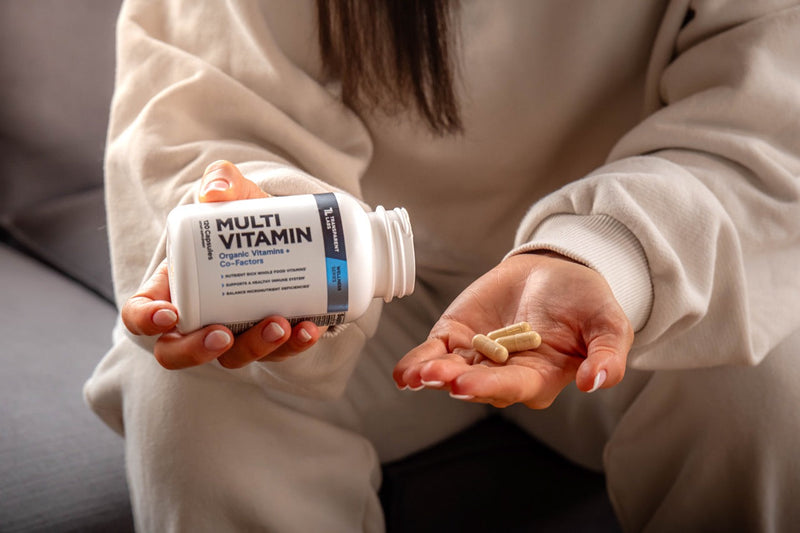
Much has been made about the daily timing of supplement intake. There are some supplements that you’ve probably been encouraged to take within 30 minutes of your workout’s conclusion to achieve any benefits from them whatsoever. For others, you probably pop them into your mouth every morning or evening with little regard for the time on the clock as long as they make it into your system at some point.
So how much does it really matter what time of the day you take your favorite supplements? More importantly, if there is such a thing as taking a supplement at the wrong time, could you actually be doing yourself more harm than good?
Creatine and Protein? Not really.
For several years, it was frequently stated that creatine and protein were essential to take only after training if you wanted to reap the maximum benefits from both your workout, and from those two supplements.
The case in favor of protein is a simple one: Your muscles were broken down during your workout, and it’s ideal to begin the process of efficiently repairing those muscles as quickly as possible. This post-workout period has commonly been referred to as the “anabolic window,” within which your muscles are theoretically more responsive to the growth caused by muscle-protein synthesis.
However, if the argument is that your muscles desperately need protein within the first 30 minutes of training to repair themselves, they certainly don’t need that protein any less at the 60 minute mark. In practice, studies have shown that total daily protein consumption is a better predictor of muscle growth and recovery than the time of the day that protein is consumed, including within the hypothetical anabolic window.

Similarly, it was commonly believed that creatine needed to be taken only after workouts to resaturate skeletal muscle tissue and aid muscle repair. In reality, your body only converts 1 to 2 grams of creatine into creatinine per day, and even that isn’t the result of exercise. Your body actually resynthesizes creatine molecules during training so that they can be put to use yet again during the same workout, or even later in the day.
Therefore, because the amount of creatine lost as creatinine is dictated by the natural progression of time and not by your training, you don’t need to be hyperfocused on restoring creatine lost during your workouts, because very little of it has actually gone anywhere.
Your Multivitamin? Sort of.
If you’re in the habit of taking your multivitamin in the morning to get it out of the way, you’re on the right track. Provided that you’re consuming your multivitamin along with a source of fat to ease the absorption of the fat-soluble vitamins, the morning is a perfect time.
There are a few reasons for this, but it all starts with the fact that multivitamins are not like prescription drugs, or even caffeine, which can begin to take effect in only five minutes. Vitamins can take anywhere from 30 minutes to six hours to even enter your bloodstream, with peak effects often not materializing until they’ve been in your system for six hours or longer.
Looking at this logically, if you’re hoping for your multivitamin intake to benefit your mind and body in ways that you can actually feel and appreciate while you’re awake, it would be best to consume your multivitamin in the morning. Otherwise, those micronutrients will be taking their peak effect long after you’re asleep, during a period when your digestion has slowed down.
Pre-Workout and Magnesium? Definitely.
Certain supplements absolutely demand to be taken at specific times of the day or night, because otherwise it would defeat their intended purpose. For example, the consumption of pre-workout should be handled with great care, because it necessitates the intake of a large dose of caffeine, along with other ingredients that are beneficial on their own, but which also assist the caffeine in achieving its full effect.
At this point, it almost goes without saying that pre-workout is best consumed prior to workouts that take place either in the morning or early in the afternoon. Otherwise, you may find it challenging to get to sleep promptly with more than 300 milligrams of caffeine percolating through your body.

Speaking of sleep, the consumption of supplements like magnesium glycinate relaxes your muscles and lowers your core body temperature in a way that will coincide with your body’s natural release of melatonin at night time and help you fall asleep. Of course, this assumes you actually want to fall asleep.
The good news is that magnesium glycinate doesn’t ordinarily make people groggy if they take it earlier in the day; they may simply feel more relaxed than they normally would. However, if you want to maximize magnesium’s benefits by using it for its intended purpose, you should take it approximately one hour before bedtime.
A Time and Place for Everything
Not all of the effects of your supplements are bound by an ideal time or location, but some most certainly are. If you desire a specific effect from your supplements, please research the amount of time it takes the ingredients in your supplements to become both active and inactive in your system, and plan accordingly.
Summary
-
The benefits of some supplements are heavily dependent on the time of day you take them, while others are far less time-dependent in their effectiveness.
-
Protein is an essential macronutrient that is beneficial to muscle growth and repair under all circumstances, regardless of the time of day it is consumed.
-
Creatine is an amino acid compound that enhances muscle strength, recovery, and energy levels, and is not depleted during training. Therefore, it can be taken at any time of the day to maintain skeletal muscle saturation.
-
Multivitamins should ideally be consumed early in the morning to allow the various vitamins and minerals to all be absorbed into your body so that their benefits can be experienced during the waking hours.
-
Preworkout is best consumed prior to workouts in the morning or early afternoon so that the large amount of caffeine doesn’t compromise your ability to achieve restful sleep.
-
The ideal time to take magnesium supplements is one hour prior to your intended bedtime so that the relaxation and lowering of your core body temperature align with your circadian rhythm.
Featured Product


