


Barefoot Weightlifting: Benefits, Risks, and Performance
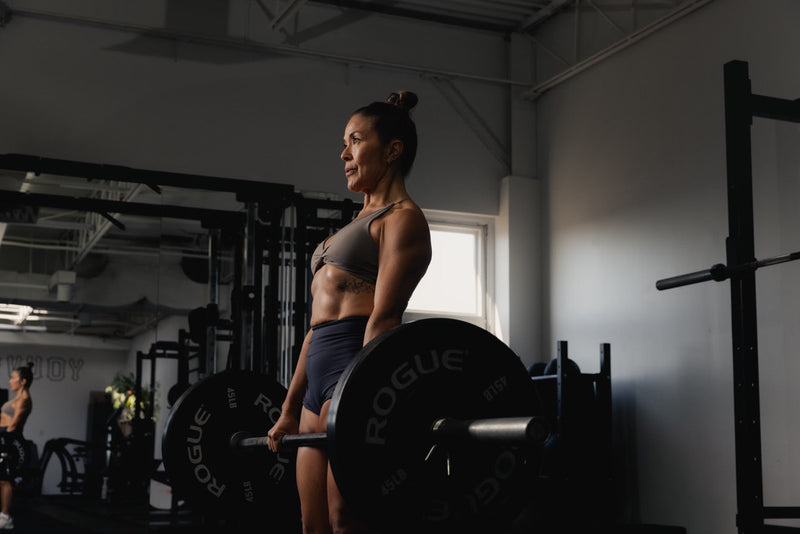
The idea of training barefoot in a gym might instantly strike you as counterintuitive. After all, socks and shoes are designed to protect your feet, and the gym can be a precarious environment to say the least. If you’re like most people who’ve spent a decent amount of time in a weight room, you’ve had multiple near-misses (and perhaps a few that didn’t miss) with dumbbells and weight plates that slipped or slid and landed millimeters from your toes.
Of course, there’s also the notion that the rubber soles of shoes provide your feet with additional grip and support. With this being the case, you might think that stepping through a gym with your feet fully exposed is a recipe for a trip to the hospital one way or another. However, there are reasons why you may want to reconsider whether or not training with shoes on is truly the best way to approach all of your lifts.
Keeping yourself rooted
Bear in mind that there are many lifts for which your choice of footwear is irrelevant, and is therefore likely to have a negligible difference on your outcomes. Examples of this include most lifts when you’re sitting at a machine, or lying on your back, and your upper body is performing the action.
Barefoot lifting primarily comes into play during standing movements, and especially when you’re executing power lifts like deadlifts and squats. In these instances there is a concept known as rooting. While your feet are confined to your socks and shoes, your feet can’t fully connect with the floor, as your socks essentially form them into a single mass that presses through the layer provided by your shoes and into the floor.
By unsheathing your feet and assuming a starting position in front of the weight you intend to lift, you allow each of your individual toes to spread out and unite with the floor. In the process, you may feel like you have a wider base to push or press from, which allows you to lift with more confidence, certainty, and stability.
Is it really safe?
Understandably, you might be a little reluctant to adopt a practice of lifting weights while barefoot, and not solely because of the objecting looks you’re expecting to receive from some people. Generally speaking, lifting barefoot is perfectly safe provided that you follow a few straightforward pieces of advice.

First, be aware of anything that might obviously contribute to your misfortune. This means you must ensure that your lifting area is clean and dry, so that your feet are unlikely to slip, or make contact with anything sharp that might leave you nursing a puncture wound. Obviously, you’ll also want to be more cognizant than ever of hazards like falling weight plates.
Second, be cognizant of the tolerance levels of others for bare feet in the weight room. While you might feel like you derive a performance benefit from lifting without socks or shoes on your feet, other people may abhor the idea of sweaty feet in a public training space. Therefore, you should consider both safety and social concerns before walking barefoot through the weight room.
So should I begin lifting barefoot right away?
You should feel free to lift weight barefoot, but be aware that things that can be minor can have major ramifications on your performance, both positively and negatively. Changing from lifting heavy weights with supported feet to unsupported feet with spread toes is a more significant change that you might think, and you should expect it to take a few tries before you’re fully comfortable with it.
This means that you’ll want to be strategic about your approach to lifting while barefoot. If you’re the type of person who likes to test their one-rep max, you should probably avoid that during your first shoeless training sessions. In fact, as a general rule, you should probably scale back your weight totals slightly, giving yourself adequate time to make the physical and mental adjustments to lifting without shoes.
Takeaways
-
There are some settings where lifting weights while barefoot is a common practice, especially for heavy standing lifts like squats and deadlifts.
-
The act of spreading your toes rooting with your feet gives your body a wider and more stable base to draw power from.
-
If you opt to lift barefoot, you must take additional care to ensure that your training area is clean and try to prevent slips or injuries from occurring.
-
Remember that some of your gymgoing peers may frown on the practice of training in a public space while barefoot.
-
Transitioning to barefoot training can be a surprisingly major adjustment, so consider lowering your weight totals during your first few attempts at lifting while barefoot.
Featured Product


