


Can You Mix Protein Powder and Coffee? (Pros and Cons)
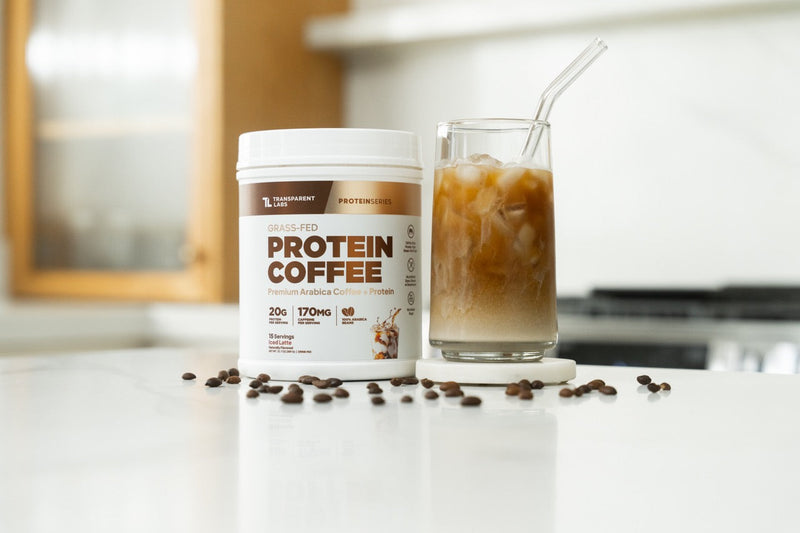
At first blush, you wouldn’t think that coffee and protein powder would be a natural combination that would appeal to a multitude of people, and a lot of your justified skepticism would be owed to the circumstances under which people have traditionally consumed each product.
Coffee is often stereotyped as the favorite stimulant of business professionals, university students, and anyone else who needs a quick jolt to their mental alertness. On the other end of the spectrum, protein powder has spent decades as the favorite tool of convenience for athletes and gym goers who wish to rapidly build their muscles, overhaul their physiques, and boost their strength.
On the surface, it would appear that the two ingredients wouldn’t appeal to the same set of consumers, let alone find their way into the same cup or glass. Yet, the combination of protein powder and coffee has caught on like wildfire with people who find it advantageous to blend the properties of each into the same container.
Well before you adopt the habit of pouring protein powder into your coffee, it’s important to know whether or not it’s a practice that makes sense, whether you’re gaining any strategic advantage from drinking them simultaneously, or whether you’re inadvertently causing yourself some hidden form of harm.
Benefits of Protein Powder
As one of the three macronutrients — alongside fat and carbohydrates — protein is the building blocks of muscle tissue. Whenever you exercise, you produce microtears in your muscles that need to be repaired. Protein provides the amino acids your body requires to repair your muscles, helping them to become bigger, stronger, and more durable, and enabling you to return to training with your muscles feeling replenished and restored to their proper working order.
The specific benefit of protein powder is that it is a concentrated form of protein that can be easily dissolved into liquids, blended into smoothies, baked into pancakes, and otherwise mixed into any number of forms that are more easily ingested than if you were to consume the same quantity of protein through ordinary means.
As a quick point of comparison, a large chicken breast contains about 40 grams of protein, which takes several minutes worth of dedicated effort to consume. Conversely, you can blend and drink a protein shake in less time than it would take you to fully season the chicken you intend to cook.

Finally, in terms of its benefits, protein powder has been proven to improve several measurements of physical health even in the absence of physical training. In a double-blind, randomized, placebo-controlled trial, study participants who received protein powder supplements rather than a placebo reported an 86 percent improvement in quality of life, a 43 percent improvement in VO2 max, along with reduced body weight, a lower BMI score, a slimmer waist circumference, and less body fat. (1)
Benefits of Coffee
With 2.25 billion cups consumed daily, coffee is the most widely used beverage in the world next to water. The popularity of coffee is certainly not owed entirely to its taste, which is usually quite bitter when unsweetened, and requires some form of creamer or sweetener to make it tolerable for many people.
The main source of coffee’s magic is contained in its caffeine, the stimulant with which coffee is synonymous. Countless people use coffee one or more times a day to wake themselves up in the morning, lessen afternoon fatigue, and increase their overall productivity.
With so much emphasis on how caffeine’s effects are felt mentally, what often goes underappreciated is the effects that caffeine has on physical capabilities. Studies have consistently shown that caffeine can improve “muscular endurance, movement velocity and muscular strength, sprinting, jumping, and throwing performance, as well as a wide range of aerobic and anaerobic sport-specific action,” in the world of the International Society of Sports Nutrition. (2)
Pros to Mixing Protein Powder and Coffee
Now that we’ve established how protein powder and coffee can provide benefits to you when taken separately, now it’s time to explore why the pairing of protein powder with your favorite coffee can improve your life on multiple fronts.
Makes it easier to hit your daily protein goals
No matter how much protein powder you scoop into your coffee — although the amount is likely between 10 to 30 grams — it is a drastic upgrade over the amount of macronutrient content that is typically in your coffee, which is usually going to sit close to zero even if you usually add a tiny bit of creamer.
No matter what your protein needs are, adding protein powder to your coffee will definitely drive you closer to meeting those needs. If you usually drink three cups of coffee per day, adding an average of 20 grams of protein to each cup will add 60 grams of protein to your daily intake, which can dramatically increase the speed with which you gain muscle and strength.
According to several studies, the amount of protein required to maximize anabolism — or muscle growth — is 1.6 to 2.2 grams per kilogram of body weight per day. (3) (4) (5) This means that a 200-pound individual would need to consume a minimum of 144 grams of protein per day to maximize their muscle gains, which can be challenging to acquire even across multiple meals and snacks.
You can go two-for-one on workout benefits
While the protein is amplifying the muscle-building potency of your workouts on the back end, the caffeine in your coffee will get straight to work to help you do some heavy lifting if you utilize it for that purpose. Granted, you need to make sure that you’re drinking the correct amount of caffeine, because certain benefits of caffeine are only unlocked if you consume sufficient amounts of it.
Provided that the caffeine contained in your coffee is in the range of 3-6 mg per kg of body mass, you’re going to be the recipient of increased endurance and fatigue resistance, and boosted muscle contraction force. (6) These enhanced attributes will be helpful whether you choose to engage in classic resistance training or an intense round of cardio.

Healthier coffee flavor upgrade
Provided that you are using a protein powder that complements the flavor of your coffee, you would be hard-pressed to find a healthier addition that can legitimately add sweetness and depth to your coffee’s flavor. Granted, some protein powders are filled with empty calories and can fill your drink with as much sugar as many of the flavored sweeteners you would find at a local coffee house.
However, if you happen to locate a protein powder that is low on sugar and artificial sweeteners, mixes well with coffee, and actually improves its flavor, you can transform your coffee into a truly nutritious drink that contributes massive macronutrient value to your diet, while also rendering you more alert.
Cons to Blending Protein Powder and Coffee
Not every element of the blending of coffee and protein is completely appealing. Some of it comes down to matters of personal preference, but it is also worth considering that depending on your individual constitution, it may not be entirely healthy to you.
Problems with the mixture
Obviously, not all protein powders are made from the same component parts, and this means that some protein powders will blend more seamlessly with your favorite coffee than others. For example, a milk-based protein like whey is far more likely to mix well with your coffee than a protein powder composed of peas, rice, or beef.
As a consequence of this, you may end up with a cup of coffee that tastes gritty, chalky, clumpy, and just generally unpleasant. If drinking a cup of coffee is an enjoyable distraction during most of your work days, mixing your coffee with the wrong protein powder may take all of the gratification out of the experience.
Digestive discomfort for some people
Not everyone experiences the same benefits from blending protein and coffee together. Some people have unique sensitivities to one or both products, which can make it completely detrimental to consume them frequently, if at all.
Anecdotal reports reveal that in some people, the mixture of coffee and protein has consistently caused nausea, diarrhea, bloating, and stomach upset. The cause of this is reportedly the mixing of protein with coffee’s acidity, which acts as an irritant that causes additional acid release.
These problems can be made even worse if your protein powder of choice contains artificial ingredients and sweeteners, which have been proven to cause gastrointestinal issues all on their own. (7)
Not automatically healthy
Before coffee becomes your favorite conveyance mechanism for the delivery of protein, there are a few health downsides that you should be mindful of. Specifically, you need to be careful not to overindulge in caffeine, which can be very easy to do if you’re taking multiple doses of protein powder that are spread throughout the day.
Individual sensitivities to caffeine vary, but in high doses, caffeine has harmful side effects that include anxiety, restlessness, insomnia, irritability, muscle twitching, and other gastrointestinal issues. (8)
The better alternative — Transparent Labs Protein Coffee
The new protein coffee of Transparent Labs offers a suitable solution to any and all of the worries that you might have about consuming a blend of protein and coffee. This convenient beverage is available in three tasty flavors — Iced Latte, Sweet Cream Cold Brew, and Mocha — and mixes easily with water, milk, or ice.

In all ways, Transparent Labs Protein Coffee eliminates the inconvenience of having to prepare protein and coffee separately, enabling you to effortlessly scoop, stir, and enjoy a drink that combines the energizing properties of caffeine with the muscle-building potential of protein.
A healthy convenience
As you prepare for your morning or midday workout, preparing a cup, glass, or shaker bottle of Transparent Labs Protein Coffee before you walk out the door will grant you access to the revivifying power of caffeine, with the muscle-building presence of protein standing by to immediately repair the damage being done to your muscles while you train.
In essence, Transparent Labs Protein Coffee can act as a simpler variation of pre-workout with strength-building effects, and all accompanied by a delicious coffee flavor.
A smooth, consistent mixture
With all of your expectations for “proffee” contained within the same supplement, you won’t have to guess whether or not you’ve scooped the correct amount of protein into your coffee, only to discover that you may have accidentally overscooped and are stuck with a clumpy mess in your cup.
Instead, Transparent Labs Protein Coffee provides you with delicious coffee and protein in a ratio that will maintain a smooth consistency throughout your drinking experience, without any guesswork about imprecise quantities that can leave unappealing clumps floating in the liquid.
A clean, multipurpose supplement
Thanks to the Transparent Labs brand promise, you know that you’re getting a low-calorie protein-coffee that is naturally sweetened, contains no artificial ingredients, and delivers 100% grass-fed whey protein that is easily traceable to its source.
This way, you won’t need to worry about any digestive issues stemming from hidden or undetectable ingredients that are lurking within either your protein or your coffee, and waiting to unleash an unpleasant surprise on your stomach. Transparent Labs’ products are traceable to their point of origin, and regularly tested to ensure the presence and quality of ingredients, and also the absence of any contaminants.
Proffee Perfected
If the only question that you want answered is whether or not you can mix protein powder and coffee, the answer is an unequivocal “yes.” Pairing protein with coffee can be a tasty training-enhancer, but it can also be an annoying inconvenience that can be plagued with inconsistencies and even cause health concerns.
To sidestep any issues with ingredients, sourcing, healthiness, and taste, Transparent Labs Protein Coffee can allay all of these concerns by offering you a convenient drink that will enhance your energy, grow your muscles, and leave you prepared to train, or for whatever else your day might bring you.
Sources
-
Ambulkar P, Hande P, Tambe B, Vaidya VG, Naik N, Agarwal R, Ganu G. Efficacy and safety assessment of protein supplement - micronutrient fortification in promoting health and wellbeing in healthy adults - a randomized placebo-controlled trial. Transl Clin Pharmacol. 2023 Mar;31(1):13-27. doi: 10.12793/tcp.2023.31.e1. Epub 2023 Mar 2. PMID: 37034123; PMCID: PMC10079511.
-
Guest NS, VanDusseldorp TA, Nelson MT, Grgic J, Schoenfeld BJ, Jenkins NDM, Arent SM, Antonio J, Stout JR, Trexler ET, Smith-Ryan AE, Goldstein ER, Kalman DS, Campbell BI. International society of sports nutrition position stand: caffeine and exercise performance. J Int Soc Sports Nutr. 2021 Jan 2;18(1):1. doi: 10.1186/s12970-020-00383-4. PMID: 33388079; PMCID: PMC7777221.
-
Morton RW, Murphy KT, McKellar SR, Schoenfeld BJ, Henselmans M, Helms E, Aragon AA, Devries MC, Banfield L, Krieger JW, Phillips SM. A systematic review, meta-analysis and meta-regression of the effect of protein supplementation on resistance training-induced gains in muscle mass and strength in healthy adults. Br J Sports Med. 2018 Mar;52(6):376-384. doi: 10.1136/bjsports-2017-097608. Epub 2017 Jul 11. Erratum in: Br J Sports Med. 2020 Oct;54(19):e7. doi: 10.1136/bjsports-2017-097608corr1. PMID: 28698222; PMCID: PMC5867436.
-
Schoenfeld BJ, Aragon AA. How much protein can the body use in a single meal for muscle-building? Implications for daily protein distribution. J Int Soc Sports Nutr. 2018 Feb 27;15:10. doi: 10.1186/s12970-018-0215-1. PMID: 29497353; PMCID: PMC5828430.
-
Jäger R, Kerksick CM, Campbell BI, Cribb PJ, Wells SD, Skwiat TM, Purpura M, Ziegenfuss TN, Ferrando AA, Arent SM, Smith-Ryan AE, Stout JR, Arciero PJ, Ormsbee MJ, Taylor LW, Wilborn CD, Kalman DS, Kreider RB, Willoughby DS, Hoffman JR, Krzykowski JL, Antonio J. International Society of Sports Nutrition Position Stand: protein and exercise. J Int Soc Sports Nutr. 2017 Jun 20;14:20. doi: 10.1186/s12970-017-0177-8. PMID: 28642676; PMCID: PMC5477153.
-
Guest NS, VanDusseldorp TA, Nelson MT, Grgic J, Schoenfeld BJ, Jenkins NDM, Arent SM, Antonio J, Stout JR, Trexler ET, Smith-Ryan AE, Goldstein ER, Kalman DS, Campbell BI. International society of sports nutrition position stand: caffeine and exercise performance. J Int Soc Sports Nutr. 2021 Jan 2;18(1):1. doi: 10.1186/s12970-020-00383-4. PMID: 33388079; PMCID: PMC7777221.
-
Ruiz-Ojeda FJ, Plaza-Díaz J, Sáez-Lara MJ, Gil A. Effects of Sweeteners on the Gut Microbiota: A Review of Experimental Studies and Clinical Trials. Adv Nutr. 2019 Jan 1;10(suppl_1):S31-S48. doi: 10.1093/advances/nmy037. Erratum in: Adv Nutr. 2020 Mar 1;11(2):468. doi: 10.1093/advances/nmz112. PMID: 30721958; PMCID: PMC6363527.
-
Evans J, Richards JR, Battisti AS. Caffeine. [Updated 2024 May 29]. In: StatPearls [Internet]. Treasure Island (FL): StatPearls Publishing; 2026 Jan-. Available from: https://www.ncbi.nlm.nih.gov/books/NBK519490/
Featured Product


