


Does Cooking Vegetables Reduce Nutrients?
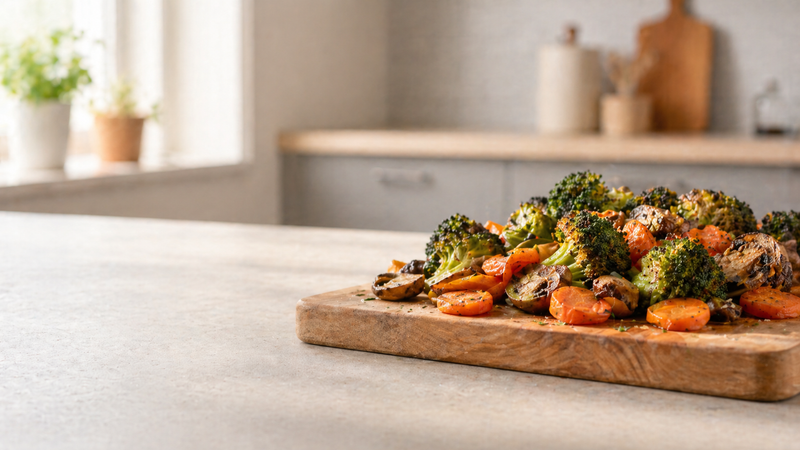
A lot can happen to your meal’s nutrient potential as you prepare it for consumption, and the process of readying your vegetables for your dinner plate is of vital importance because of how much of your health is riding on the decisions you make during that process.
When it comes to the foods you eat — and especially vegetables — both the quality and quantity of their micronutrients can be altered by the way you prepare them, as is the ability of your body to absorb those micronutrients.
With that in mind, here are some things that you should consider to ensure that you’re maximizing the nutrient quality and quantity of the vegetables you’re eating.
Water-Soluble Vitamins
When you’re consuming food for its vitamin C or vitamin B content, you need to be especially careful when it comes to cooking it, and especially if your food preparation process involves the presence of water.
For example, if you’re drawn to broccoli because of its high vitamin C content, you may find yourself leaving a sizable percentage of that vitamin C in the pot you’re boiling it in. Because vitamin C is a water-soluble vitamin, it can leach out into the water, essentially robbing the broccoli of one of its core micronutrients.
This means by the time you extract the broccoli from the water and drop it onto your dinner plate, you may find that its vitamin C content has been almost completely depleted.
Fat-Soluble Vitamins
In addition to water-soluble vitamins like vitamin C and vitamin B, broccoli also contains fat soluble vitamins like vitamin A and vitamin K.
Fat solubility applies to the cooking process just like water solubility. So if we return to our same bushel of broccoli, and drop it into a stew or a sauce containing any form of cooking oil, some of that broccoli’s nutrients may be drawn into the oil. Still, the fat that absorbed those nutrients remains captured in the broth or sauce, which means that you are still consuming them as long as you clean your bowl or plate.
On the other hand, in a scenario where broccoli is merely being boiled, if butter, oil, or some other source of fat has been added to the water, the broccoli’s fat-soluble vitamins are likely to be absorbed into the water right alongside the water-soluble vitamins.
At that stage, the broccoli that reaches your dinner plate is merely a shell of what it was prior to the initiation of the cooking process.

The Benefits of Cooking Vegetables
Now that you’re convinced that you should subsist solely through raw vegetable consumption, you may want to take heed of the nutrient value that is unlocked in certain vegetables once they have been cooked.
Studies have demonstrated that the absorbability of lycopene — a carotenoid with antioxidant properties — was found to increase by 35 percent when it was heated. These increases in antioxidant activity were found to have increased when heating tomatoes, carrots, spinach, mushrooms and several other vegetables, too.
So while you may be putting certain nutrients at risk by cooking your food, you may be unlocking the full potential of others through the same processes.
Don’t Overthink It
If reading about the lost nutrient potential of your food has you concerned, don’t overthink it. Just remember that the majority of the nutrients that are lost from your food have been recovered by the solution you chose to cook it in.
If you consume the water, broth, juice, drippings, or sauce from your food one way or another, you should still receive close to 100 percent of the micronutrient content your vegetables have been advertised to possess.
Finally, if you’re still at all concerned that you’re not capturing enough of the nutrient value of the vegetables in your diet, there’s an easy solution: Eat even more vegetables! Or, if you prefer, find an additional source for acquiring those nutrients, like a handy multivitamin.
After all, if there’s one problem your body would love to have, it’s the problem of having more micronutrients than it knows what to do with.
Takeaways
-
Cooking your vegetables has the ability to reduce the vitamin and mineral content that actually reaches your system.
-
Boiling your vegetables in water can result in the water-soluble vitamins — vitamin B and vitamin C — being drawn out of the food and into the water.
-
Adding a cooking oil or another fat to the cooking process can cause the fat-soluble vitamin — vitamins A, D, E, and K — to leach out into the source of dietary fat.
-
Despite its potential to reduce nutrient content, cooking your food increases the absorbability of certain nutrients, and especially antioxidants.
-
Consuming all of the liquid or fat content your vegetables are cooked in is an advisable way to recover the majority of the nutrient content from your food.
Featured Product


