


Creatine for Women Over 40 (Complete Guide from 2026)
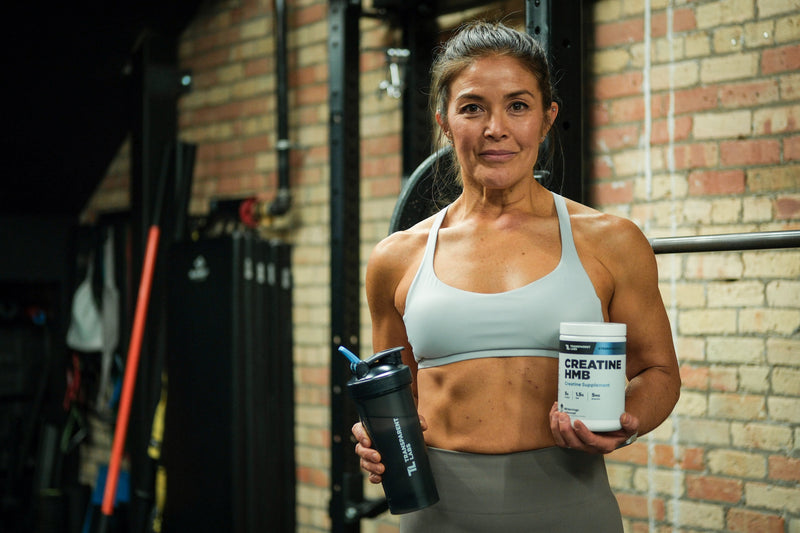
It truly wasn’t all that long ago that women were being encouraged to avoid creatine at all costs. Even as late as the early 2000s, many health and fitness specialists — including several with columns directed almost exclusively at women — decried the use of creatine in general, referring to it contemptuously as a “natural steroid,” and advised women of all ages to avoid creatine at all costs, lest they suffer from dire consequences.
As it turned out, the “consequences” of regular, proper creatine supplementation turned out to be lives that were thoroughly improved on several fronts, and in areas that extended far beyond mere muscle development.
Nowadays, we are living in an era when creatine use among women is not only tacitly encouraged, but it is often directly advised by medical professionals for the sake of attenuating a wide range of harmful conditions, a few of which are most commonly experienced in their greatest frequency by women over 40.
In light of this, we’re going to walk through the reasons why a plethora of trusted sources now recommend creatine for women over 40, the data that is driving those recommendations, and also what you can expect to happen if you’re a woman over 40 who’s about to begin regular supplementation with creatine.
What is creatine?
Although creatine’s composition often gets lost behind its mysteriousness and perceived edginess, it is actually a combination of three basic amino acids — glycine, arginine, and S-adenosyl methionine. All three of these amino acids are attainable separately through different foods.
Because of the tremendous value of creatine and the precise functions it performs, it is seldom considered in terms of the quantities of creatine that your body can synthesize on its own by combining the separate amino acids. Instead, measurements of exogenous creatine, which tend to be far more voluminous, are usually the only forms of creatine that are factored in when determining how much creatine you are ingesting from day to day.

In its final form, creatine can only be acquired in significant amounts from animal products, and the quantities found in red meat and certain types of fish are usually the only sources of creatine worth tracking for the purposes of gauging how much creatine you are consuming. Regardless, most people who are serious about creatine intake will consume it in a supplemental form.
In all cases, whether it is ingested through ordinary food or supplements, or synthesized by your body, creatine is stored within the bodies of women over 40 the same way it is stored in the bodies of everyone else: Creatine is saved in the skeletal muscles and organs as creatine phosphate, where it remains until your body needs to use it.
How do creatine supplements work?
Creatine’s function in your body is impossible to discuss without acknowledging its direct connection with adenosine triphosphate, or ATP. No matter what age or gender you are, whenever you perform an activity requiring the use of energy, your body manages the distribution of that energy through various internal systems. The ATP-phosphocreatine system is called upon for physical exertions that are both intense and short in duration.
The problem with the ATP-phosphocreatine system is that it can only function for so long before it is depleted — usually in less than 15 seconds of all-out effort. One of the best ways to envision this usefulness is in a race setting; creatine supplementation might extend the length of time in which the body can run effortlessly for two additional seconds. It may not seem like much under the circumstances, but in a scenario where tenths of seconds matter, this can ultimately make the entire difference between winning or losing a race.
Similarly, demanding resistance training sessions benefit from creatine thanks to its ability to intensify muscle contraction, producing greater power, and allowing you to generate more force.
In less intense scenarios, creatine can act as a buffer between energy systems, and can boost your durability, particularly under conditions where you have to regularly vary your speed or intensity for an extended period of time.
Creatine dosage guidance
While it initially took some trial and error for a consensus to be reached on the quantity of creatine that is advisable to take on a daily basis, the general guideline is that most people can achieve the necessary levels of supersaturation required in their skeletal muscles by consuming between 3-5 grams of creatine per day.
For most people, and especially for most women, this range of creatine intake will be adequate to saturate your skeletal muscle. While it has been theorized in some circles that consuming larger amounts of creatine daily may be required to maintain the muscle saturation levels of exceptionally large individuals with a great deal of muscle mass, the 3-5 gram range is the most studied dosage range, and adhering to it has yielded considerable success to countless people.
As such, women over 40 interested in creatine supplementation are advised to keep their supplementation within the range of 3-5 grams per day, with the International Society of Sports Nutrition concluding that creatine intake at the lowest end of this range is linked with significant health benefits throughout the lifespan. (1)
Creatine for muscle maintenance
While it is very possible to grow new muscle tissue well into your 40s, the focus of people in this age range often turns to muscle maintenance. This can be especially true for women as their 40s progress, because the onset of menopause is usually accompanied by drastic reductions in muscle mass and a corresponding decline in strength.
Fortunately, creatine has shown the ability to help women maintain their existing muscle tissue, along with their acquired strength, even following the onset of menopause. A meta-analysis of studies involving older women who combined creatine with resistance training showed that they generally received significant strength gains in both their upper and lower bodies. (2)

Creatine even increased lean muscle mass in women who were significantly post-menopausal. In a study that included 237 women with an average age of 59 years old, when creatine was combined with resistance training, lean tissue mass increased by 50 percent above the level achieved through strength training alone. (3)
Creatine for muscle recovery
Muscle mass increases and retention are one thing, but muscle recovery is something else. Just because a muscle’s strength levels improve over time, that doesn’t necessarily mean that its recovery potential was maximized, or that it feels refreshed and ready for its next workout. Fortunately, creatine has been proven to expedite muscle recovery in women over 40, readying them for their next rounds of exercise.
A meta-analysis of several studies involving women with average ages ranging from 50 to 75 demonstrated that creatine was able to lessen post-workout fatigue, and contribute to increased workout volume and intensity over time, even amongst older female populations. (4)
In a study that included women of ages ranging from their early 20s to their mid 40s, the women who supplemented with creatine had a faster recovery of their post-workout muscle strength within 48 hours, along with reduced muscle soreness, less fatigue, and lower muscle stiffness in comparison to a placebo. (5)
Creatine for mental and cognitive health
Easily the most underrated and long-hidden benefit of creatine has been its role in supporting nearly all of the processes connected with optimal brain function. Energy optimization is one of the most important contributors to mental health, and a steady supply of energy to the brain is required to maintain its performance at a high level.
As it applies to women specifically, an eight-week randomized, controlled trial of 36 perimenopausal and menopausal women concluded that creatine supplementation resulted in faster reaction time, and a reduction in mood swings. (6)
A separate meta-analysis of 16 randomized controlled trials conducted with older adults in general found that creatine supplementation led to a significant improvement in memory, and improved attention time and processing speed. Moreover, a subgroup analysis of the women involved in the study revealed that creatine supplementation had stronger effects on the processing speed of the women than the men. (7)
A systematic review of six studies including more than 1,500 participants found that higher creatine intake was linked with greater cognition, in the form of enhanced memory and attention span. (8)
Finally, the combination of creatine with SSRIs in the treatment of major depressive disorder significantly outperformed the SSRIs alone, with the improvements in the amelioration of depressive symptoms being evident as early as two weeks into supplementation. (9)
Creatine for bone health
The relationship between women and bone health is a critical one, because women in their 40s rapidly lose bone density. On average, women’s bone density decreases by 10 percent within the first five years of menopause. This increases feelings of frailty, and makes women more susceptible to incurring serious injuries whenever they experience falls.
The unfortunate news is that creatine intake does not directly boost bone density, or slow its decline. (10) However, creatine benefits your body in other ways that can enable you to combat the loss of bone mass.
First, resistance training is one of the most efficient ways to increase bone mineral density. A meta-analysis of 17 randomized controlled trials confirmed that women were able to retain a larger quantity of their bone mass by following structured resistance training programs. (11)
Because of creatine’s proven role in amplifying your body’s capacity to exercise, along with optimizing muscle recovery and repair, it is able to upgrade the quality of your workouts and its aftereffects. This means creatine can help you experience the types of workouts that can result in the retention of a larger quantity of bone mass.
Second, the most important protection from experiencing the types of injuries that can occur as a consequence of bone loss is the prevention of falls. Retaining muscle control and coordination are vital tools for preventing falls, and studies have demonstrated that strength training contributed to a substantial reduction in the fall rates of older adults. T11)
Creatine for reproductive health
Before menopause begins, creatine is able to play a crucial role in increasing a woman’s odds of conception and contributing to the health of unborn infants while they are still in the womb. These are important functions, because the odds of successfully conceiving and carrying children to term decline sharply when women reach their 40s, so the advantages creatine provides can be invaluable for improving the likelihood of success.
Because the reproductive system is energy dependent and responsive to hormonal fluctuations, creatine intake can reduce the likelihood of reproductive problems caused by energy deficits or dips. There is also observational evidence that increased creatine intake enhanced egg health and quality, implantation success rates, and embryo development.
Creatine intake has also been linked with a 25 percent reduction in the likelihood of experiencing irregular periods. (12)
Myths about creatine use in women

Women and men often have different priorities when it comes to fitness training, which means that an effect or outcome that many men would prioritize might not be ideal to most women. In relation to that, many of the myths about creatine that hindered its acceptance for years caused women to experience greater levels of average dread than men. Each of these myths is based on a false belief about creatine that frequently takes on a different character when viewed through the eyes of women.
Creatine doesn’t work for women at all
The myth that creatine simply doesn’t work for women is a byproduct of the misguided belief that creatine’s sole benefits are isolated to muscle growth and recovery, that women aren’t interested in muscle development, and that women’s lower testosterone levels prevent creatine from producing appreciable improvements in muscle size and strength anyway.
Of course, creatine can help women of all ages in a host of ways that aren’t directly linked to muscle function in any fashion, but even if your sole reasons for consuming creatine are to improve your fitness level and grow your muscles, creatine can help you accomplish this, whether you’re a woman over 40, or if you fit into an entirely different demographic.
Creatine will make women musclebound
For every person who has believed that creatine is of no physical value to women, there has been at least one other person who believes that creatine will cause explosive muscle growth that borders on the supernatural. This line of thinking ties directly to the classic scenarios of first-time gym goers confiding in their personal trainers that they want to get “toned,” but they “don’t want to get too big.”
Regardless of whether women consume creatine or not, most women lack the testosterone required to grow muscle tissue at an alarming rate. Moreover, in the rare circumstance that such a scenario occurred, there are ways to tweak training and nutrition plans to slow or halt the growth of muscle.
Creatine will boost women’s testosterone levels
The myth that creatine can boost testosterone levels stems from the initial attempts by the media to comprehend what creatine was, which resulted in creatine being clumsily classified as “a natural steroid.” Because of this unfortunate mislabeling, many people applied to creatine all of the characteristics of anabolic steroids, including its classification as a hormonal derivative.
While anabolic steroids will automatically boost your body’s testosterone levels due to their hormonal nature, creatine is an amino-acid compound that elevates the stored energy levels of muscles and tissues to optimize their functions. Consequently, creatine performs its work without any direct amplification of testosterone levels.
Benefits that aren’t limited by age or gender
Not only is creatine intake beneficial to women even after they reach the 40-year benchmark, but study results indicate that creatine may actually be even more beneficial to women after they reach the age of 40 than to any other group.
So, if all of the untrue myths and rumors about creatine have caused you to delay including it in your daily nutrition plan, now is as good of a time as any to change course, start taking creatine, and see how dramatically your life can improve along multiple measures of quality.
Sources
-
Kreider RB, Kalman DS, Antonio J, Ziegenfuss TN, Wildman R, Collins R, Candow DG, Kleiner SM, Almada AL, Lopez HL. International Society of Sports Nutrition position stand: safety and efficacy of creatine supplementation in exercise, sport, and medicine. J Int Soc Sports Nutr. 2017 Jun 13;14:18. doi: 10.1186/s12970-017-0173-z. PMID: 28615996; PMCID: PMC5469049.
-
Dos Santos EEP, de Araújo RC, Candow DG, Forbes SC, Guijo JA, de Almeida Santana CC, Prado WLD, Botero JP. Efficacy of Creatine Supplementation Combined with Resistance Training on Muscle Strength and Muscle Mass in Older Females: A Systematic Review and Meta-Analysis. Nutrients. 2021 Oct 24;13(11):3757. doi: 10.3390/nu13113757. PMID: 34836013; PMCID: PMC8619193.
-
Chilibeck PD, Candow DG, Gordon JJ, Duff WRD, Mason R, Shaw K, Taylor-Gjevre R, Nair B, Zello GA. A 2-yr Randomized Controlled Trial on Creatine Supplementation during Exercise for Postmenopausal Bone Health. Med Sci Sports Exerc. 2023 Oct 1;55(10):1750-1760. doi: 10.1249/MSS.0000000000003202. Epub 2023 May 5. PMID: 37144634; PMCID: PMC10487398.
-
Smith-Ryan AE, Cabre HE, Eckerson JM, Candow DG. Creatine Supplementation in Women's Health: A Lifespan Perspective. Nutrients. 2021 Mar 8;13(3):877. doi: 10.3390/nu13030877. PMID: 33800439; PMCID: PMC7998865.
-
Candow DG, Forbes SC, Chilibeck PD, Cornish SM, Antonio J, Kreider RB. Effectiveness of Creatine Supplementation on Aging Muscle and Bone: Focus on Falls Prevention and Inflammation. J Clin Med. 2019 Apr 11;8(4):488. doi: 10.3390/jcm8040488. PMID: 30978926; PMCID: PMC6518405.
-
Korovljev D, Ostojic J, Panic J, Ranisavljev M, Todorovic N, Nedeljkovic D, Kuzmanovic J, Vranes M, Stajer V, Ostojic SM. The Effects of 8-Week Creatine Hydrochloride and Creatine Ethyl Ester Supplementation on Cognition, Clinical Outcomes, and Brain Creatine Levels in Perimenopausal and Menopausal Women (CONCRET-MENOPA): A Randomized Controlled Trial. J Am Nutr Assoc. 2026 Mar-Apr;45(3):199-210. doi: 10.1080/27697061.2025.2551184. Epub 2025 Aug 25. PMID: 40854087.
-
Xu C, Bi S, Zhang W and Luo L (2024) The effects of creatine supplementation on cognitive function in adults: a systematic review and meta-analysis. Front. Nutr. 11:1424972. doi: 10.3389/fnut.2024.1424972
-
Samantha Marshall, Alexandra Kitzan, Jasmine Wright, Laura Bocicariu, Lindsay S Nagamatsu, Creatine and Cognition in Aging: A Systematic Review of Evidence in Older Adults, Nutrition Reviews, Volume 84, Issue 2, February 2026, Pages 333–344, https://doi.org/10.1093/nutrit/nuaf135
-
Lyoo IK, Yoon S, Kim TS, Hwang J, Kim JE, Won W, Bae S, Renshaw PF. A randomized, double-blind placebo-controlled trial of oral creatine monohydrate augmentation for enhanced response to a selective serotonin reuptake inhibitor in women with major depressive disorder. Am J Psychiatry. 2012 Sep;169(9):937-945. doi: 10.1176/appi.ajp.2012.12010009. PMID: 22864465; PMCID: PMC4624319.
-
Candow DG, Moriarty T. Effects of Creatine Monohydrate Supplementation on Muscle, Bone and Brain- Hope or Hype for Older Adults? Curr Osteoporos Rep. 2024 Nov 1;23(1):1. doi: 10.1007/s11914-024-00895-x. PMID: 39509039.
-
Zhao F, Su W, Sun Y, Wang J, Lu B, Yun H. Optimal resistance training parameters for improving bone mineral density in postmenopausal women: a systematic review and meta-analysis. J Orthop Surg Res. 2025 May 27;20(1):523. doi: 10.1186/s13018-025-05890-1. PMID: 40420105; PMCID: PMC12107943.
-
Ostojic SM, Stea TH, Ellery SJ, Smith-Ryan AE. Association between dietary intake of creatine and female reproductive health: Evidence from NHANES 2017-2020. Food Sci Nutr. 2024 Apr 30;12(7):4893-4898. doi: 10.1002/fsn3.4135. PMID: 39055234; PMCID: PMC11266896.
Featured Product


