


Do Popular Diet Fads Actually Work? Science Explained
Since as early as the 1800s, the world has been rocked by several diet fads that have promised to dramatically reshape your body and subsequently improve your life. Nearly all of them called for the user to adjust one or more of their key eating and drinking behaviors, become hyperfocused on rigid adherence to the prescribed plan, and watch as the unsightly pounds melted away.
One by one, the majority of these diets bit the dust, either because they were deemed to be unsafe on their surface, or because they were simply unsustainable. Now that we have generally become more enlightened, with more access to critical information, the question needs to be asked: Do any of the famous diet fads actually hold up?
The 18-Day Diet
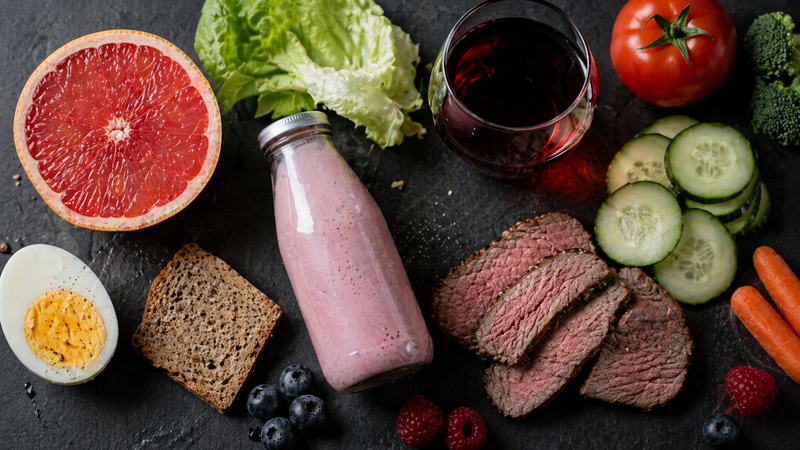
The 18-Day Diet was a byproduct of the late 1920s and early 1930s, when a truly flawed understanding of nutrients still reigned supreme. Birthed from an Ethel Barrymore visit to the Mayo Clinic, this diet plan treated its adherents to an average daily menu of 1.5 grapefruits, three eggs, two slices of melba toast, half a head of lettuce, one tomato, six slices of cucumber, and three cups of plain coffee per day.
If you add it all up, this equates to well under 500 calories. Eating less than 9,000 calories in 18 days does have a way of making people drastically thinner… if they manage to survive it. Unfortunately, not everyone did, and a few famous actresses even died as a result of their participation in this dietary trend.
The Fat-Free Diet
The fat-free diet is a staple of the 1980s and 1990s, and stemmed from the erroneous belief that dietary fat and body fat — or adipose tissue — were exactly the same thing. Or to put it another way, the dietary fat from that avocado made it cleanly through the digestive process, and then took up residence on your waistline.
The idea of intentionally avoiding all sources of dietary fat is not only born from a fatal misunderstanding of macronutrient properties, but actually following it to the letter would compromise so many physical processes that are dependent upon dietary fat.
Drinking Man’s Diet
The Drinking Man’s Diet was a bestselling pamphlet of the mid 1960s, selling me that one million copies, and it encouraged primarily men to set aside heavy carbohydrates during lunch and dinner, and instead to indulge themselves in the heavy consumption of alcohol.
The faulty premise of the pamphlet’s authors was that alcohol resulted in no caloric penalty to the drinker, at least not in comparison to carbohydrates. This ignored both the high quantity of carbohydrates in beer, as well as the greater caloric density of a gram of alcohol in comparison to a gram of carbohydrates, at seven to four. Ultimately, any diet that encourages people to drink heavily is going to cause problems, and as one news editor opined, any man who stuck to this diet seriously was likely to lose not only a lot of weight, but also his job and his wife.
William Banting Diet/Letter on Corpulence

Spawned by William Banting’s infamous “Letter on Corpulence,” the William Banting Diet essentially consisted of a curated list of meats, vegetables, and alcoholic beverages. You could have meat with every meal, which permitted bacon, but banned pork for some reason. You were also permitted to eat several servings of fruit and vegetables, but no potatoes, and generally no sugar or milk.
The big problem? This diet practically mandated the consumption of five to seven glasses of wine per day. Shockingly, of all the old diets, this one probably holds up the best in terms of overall nutrients and satiety, except that its 35-drink minimum weekly requirement is certainly going to overwhelm your liver in the long run.
Slim Fast/Liquid Diet/Last Chance Diet
The famous Slim-Fast Diet and Cambridge Diet were byproducts of The Last Chance Diet, which was a liquid diet consisting of a cherry-flavored protein syrup that was the nutritional centerpiece of a supervised fasting plan. At their cores, these two diets suggested that people consume a maximum of 330 calories per day from protein-based shakes, and then have a “sensible” dinner of no more than 800 calories.
Following these diet plans to the letter resulted in many people getting on unsustainable diet plans that amounted to “scientific starvation” in the eyes of many critics.
There are instances where it is wise to look to the past for valuable nutritional insights and fitness hacks, but all of these diets are best left smoldering in the fire pits of history. In fact, it’s truly mind boggling that the healthiest diet on this list — from 1869 no less — would leave you far too drunk to even think about working out.
Takeaways
-
Fad diets have existed for more than 150 years.
-
With few exceptions, most fad diets promising rapid weight loss involve some form of starvation in order to accomplish the goal.
-
More than one fad diet has promoted excessive alcohol intake at levels that many medical organizations consider to be dangerous.
-
Diets that promise rapid weight loss are likely to be both unhealthy and unsustainable.
-
Modern diet plans permit you to capitalize on the free availability of nutrient information, and allow you to prioritize optimal health when establishing a healthy weight-loss plan.
Featured Product


