


Do You Need Intense Workouts to Build Muscle?
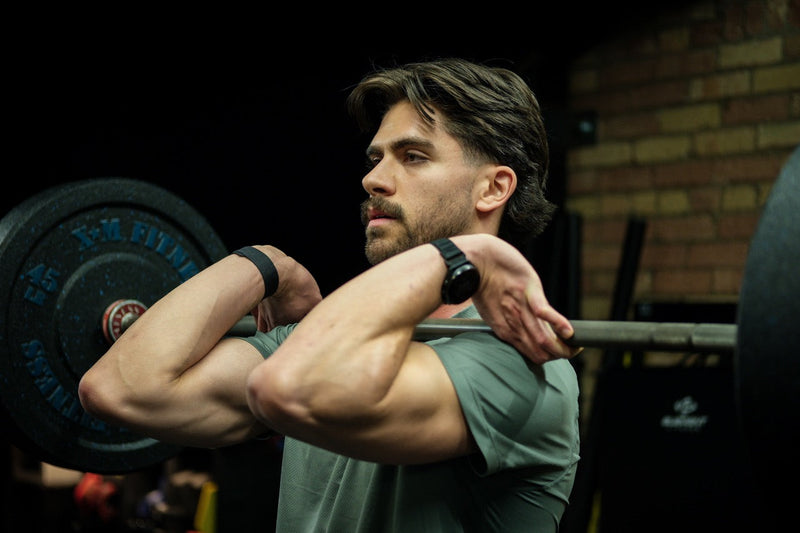
When you first dedicated yourself to working out, you decided to develop a robust resistance training routine and stick to it. This means that no matter how your training splits have been arranged, you make sure to complete three or four different exercises for each of your muscle groups, in three to four sets, and eight to 12 reps of each exercise.
In short, you’re not leaving the gym until you’ve attacked your muscles from every angle, while completing at least 72 reps in the process. That’s all well and good, but is there a simpler, shorter, or less strenuous path to muscle gains for the days when you have less time, or you’re not quite as motivated?
Size vs. Strength
Straight out of the gate, we should reaffirm that there is a distinct difference between training for size and training for strength that is often unacknowledged. While it’s clear that muscle size is often a clear indicator of who is stronger in some respects, there are other times when someone who has been training specifically for strength and power rather than size is demonstrably stronger than the more muscular individual.
This is one of the reasons why most of the guidance for workouts that are specifically intended to prioritize the building of strength caps the number of training reps performed during a set at five.
Moreover, the strength training program designed by Bill Starr, which is often cited as the blueprint for fast and efficient strength training, is built around only three days per week of lifting, which progresses toward a single max-effort, five-rep set of each exercise per week.
The point here is that even in the world of competitive strength training, it has been well established that in order to build strength, not every workout requires set that are performed to failure with the heaviest tolerable load, and very few sets need to be performed with all-out aggression in order for you to see consistent improvement.
Training to Failure
Most hypertrophic training programs make training to muscle failure an absolute requirement. As a general rule of thumb, trainees are advised to seek failure on the final rep of their last set of each exercise in a workout, and are told that they have potentially wasted their time if they don’t reach the failing point.
Well, there are a few studies that dispute this fitness axiom. One study showed that athletes with significant resistance training experience enjoyed similar gains in muscle mass whether they trained to failure by completing reps with 70-80 percent of their one-rep maxes, or they simply completed two to three times as many repetitions with 30-50 percent of their one-rep maxes.

To be fair, the group training with heavier loads did yield far greater increases in strength than the group that trained with lighter weights. However, this indicates that failing to train to failure every now and again is unlikely to result in your muscles shrinking overnight,
Low Weights
There is a general belief that you should train within a low-to-medium rep range if you’re looking for a hypertrophic effect — meaning that you’re hoping to maximize muscle size — or if you’re simply looking to gain strength. Yes, there is plenty of scientific evidence to back up the notion that this is the best way, but there is also evidence suggesting that this is not the only way.
An extensive eight-week study involving experienced weightlifters showed that whether the athletes were placed in the high-load, low-rep group, or the low-load, high-rep group, they both experienced gains in their one-rep maximum lifts after eight weeks. However, those who trained in the low-load, high-rep segment had a significant reduction in muscle damage markers at the conclusion of the study.
In this case, the study suggests that training with lighter weights is not only effective for yielding strength gains even in experienced lifters, but it’s also likely to reduce the long-term strain on your body. This means that regular periods of training with lighter weights might be beneficial when it comes to preserving your body and its ability to function.
Pick and Choose
Please don’t leave with the wrong message. While the evidence of the studies suggests that you can still achieve increases in size and strength if you only seldom use the heaviest weights, never train to total failure, and opt for high-rep sets, it does not suggest that you can exclusively use all three.
For the most part, these methods are suggested as temporary solutions to help you remain productive while your body recovers from cumulative training strain. Therefore, if you opt to employ any of these deviations from the tried-and-true training protocol, you should probably only choose one modification at a time, and with a clear understanding of why you’re using it. Otherwise, you’re likely to outsmart yourself and face the consequences of engaging in workouts that are altogether too easy.
Summary
-
Training to failure during every workout is not the only way to reliably add size and strength.
-
Most competitive weightlifters do not train to failure during every workout, but still make consistent strength gains.
-
Structuring a low-rep workout that builds to one all-out effort per week is a proven strategy to building strength.
-
Studies show that athletes lifting lighter weights who didn’t train to failure built comparable muscle mass to those trained to failure with heavier weights, but with a sacrifice of strength level.
-
A separate study indicated that athletes who trained to failure with lighter weights still managed to boost their strength, but had fewer markers of muscle damage.
-
Opting to reduce the intensity of your workout in a key area can be an advisable short-term strategy as long as you structure your training program well, and have a clear objective in mind.
Featured Product


