


Why Electrolytes Are Having a Moment | The Truth Behind the Trend
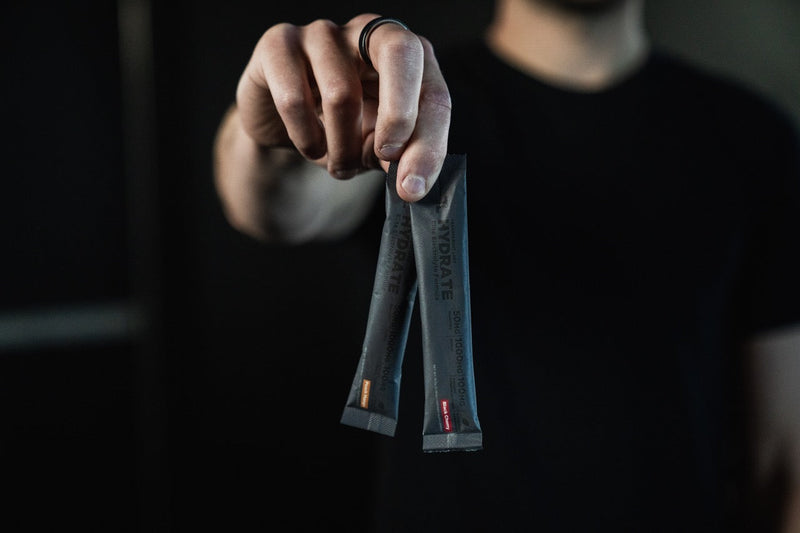
Unless you’ve been living under a rock, you’ve noticed an explosion in the number of hydration supplements that are inhabiting the shelves at your local grocery stores, or being advertised to you online. In addition to sports drinks like Gatorade, Body Armor, and Prime, you now see powdered electrolyte options like Liquid I.V. or tablets like Nuun, all of which promise to push your hydration levels to their peak.
Coincidental with this, and possibly because of it, the importance of hydration seems to be a subject that’s on everyone’s minds. In this day and age, it’s tough to look anywhere without receiving some form of encouragement to remain hydrated, whether you’re walking into a gym, or simply studying billboards as you drive along the freeway.
The fact is, there’s no new breakthrough science around electrolytes that are being promoted to preserve your hydration; their benefits were proven long ago. So what is it that has caused a supplement that has subsisted for decades to suddenly surge to an unprecedented level of popularity?
How were electrolyte supplements first introduced?
The value of electrolytes was practically unheard of outside of medical circles prior to 1966, when Gatorade exploded into the marketplace out of obscurity. The emergence of arguably the first true hydration-restoring drink — which was ironically first promoted as an “energy drink” — came in the aftermath of the 1966 Florida Gators football team enjoying one of their best seasons in program history at that point.
Even before the team played in the Orange Bowl that season, which would ultimately result in a victory over Georgia Tech, the state’s newspapers were reporting that Gatorade was the cause of the team’s improvement over prior years, which would culminate in the school’s best season in decades.
In November of that year, Neil Amdur of The Tallahassee Democrat interviewed University of Florida doctor Robert Cade about how the liquid that “tastes like a mint and works like a miracle” might have contributed so profoundly to the team’s success.

“There is nothing revolutionary or harmful about Gatorade,” Dr. Cade told The Democrat. “And my interest is not to win football games. Each year, 20 to 50 boys die in this country from heat strokes while playing football. I wanted to do something to help eliminate this, and we’ve designed an electrolyte solution that accurately replaces the fluids an athlete loses.”
Cade went on to explain how most football coaches would “administer salt tablets to their players to combat fatigue,” which actually posed the further problem of raising the players’ salt levels in harmful and dramatic ways without the balance provided by fluids. Consequently, Cade toyed with different blends of salt and water during the 1965 season before he “added a couple of other electrolytes” to the mix ahead of the 1966 season, including potassium, sodium, and chloride.
“Gatorade doesn’t make a good football player out of a bad one, but it seems to help a good player perform to his ability over a longer period,” concluded Cade.
Ironically, the introduction of Gatorade was one of the rare cases in which the term electrolytes was specifically used. In most instances, for marketing simplicity, Gatorade was advertised for its ability to restore and preserve energy, and when its ingredients were mentioned, sodium and potassium were more likely to be acknowledged individually than under the collective title of “electrolytes.”
The name “energy drink” quickly gave me way “sports drink,” and Gatorade’s early category dominance amongst sports drinks was such that when “electrolyte stamina tablets” were introduced and sold in the late 1970s, they were advertised in relation to how many pints of Gatorade they were equivalent to.
Even with a new category of beverage beginning to flood the marketplace as multiple challengers to Gatorade’s throne emerged throughout the ‘80s and ‘90s, few people in the general public understood the specific mechanisms at work within the sports drinks, and how they went about restoring and preserving athletic potential.
What do electrolytes do?
The primary electrolytes include sodium, potassium, calcium, magnesium, chloride, bicarbonate and phosphate. Plainly stated, they are minerals that carry an electric charge, and which generate signals and impulses that maintain the functionality of your body.
Within the context of physical performance, electrolytes help you maintain an optimal fluid balance, send nerve impulses to your muscles that enable them to contract, regulate your blood pressure, and also help your body to absorb nutrients.
Aside from this, many electrolytes have functions in addition to their mere signaling properties, which is why several electrolytes are frequently cited for their benefits in other areas of athletic performance.
The physical problems occur during exercise when electrolytes are lost, usually through heavy, sustained sweating. These losses compromise your body’s ability to regulate fluids and send signals to muscles, resulting in muscle cramps, spasms, fatigue, dizziness, heart palpitations, and general confusion.
As far as their obligatory nature is concerned, the importance of electrolytes is not a matter of debate. In its position statement on exercise and fluid replacement, the American College of Sports Medicine lists the goal of prehydration as the pursuit of “normal plasma electrolyte levels,” and states the replacement of “any fluid electrolyte deficit” as the objective of post-exercise rehydration. (1)
The reason for this is the abundance of evidence supporting the role of electrolytes in aiding physical performances that are long in duration, and in which a great deal of sweating occurs. In a widely-cited meta-analysis of 50 randomized controlled trials, it was concluded that the consumption of electrolyte drinks improved performance by anywhere from 2% to 54% depending on the variety of exercise being performed. (2)

What can’t electrolytes do?
As with almost any supplement, electrolytes and their benefits can be overhyped in some scenarios. One of the core problems with the excessive promotion of electrolytes is the relative scarcity of the circumstances in which most people will need them.
Through the maintenance of a steady diet, most people supply their bodies with a steady influx of electrolytes, and certainly with sufficient sodium to get them through days in which no exercise of great physical strain will transpire. Unless some evident form of heavy sweating or another form of unusual fluid loss occurs — like vomiting — there is usually no compelling need to replenish electrolytes from specialized sources.
In fact, even when sweating does take place, there is limited evidence that electrolyte supplementation is beneficial outside of scenarios of sustained exertion that last an hour or more, or intense workouts of a shorter duration that occur in humid settings or under other circumstances where heavy sweating is expected.
As just one example of this, in a study involving 20 male and female 5K runners who generally completed the distance in times ranging from 15 to 30 minutes, there was no significant difference or drop in performance quality regardless of whether the athletes consumed a sugar-free amino-acid electrolyte beverage, a conventional carbohydrate-electrolyte sports drink, or water. (3)
Because of this, a shortage of electrolytes is usually not the source of losses to energy, muscle power, or endurance during resistance training sessions, or during short-duration cardiovascular training. In these scenarios, ordinary water consumption is adequate.
So why are electrolytes being so heavily focused on?
The role of electrolytes hasn’t changed since their time of discovery, so why is it that this collection of minerals suddenly seems to be on everyone’s mind? There are several reasons for this, and all of them coalesce around the increased spread of information and greater nutrient awareness.
Electrolytes are a hot topic among influencers
With a greater number of people catching the fitness bug, the amount of attention being paid to the nutrients consumed by popular fitness influencers has been amplified. Unfortunately, the popularity of an influencer doesn’t equate neatly with the breadth of their knowledge, which can lead to the proliferation of misinformation.
As a consequence of electrolytes achieving a level of fad-driven notoriety that isn’t necessarily rooted in scientific evidence, far more people are consuming electrolytes in supplemental levels than truly require them. However, in absolute fairness, many people were already consuming electrolytes in unnecessarily high levels through the daily consumption of sports drinks even in the absence of exercise.
Increased focus on daily hydration for non-athletes
There has been an increased focus on the value of sustaining hydration for both athletes and everyday people. Much of this focus is being driven by influencers’ encouragements — like TikTok's #WaterTok trend — but many hydration brands began to target non-athletes by delineating the broad benefits of hydration. These benefits include reduced fatigue, improved concentration, and enhanced digestion.
Certainly, there is value to this. Studies show that an absence of adequate hydration can contribute to reduced self-esteem, heightened fatigue, shorter memories and attention spans, and slower reading speeds and reaction times. (4) All of these problems can contribute to reduced work quality even in a non-athletic setting.

On the other hand, because sufficient electrolytes are consumed through an ordinary diet, most hydration shortfalls that aren’t induced by exercise are simply a consequence of not drinking enough water or fluids in general. Therefore, there is no shortfall of electrolytes that needs to be addressed, and consuming dedicated hydration supplements results in minerals being introduced to the body in superfluous levels.
A combination of promoted lifestyle and training changes
An increasing number of influencers in the training space have been promoting training approaches along either one of two extremes to accelerate positive physical changes, or to emphasize feelings of achievement. These include HIIT workouts or other training programs built around explosive moments, and marathon training or other distance-oriented workout protocols. In both cases, the combination of either humid gym conditions with intense exercise or warm weather with long running sessions can induce the sort of sweating that can naturally lead to dehydration concerns.
Similarly, many of the popular dietary practices that are believed to contribute to rapid weight loss can either cause your body to flush sodium out of your system, or disrupt your body’s ability to absorb it. This includes variants of the keto and low-carb diets, and also nutrition plans that require the consumption of high levels of caffeine.
Better products, improved products, specialized products
In the midst of the surge in inducements to remain hydrated, the hydration market has improved its offerings. No longer limited to Gatorade and its rotating series of challengers, the market now includes several ready-to-mix powders that are low in calories, along with the introduction of new hydration solutions that are more robust and effective, along with being better-tasting.
In essence, the hydration market reached a new high-water mark for maturity just as the benefits of preserving hydration achieved peak public awareness. With this being the case, the product options for people seeking electrolyte beverages became more diverse than they have ever been during the exact time when an unprecedented number of people hit the marketplace looking for them.
Keeping pace with the trend, Transparent Labs offers Hydrate, a clean electrolyte powder made entirely of natural ingredients and sweeteners, to ensure that your body’s hydration needs are being met without any of the unnecessary downsides or hidden surprises caused by any of the artificial colors and sweeteners that are known to cause digestive problems.
On top of that, for most extended bouts of training lasting 90 minutes or more, your body also needs energy from foods that can be quickly digested with minimal discomfort. For that, Transparent Labs also makes Cyclic Dextrin to help you continue at a steady pace without any digestive discomfort or insulin spikes.
Hydration Table
Before you allow yourself to pursue hydration in a way that isn’t necessarily fruitful, here is a handy table you can use to understand when and how you should use an electrolyte drink.

There’s a time and place for electrolytes
The fact that electrolytes are having a moment might be the very thing that motivated you to read this article. If so, you should be commended for taking an interest in preserving the optimal functionality of your body through adequate hydration. With that being said, make sure that you’ve properly assessed your personal hydration needs so that the hype of the moment doesn’t cause you to flood your body with minerals that it doesn’t need.
Sources
-
American College of Sports Medicine; Sawka MN, Burke LM, Eichner ER, Maughan RJ, Montain SJ, Stachenfeld NS. American College of Sports Medicine position stand. Exercise and fluid replacement. Med Sci Sports Exerc. 2007 Feb;39(2):377-90. doi: 10.1249/mss.0b013e31802ca597. PMID: 17277604.
-
Orrù S, Imperlini E, Nigro E, Alfieri A, Cevenini A, Polito R, Daniele A, Buono P, Mancini A. Role of Functional Beverages on Sport Performance and Recovery. Nutrients. 2018 Oct 10;10(10):1470. doi: 10.3390/nu10101470. PMID: 30308976; PMCID: PMC6213308.
-
McIntosh, M. C., Ruple, B. A., Kontos, N. J., Mattingly, M. L., Lockwood, C. M., & Roberts, M. D. (2024). The effects of a sugar-free amino acid-containing electrolyte beverage on 5-kilometer performance, blood electrolytes, and post-exercise cramping versus a conventional carbohydrate-electrolyte sports beverage and water. Journal of the International Society of Sports Nutrition, 21(1). https://doi.org/10.1080/15502783.2023.2296888
-
Zhang N, Du SM, Zhang JF, Ma GS. Effects of Dehydration and Rehydration on Cognitive Performance and Mood among Male College Students in Cangzhou, China: A Self-Controlled Trial. Int J Environ Res Public Health. 2019 May 29;16(11):1891. doi: 10.3390/ijerph16111891. PMID: 31146326; PMCID: PMC6603652.
Featured Product


