


Free Weights vs Machines: Which Builds More Muscle?
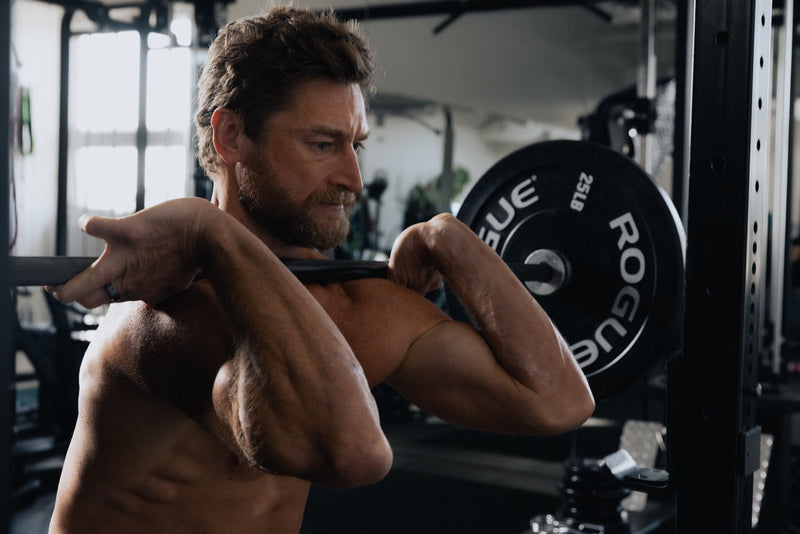
The debate about whether free weights or machines are better for training goes back to when machines were first being created by Swedish professor Dr. Gustav Zander in the late 19th century. The conversation really picked up steam thanks to fitness pioneers like Jack LaLanne and Arthur Jones started introducing their own lines of machines into the market.
Many well-known bodybuilders have been longtime advocates for machines, while some experts today and legends of the past swear by free weights. So, which is actually better for you and your goals?
The Short Answer
If you’re waiting for the part where we say “both are great” and not determine an actual winner, you’re going to be waiting a while. It turns out that free weights was shown in a 2020 study to have a small advantage when it comes to overall muscular activation (1). The activation along with having to stabilize the weight and control its momentum during the eccentric portion of a rep are what makes them the slight leader over machines.
That said (here it comes), machines are far from useless and regardless of the fitness discipline you subscribe to, your level of experience, or what your goals are, using both are key for a well-balanced training program. How you use them and when in your training sessions are the key to maximizing the benefits they offer.
What the Research Actually Says
The study from 2020 compared free weight squats with Smith Machine squats and found the former earned its lead because of having to stabilize the weight. There was significant stabilization in the calves because they were working to keep the body and barbell in balance. Free weights are also deemed superior when it comes to improving balance and coordination. (2)

More studies have been done in the years since that actually determined that when it comes to muscle hypertrophy, both machines and free weights provide very similar results. (3, 4) They are also comparable when it comes to generating power for vertical jumping or sprinting. (5)
There are other pros and cons for both that affect training performance as well as overall health and wellness.
The Case for Free Weights
Various forms of free weights include barbells, dumbbells, kettlebells, weight plates, or any weighted object that the lifter is in complete control of how and where it moves. Because of that control requirement, free weights are very valuable. The lifter needs greater stabilizer recruitment and intermuscular coordination in order to make the free weight go where it needs to go.
Imagine doing a dumbbell curl. The bicep is in charge of bending the elbow to lift the weight and turning the palm upward to maximize the contraction once the dumbbell reaches its apex above the elbow. There is no other support from outside the body. That same control is required once the dumbbell is lowered back down to the starting position because if the movement is being done correctly, then the biceps are working against gravity. When the lifter is using a full range of motion while using that load, there is more motor unit recruitment,
Those principles apply to all free weight movements, which is why free weights are considered by many experts and trainers as superior to machines when it comes to developing strength that transfers to real-world activities and functional movements that transfer to the field or court for competitive athletes.
If you’re in a weight room, then the best free weight movements include the big three in powerlifting: squat, bench press, and deadlift, as well as other multi-joint exercises such as the bent-over row and overhead press. If you want to take your training to a more challenging level, perform weighted carries such as the Farmer’s Walk or with a yoke as strongmen athletes do.
The Case for Machines
There is a reason that machines are so commonplace in commercial gyms and are now starting to make their ways into home gyms as well. They’re easy to use and are considered safer than free weights, all while providing similar muscle growing benefits as discussed earlier.
Beginners are more likely to benefit from using machines because the path of travel is already fixed and established. All they have to do is grab the handles or place their feet in position, use force to move the weight, and slowly return to the starting position. Even if they reach failure, almost all machines are made so the lifter can minimize the risk of an injury. Either the range of motion ends before the lifter can be trapped.
They are also beneficial for recovering from an injury. The fixed and controlled movement pattern reduces the odds of an error with form, which allows the user to focus more on execution. Someone that is recovering from a shoulder injury can make more progress using a machine press than having to either unrack a barbell or kick up dumbbells to do a similar exercise.
There is a reason that bodybuilders gravitate more towards the machine area than the free weight room in recent years. The cams, cables, and fixed paths of travel allow them to isolate a specific muscle group and train to failure without risking being trapped by the weight or having to rely on a spotter for help.

One downside to free weights is that once the weight reaches a certain point, gravity can take over, which relieves tension on the working muscle. One example is a lateral raise for shoulders. Once the arms come down near the body, the side delts don’t have to work as hard as they did when the arms were near shoulder height.
A side lateral raise machine is different. As soon as the weight is removed from its resting place, the lifter has to face a consistent resistance curve from start to finish. This constant tension of the muscle throughout the entire range of motion is another advantage that makes machines and cables indispensable in a training program. The safety and ability to maintain tension are why physique athletes rely on machines so often both in offseason and especially during contest prep when they are pushing themselves while maintaining a caloric deficit to get leaner.
There are several machines that are worthy of being added to a training agenda, but compound movements remain superior. These include the leg press and hack squat for the lower body, pull-up assistant machines and chest presses for the upper body, and cable stations that have multiple pulley stations so you can train everything. An honorable mention can be made for the leg curl, which is vital for hamstring development.
Where Machines Win Over Free Weights
Free weights are deserving of the love they get, but there are times when machines are the superior option for training. Working in machines for isolation training near the end of the session can go a long way in maximizing the quality of a workout. You can simply do more reps and break down muscle fibers to a greater degree when you can extend a set beyond failure safely without having to fight gravity.
Machines are also great if you’re training around an injury but don’t want to leave any potential progress on the table. Just because you can’t train a specific movement due to that area being hurt, that doesn’t mean you can’t work around it and set yourself up for greater success when you can train that area again.
Those that train alone should definitely keep machines at the forefront of their workout. If you need an example to verify this, look no further than the bench press. If you get stuck under the bar, you either have to find a way to roll it off yourself or leave the collars off, which could cause the plates to shift and lead to an injury that results in you having to use machines anyway. If you bench on a Smith machine and get stuck, the safety bumpers stop the bar if they set are set up correctly. You can also spin the bar, and the hooks catch on to the machine so you can walk away.
Furthermore, if your training plan includes pump-focused sets or blocks, then machines are a must because of the lack of a stabilization tax on the muscles. You can perform higher rep sets without technical breakdowns. A 2018 study concluded that an internal focus directly results in significantly greater muscle activation and long-term hypertrophy in isolated muscles. (6)
How to Combine Both for Maximum Muscle Growth

As a Masters level powerlifter, it may be assumed that free weights would be my go-to. However, there is definitely value in using machines, even with the competition lifts being all free weights. Using machines helps with mind-muscle connection, which can transfer to coming up out of the hole during squats, hearing the command to press, or when standing tall while fighting gravity and grip fatigue during a deadlift. They also help with volume and hypertrophy during an offseason. For older lifters, they can also help hold off the effects of sarcopenia (muscle loss) and dynapenia (strength loss) as they age. (7)
Free weights are still the foundation, though, and that is why most training programs should be structured with free weights first while the muscles working are fresh and the lifter has the most energy to commit. After the primary lifts are completed, machines can then be used for volume, isolation, and even weak point training. For powerlifters, that could be the triceps at the lockout of a bench press. For many up and coming bodybuilders, it could be bringing up an underdeveloped area on their physiques. Some advanced pros flip the script and start with machines and focusing on their weaknesses when they have the most energy to commit instead. While working on weaknesses first could be a smart move, free weights early in the session should still be the way to go for most athletes and fitness enthusiasts. The table below shows how and when to use each based on the goals of the athlete or lifter.

Does It Matter What You Use If Progressive Overload Is There?
The debate between free weights and machines can continue long after you finish reading this and go on with your next training session, but the non-negotiable that really matters is progressive overload. Let’s keep this simple: if the muscles aren’t challenged in a way that results in them having to supercompensate during recovery, then they’re not going to get stronger or grow.
The form of progressive overload can be weight used (safely), volume, more sets, or higher rep counts. Without some form of progressive overload, it doesn’t matter whether you use free weights, machines, or both. It won’t matter what preworkout you use before you lift or how much creatine you take after your training session, either. Simply put, you won’t get better.
Frequently Asked Questions
Which is better for fat loss, free weights or machines?
That is a solid question, but the answer is still the same. Free weights can help burn a few more calories due to the stabilization required, but the machines help as well because you can train to failure without placing extra stress on the joints. In the end, you should use both for a well-rounded and successful fat loss workout plan.
What happens if I do machines first instead of free weights?
By the time you get to the end of the workout and start using free weights, the muscles will be fatigued. As a result, the ligaments, tendons, and joints are bearing more of the load than they would have if you started with free weights. This leads to a greater chance of suffering an injury.
Can I just use one or the other on their own?
Yes, and many home gym users have relied on free weights alone for many years with great success. However, recent advancements in machine development and an expanding demand for home gym machines have resulted in many companies producing machines that don’t take up much space and allow lifters to reap the benefits of machines without signing up for a gym membership. So, you can use one or the other, but if you have access to both, why not use both?
References
-
Schwanbeck, S. R., Cornish, S. M., Barss, T., & Chilibeck, P. D. (2020). Effects of training with free weights vs. machines on muscle mass, strength, and function. Journal of Strength and Conditioning Research, 34(7), 1851–1859. https://doi.org/10.1519/JSC.0000000000003349
-
Spennewyn, K. C. (2008). Strength training: Free weights vs. machines. Journal of Strength and Conditioning Research, 22(6), 1848–1851. https://doi.org/10.1519/JSC.0b013e318185f14c
-
Henselmans, M., Schoenfeld, B. J., Plotkin, D. L., Vigotsky, A. D., Contreras, B., & Ribeiro, A. S. (2021). Machines and free weight exercises: a systematic review and meta-analysis comparing changes in muscle size, strength, and power. Journal of Human Kinetics, 78(1), 65–75. https://doi.org/10.2478/hukin-2021-0036
-
Haugen, M. E., Vårvik, F. T., Larsen, S., Haugen, A. S., van den Tillaar, R. J. W., & Bjørnsen, T. (2023). Effect of free-weight vs. machine-based strength training on maximal strength, hypertrophy and jump performance – a systematic review and meta-analysis. BMC Sports Science, Medicine and Rehabilitation, 15(1), 103. https://doi.org/10.1186/s13102-023-00713-4
-
Hernández-Belmonte, A., Courel-Ibáñez, J., Conesa-Ros, E., & Pallarés, J. G. (2024). Free-weight versus machine-based exercises: Challenging a traditional assumption. Scandinavian Journal of Medicine & Science in Sports, 34(1), e14510.
-
Schoenfeld, B. J., Vigotsky, A., Contreras, B., Golden, S., Alto, A., Larson, R., Winkelman, N., & Paoli, A. (2018). Differential effects of attentional focus strategies during long-term resistance training. European Journal of Sport Science, 18(5), 705–712. https://doi.org/10.1080/17461391.2018.1447020
-
Fragala, M. S., Cadore, E. L., Dorgo, S., Izquierdo, M., Kraemer, W. J., Light, C. E., & Peterson, M. D. (2019). Resistance training for older adults: Position statement from the National Strength and Conditioning Association. Journal of Strength and Conditioning Research, 33(8), 2019–2052. https://doi.org/10.1519/JSC.0000000000003230
Featured Product


