


Squat vs. Leg Press: Can You Swap the King of Exercises?
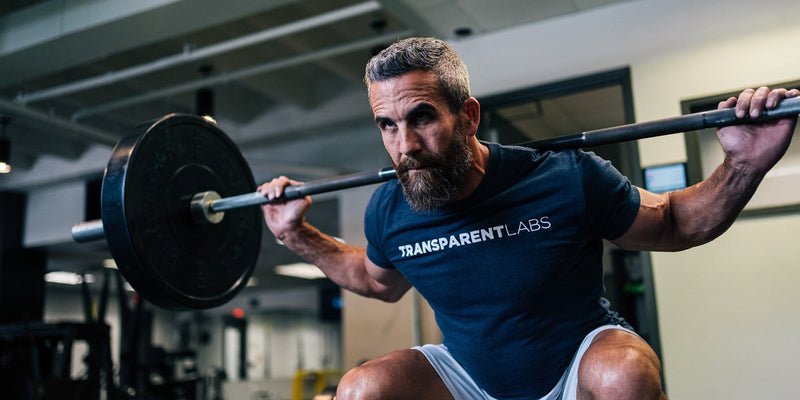
Squatting is one of the most rewarding exercises there is in terms of the overall changes it can make to your body. Famously referred to as “the king of exercises” by fitness legend Arthur Jones, the squat remains one of the foundational movements in competitive powerlifting, and is an oft-referenced movement when people are boasting about their personal lifting records.
This aside, the squatting movement can be demanding in ways that compromise your safety, and might leave you wondering why you can’t simply use the leg press instead. After all, your legs move in the same general pattern, which means your body must be reacting to the movement the same way, right?
Not exactly. It’s not outlandish to think that you can take squatting out of your workout and simply replace it with the leg press, but you should keep a few of the crucial differences between those exercises in mind before you make that switch.
The squat and leg press are more different than they first appear
It’s tempting to assume the effects of an exercise by the way your body moves in order to confront resistance and induce fatigue. In the case of both the squat and the leg press, your knees bend to create an angle of approximately 90 degrees or less, as you control the weight on its descent before pressing against the resistance. This can create the impression that the two exercises are accomplishing the same thing.
If you’ve thought this, you’re not alone, but you may want to take another look. During a squat, you control an untethered weight by moving both the weight and your body vertically through space. When you do leg presses, you are usually moving a weight sled through space at an angle while your body remains pressed against a padded surface.
Guiding your body through open space while the barbell on your back threatens to pin you to the floor is quite different from pressing a sled along a fixed path of movement. When you squat, your limbs move your body as the barbell amplifies your weight, and you carefully control your own movement pattern. When you execute a leg press, your limbs move the weight at an angle, and in the only direction it is capable of moving, while your body remains in a fixed position.
These distinctions may seem minor, but they are worth noting, because they have different effects on your body than you are likely to be aware of at first.

Your body responds to the movements very differently
When a squat is executed properly, and to an adequate depth, it is one of the best all-around developers of size and strength in the leg muscles. Most of the variance in which particular muscles of the legs are emphasized during a proper squat is determined by factors like the angle of your torso, and the width at which you set your feet.
Comparatively, most of the variance in muscle development during a leg press is determined by the amount of weight applied to the exercise. Studies have shown how low-to-moderate leg presses rely more heavily on the muscles of the quadriceps, while heavy leg presses place greater demands on the glutes.
One of the reasons for this difference is that proper execution of a leg press usually requires that you draw your knees into your chest before extending your legs, while your body is never fully straightened at the waist as it would be at the conclusion of a squatting movement. This makes the leg press a far less natural movement than the squat as far as your body is concerned.
You may be sacrificing some significant benefits
The most dramatic difference between squatting and leg pressing in terms of its effects on your body may be found in the area of athletic development. Or, more specifically, switching exclusively to leg pressing from squatting is likely to result in clear sacrifices made to your overall athleticism.
This shouldn’t be altogether surprising; squatting trains your muscles to apply power directly against the ground, which is the direction that force is applied when you perform any activities associated with natural movement, like running or jumping.
In studies comparing the separate effects of squatting and leg pressing on the development of athletic abilities, both the squatting and leg pressing groups were able to increase their one-rep maximum barbell squat after an eight-week training period. However, only the squatting group enjoyed significant improvements to their squat jump and countermovement jump measurements.
Another way of looking at this is that leg pressing can increase your muscle strength in a manner similar to the barbell squat, but your body may not be able to apply your newfound strength in an athletic setting in all the ways that you would like.
Understand the trade-offs
To be clear, separate studies identified how leg pressing alone could lead to increases in your one-rep squat max, and how performance on the leg press was a fairly accurate predictor of squatting strength. This means there is a clear overlap between the effectiveness of both exercises, and you may be able to simply do the leg press if you want to build size and power in your legs comparable to a squat.
However, if your goal is to simultaneously develop your athletic potential while building your size and strength, research indicates that you’ll want to keep at least one squat variation in your training arsenal in order to ensure that the power you gain can be applied to real world situations.
Summary
-
Despite appearing like similar movements, squatting and leg pressing are distinct in ways that can have a difference in the ways your body reacts to them.
-
Squatting requires you to move a weight and your body through space entirely on your own; leg pressing moves a weight along a fixed path, requiring less control.
-
Squatting is a more natural movement that allows you to stand up completely with a weight; leg pressing requires your body to remain at a fixed angle even when a rep is completed.
-
When squatting, most of the variance in muscle activation is determined by the placement of your feet and the angles of your legs; in leg pressing, most of the variance is determined by the amount of weight being lifted.
-
Because squatting is a natural movement that teaches you to apply pressure against the ground, its effects translate more neatly into improvements in athletic measurements like running, jumping, and lateral movement.
-
It is important to understand what you may be sacrificing if you opt to permanently forego squatting in favor of leg pressing.
Featured Product


