Pre-Workout vs. Coffee: Can It Replace Your Morning Brew?
Undoubtedly, there are plenty of people who find something charming about the bitter flavor that a morning cup of coffee visits upon their taste buds. Realistically, though, most people wouldn’t have taken the time to develop an appreciation for coffee if it wasn’t a caffeine-rich resource that perks them up quickly and reliably.
Conversely, many pre-workout formulas are also abundant in caffeine, which is one of the core reasons why a large number of gym attendees couldn’t even fathom facing workouts without a scoop of pre-workout coursing through their bloodstreams. This begs the question, if you decided to use pre-workout as a replacement for your morning coffee — even if you weren’t planning to exercise — would that be a reasonable approach to daily caffeination?
Pre-workout often has less caffeine than coffee
Caffeine isn’t the only ingredient in pre-workout that contributes to the efficiency of your exercise regimen. Still, when caffeine is present in such formulas, it’s usually the star of those concoctions due to the nearly instant alertness that it provides, and because it is the component of pre-workout that takes the most immediate effect.
So if your sole reason for drinking coffee is for the jolt that caffeine provides you with, you might be surprised to learn just how much less caffeine per ounce is contained within pre-workout formulas in comparison to coffee.

Most pre-workout powders that aren’t labeled as low-stim or stim-free come with labels that advise you to stir or shake the pre-workout powder into 12 ounces of water. Keep this in mind, since most pre-workout powders will administer 180 to 200 mg of caffeine to your system at around 15 mg/oz.
In comparison, using Starbucks coffee as an example, an 8-ounce cup of coffee contains about 160 mg of caffeine, or 20 mg/oz, with most 12-ounce servings containing between 20-23 mg/oz. To put it in clear terms, the average pre-workout formula contains less caffeine per ounce than Starbucks coffee in relative terms, and usually less total caffeine per serving in most scenarios.
Pre-workout can be far less expensive than coffee
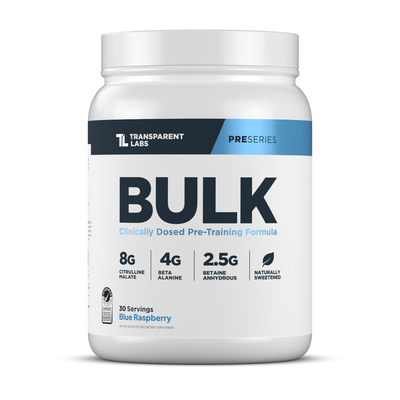
Using premium pre-workout powders like Transparent Labs Lean or Bulk products as your examples, if you paid full price for your pre-workout, you would spend $49.99 for 30 servings of pre-workout. Presuming that you received your water for free from your gym’s water fountain, you would be paying approximately $1.50 per 12-ounce serving of pre-workout powder.
Undeniably, this is competitive on a per-serving basis with many popular brands of ground coffee, which average out to around $1.00 per serving for specialty blends or flavors. On the other hand, if your alternative to pre-workout is one of the least expensive coffees offered by Starbucks or one of its competitors, you can expect to pay around $3.00 for a pick-me-up of comparable size.
Obviously, this calculation is highly dependent upon where you choose to purchase your coffee, but if the price of your caffeine is a factor in your decision, it can be significantly less expensive to grab one of the highest quality pre-workout mixtures over an average cup of coffee from a popular coffee franchise.
Pre-workout is less likely to make you jittery
Again, we’re presenting a scenario that is heavily dependent upon how much coffee and pre-workout you’re drinking, and under what circumstances. Still, if we assume that comparable amounts of pre-workout and coffee are being consumed at the same time, you are actually less likely to feel as jittery from pre-workout as you are from the coffee.
The reason for this is that the best pre-workout powders actually include a braking mechanism in the form of L-theanine. This amino acid is mixed into pre-workout because of its ability to reduce stress and anxiety, to relax your muscles, and to promote feelings of calmness. So while your body is ready for action, and your brain is stimulated, these sensations usually feel more regulated, and are unaccompanied by the discomfort that is common with unchecked caffeine use.
Pre-workout can contain far fewer calories

Coffee is famous for its absence of calories, so if you drink your coffee black, you needn’t worry about calories entering into the discussion. On the other hand, if you prefer your coffee loaded with sugar, and especially if you can’t bear the thought of drinking coffee in a form that doesn’t include whole milk, whipped cream, and caramel, you can easily squeeze more than 500 calories of ingredients into your preferred flavor of coffee.
By comparison, most pre-workout powders tend to peak around 20 calories per serving, while Transparent Labs pre-workout formulas — which use only natural sweeteners — administer just five calories per serving. In the latter case, the absence of artificial sweeteners also makes Transparent Labs pre-workout less likely to cause GI discomfort than coffees that have been filled with artificial sweeteners for the sake of avoiding a deluge of calories.
Pre-workout is not just for workouts anymore
There is absolutely nothing preventing you from taking pre-workout as a morning coffee replacement, even if you have no plans to exercise after drinking it. All things considered, pre-workout can provide you with a similar feeling to coffee — albeit with fewer jitters and a lower dose of caffeine per ounce — at a reduced price, and with fewer calories. Therefore, if your fondness for coffee is rooted in the sensations it induces and less about the ambiance in which you drink it, pre-workout might be a very practical alternative to coffee as a tool for cognitive clarity and physical readiness.
Summary
-
Pre-workout formulas compare very favorably to coffee on several important measurements of effectiveness and value.
-
Most pre-workouts contain less caffeine than coffee, which can make pre-workout the safer option for people who want to moderate their caffeine consumption.
-
Compared with similarly-sized coffees purchased from commercial chains, pre-workout costs less per serving than even the least expensive options of most coffeehouses.
-
Due to the presence of L-theanine, pre-workout is less likely than coffee to cause jittery feelings in those who drink it.
-
While the average pre-workout seldom contains more than 20 calories per serving, the calorie content of coffee can quickly skyrocket when sweeteners and other ingredients are added.
-
All things considered, pre-workout can be a preferred alternative to coffee even if you have no plans to exercise.
Featured Product