


VO2 Max and Longevity: How to Improve Your VO2 Max
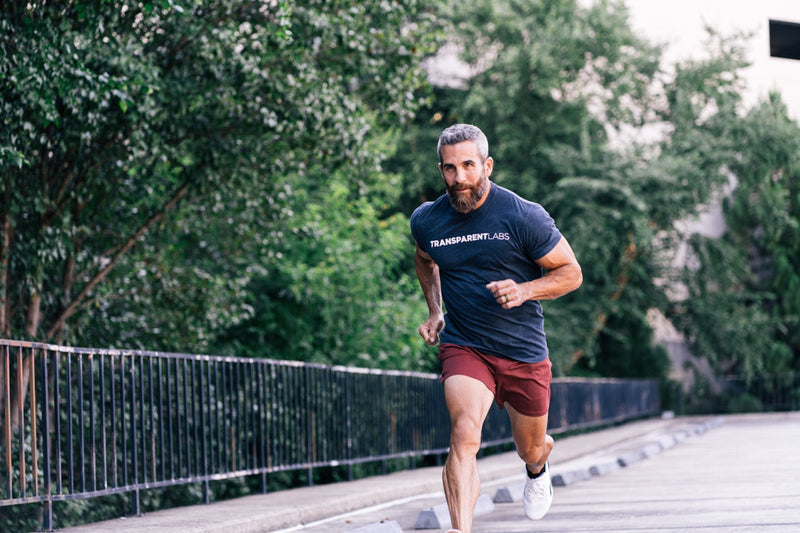
One of the main reasons that people exercise, especially after they reach the age of 50, is for the sake of extending their lives, or at least improving their quality.
If it were possible, many people would love to have a single metric that could help them predict how long they’re going to live. More to the point, they would also love to have a single data point they could monitor and improve upon for the purpose of lengthening their life span.
The good news is that this singularly valuable statistic is readily available to you in the form of VO₂ max. The bad news is if you’ve never trained in a structured fashion for a sport that requires you to gradually elevate your VO₂ max for the sake of being competitive, there’s a good chance you’ve never even heard of VO₂ max.
So what is VO₂ max, what is it about VO₂ max that makes it such an accurate predictor of a person’s longevity, and how can you effectively boost it in a way that will optimize your health and lengthen your time on earth?
What is VO₂ max?
VO₂ max is actually the product of a physiological formula in which the amount of blood your heart pumps is multiplied by the amount of oxygen your muscles are able to extract from your blood. In essence, it is an efficiency metric that is more advanced than your mere aerobic capacity.
In a training context, VO₂ max is a reflection of how rapidly your body is able to use oxygen during exercise. In a sense, it is like your body’s ultimate hidden efficiency data point because of how it reflects the confluence of four important physiological processes.
Specifically, VO₂ max exists at the intersection of how efficiently your heart pumps blood, how well your lungs absorb oxygen, how effectively your blood vessels transport blood, and how readily your muscles use oxygen to create energy in the form of ATP.
In short, VO₂ max is a single number that represents how long your body can sustain its peak level of all-out performance. This is why it is an especially valuable metric for evaluating athletes whose sports prioritize the blending of aerobic and sprint performance, like runners and swimmers.
How is VO₂ max quantified?
To put the numeric system in simple terms,VO₂ max is expressed as a number followed by mL/kg/min, or milliliters of oxygen per kilogram of body weight per minute. In nearly all cases, the range of numbers used to reflect VO₂ max scores will begin in the teens and reach into the upper 50s.
Great care must be taken when comparing VO₂ max scores, because the quality of a score is heavily dependent upon the age and gender of the person being tested. For example, for a 45-year-old woman, a VO₂ max above 46 is superior, and a score below 26 is regarded as poor. Yet, for a woman over the age of 80, any VO₂ max score comfortably over 19 is good, and scores above 22 are considered excellent.

Meanwhile, men’s VO₂ max scores are all an average of approximately 10 points higher than women’s scores in each category, resulting in scores below 29 being regarded as poor for men in their 70s, while scores below 40 are considered equally problematic for men in their 20s.
Why is VO₂ max able to predict longevity so well?
The idea that VO₂ max is such a reliable predictor of longevity was substantiated by a Cleveland Clinic study that was published in 2018. The landmark study followed more than 120,000 test subjects who participated in periodic treadmill testing between 1991 and 2014.
The results of the study were very straightforward, in as much as the fittest 2% of study participants had an 80% lower risk of death than those whose fitness levels were categorized as poor. Within the study, cardiorespiratory fitness — which was determined by the VO₂ max formula — was deemed to be a more reliable indicator of health than whether or not a person smoked, had diabetes, had high blood pressure, or was at risk for coronary artery disease.
The reason the VO₂ max equation holds up so well as a determining factor in overall health is because any flaws or weaknesses in your oxygen-delivery and continuous energy-production systems are reflected in VO₂ max. If the entire system is operating at a superior level, your VO₂ max will remain high. Conversely, if a single component of the system is lacking, your VO₂ max will drop.
To put it plainly, if your VO₂ max is low — or is evidently lower than it probably should be — you’re probably being hampered by an oxygen delivery shortfall that should probably be corrected.
How do you boost VO₂ max?
There’s a reason why VO₂ max is highly prized within athletic circles as the ultimate measurement of practical endurance, and that’s because it reveals much about the time and effort athletes have devoted to tailoring their bodies for physical duration and intensity.
Based on what VO₂ max seeks to quantify, it should come as no surprise that the fastest way to raise your VO₂ max is through a combination of high-intensity interval training (HIIT) and sustained aerobic work.
If you regularly engage in training that boosts your heart rate through structured sets intended to push you to your physical limits followed by long aerobic sets that simply require you to maintain a slower pace for long periods of time, you are well on your way to establishing a solid VO₂ max score.
All of this aside, maintaining a healthy body weight with minimal levels of body fat is perhaps the most important factor in maintaining a healthy VO₂ max even when you’re not engaging in regular cardio. For instance, two people with identical oxygen uptake levels may have VO₂ max scores that are more than a dozen points apart from one another simply because one person is 40 pounds heavier and needs to spread the absorbed oxygen over more body mass.
Protect your VO₂ max
Please be mindful that you can minimize the effectiveness of workouts that are designed to boost your VO₂ max even if you execute them perfectly if you fail to pay adequate attention to your recovery, and also by neglecting to fuel yourself with the proper nutrients.
As long as you ensure that your body recovers well, training for speed, power, and longevity while optimizing your body composition will provide you with a high VO₂ max score and the enhanced life quality that goes with it.
Summary
-
VO₂ max is regarded as the single most accurate metric for predicting longevity, but few people know what it is.
-
VO₂ max is a reflection of how rapidly your body is able to use oxygen during exercise, and indicates how efficiently you are able to produce sustained energy during all-out activities.
-
VO₂ max is expressed by a number that usually ranges from the teens into the 50s, and the quality of the scores is heavily dependent upon age and gender.
-
The reason VO₂ max is believed to be so strongly correlated with longevity is because it reveals if flaws are present in your body’s oxygen-delivery and energy-production systems.
-
VO₂ max is most reliably trained through a combination of high-intensity interval training (HIIT) and aerobic exercise, but can also be dramatically improved by shedding body fat and optimizing body composition.
-
Adhering to a well-rounded sleep and recovery strategy can help you reap the full advantages of your VO₂ max workouts.
Featured Product


