


Muscle Strength and Longevity: What Science Says
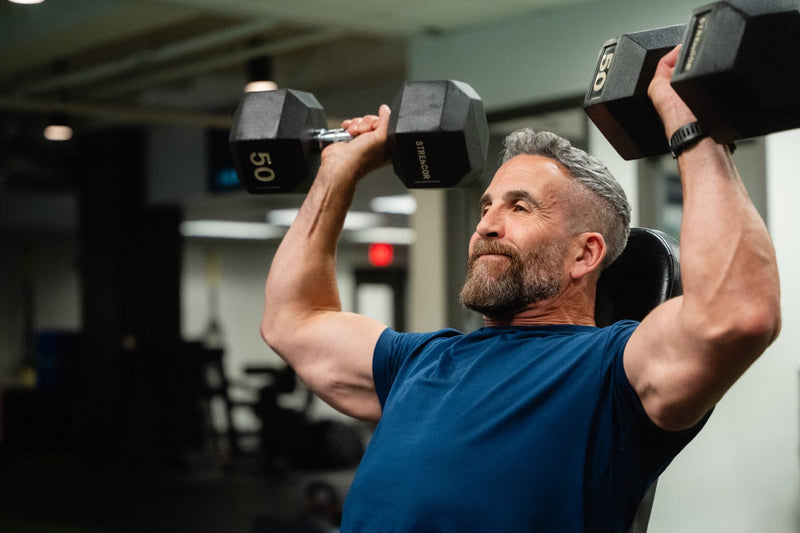
Muscle strength is clearly useful for many things; if it wasn’t, people wouldn’t spend so many long hours training in the gym trying to develop it. At all stages of life, muscle strength helps us to perform work at a faster rate than we could if our strength was insufficient, and it can even help us to complete some tasks that would be downright impossible if we lacked the strength to perform them.
Certainly the strength of your muscles can make your life easier, but did you know that your strength can also be used to predict the length of your life? Yes, there are considerable caveats that must be acknowledged when citing the research, but it remains true that the same muscle strength that has benefitted you throughout your life can also be used to gauge how long your life will last.
How is muscle strength being measured
The key caveats to the studies stating that strength level can be used to extrapolate longevity is that nearly all of the studies involve older adults whose overall muscle strength is being gauged by the strength of their grip.
To be clear, grip strength is believed to be a reliable predictor of overall muscle strength in older adults, but it admittedly has little correlation to lower limb strength. Moreover, because larger people tend to have stronger grips and bigger muscles overall, grip strength can be skewed by the total body sizes of the studies’ participants.
However, even when taking all of this into consideration, studies have plainly identified grip strength as a reliable standalone biomarker, with predictable links between a stronger grip and several favorable outcomes. Therefore, even though the studies aren’t finding links between push-up quantity and all-cause mortality, the data indicates that all of your efforts to elevate your strength level can be reliably encapsulated within the strength of your grip.

What do the studies say?
Across dozens of studies involving millions of participants, grip strength was definitively proven to be a reliable predictor of all-cause mortality and cardiovascular disease. In a meta-analysis of 42 studies that included more than three million participants, the individuals with weaker hand grips had hazard ratio scores of 1.41 for all-cause mortality and 1.63 for cardiovascular disease.
For the sake of interpretation, these scores reflect elevated chances of death owed to these causes of 41% and 63% respectively, in comparison with individuals with stronger grips. In practice, this implies a heavy correlation between a person’s muscle strength and their body’s capacity to sustain their life, or their susceptibility to circumstances that might lead to their demise.
How does muscle strength contribute to longevity?
First of all, muscle strength is usually a reliable predictor of the presence of muscle mass. Under ideal circumstances, your muscle mass will be paired with a commensurate quantity of strength, essentially meaning that you’ll be as strong as you look when it matters.
However, even if the strength generated by your muscle mass is lower than expected, your muscle tissue would still be beneficial for the regulation of blood sugar and reducing your risk of type 2 diabetes, serving as a reservoir of protein for emergency energy production and wound healing, and supporting your bone health.
Second, muscle strength helps to stabilize your body and lowers your risk of falling. Among older adults, this is of vital importance; more than 20 percent of older adults die within one year of suffering a hip fracture even if the injury is surgically repaired, with 70 percent passing away if the injury goes unaddressed. This is just one of the many devastating injuries that can befall someone as a consequence of falling.
Additionally, muscle strength prevents falls from ever occurring by improving posture and balance, and dramatically improving a person’s odds of recovering from a loss of balance. Moreover, muscle strength and muscle mass help to cushion and protect your body from falls even if they occur.
In the event that you get sick, higher general muscle strength can help your body emit more productive coughs that can help clear the respiratory system more efficiently. Stronger muscles also contribute to superior blood flow, which makes the delivery of oxygen to organs and tissues more efficient, especially when fighting illnesses.
How can I practically boost muscle strength?
When deciphering this information, responsible interpretation is necessary, or you may find yourself thinking that literally training your grip strength is the most crucial exercise you can engage in for life preservation.
Again, grip strength is used as a proxy for total body strength, which means that you’ll need to train the muscles of your entire body in order for grip strength to provide an accurate reflection of your body’s overall muscle composition
In order for the development of your muscles to meaningfully contribute to the improvement of your health and the preservation of your life, your best bet is to train your body from top to bottom, primarily through compound movements (i.e., squats, deadlifts, bench press, pull-ups) that apply stress to the largest muscles in your body through a full range of motion.

Furthermore, you’ll want to support the development of your muscles by providing them with the type of performance and recovery support that is only achievable through strategic dietary choices. In practice, this means that you are consuming ample protein to drive muscle protein synthesis, and also pairing it with a supplement like creatine HMB to preserve muscle tissue and supercharge your muscles’ energy reserves.
Daily life deposits
If you intend to live for a long time and get the utmost enjoyment out of your time, taking steps to grow and maintain the health of your muscles is one of the wisest investments you can make. When viewed through this lens, it’s possible that every workout you dedicate yourself to is a deposit in the account that holds the number of days of life you have remaining, and the minor discomfort of each resistance workout is saving you from much greater discomfort later on.
Summary
-
Muscle strength has been conclusively proven to be an indicator of longevity.
-
Dozens of studies involving millions of people have established a link between stronger muscles and a reduced risk of all-cause mortality and cardiovascular disease.
-
Muscle strength is a reasonable predictor of the presence of muscle tissue, which is beneficial for the regulation of blood sugar, the healing of wounds, and the support of bones.
-
Strong muscles help to stabilize the body, dramatically reducing the likelihood of devastating falls, and improving the odds of recovery if a fall occurs.
-
Increasing muscle strength also improves the efficiency of blood flow and oxygen in the event that your body is required to combat a disease or illness.
-
In order to effectively boost your muscle strength, you are encouraged to train the muscles of your entire body as opposed to focusing on grip strength, which is used by these studies as a proxy for total body strength.
Featured Product


