


Best Outdoor Alternatives to a Running Track
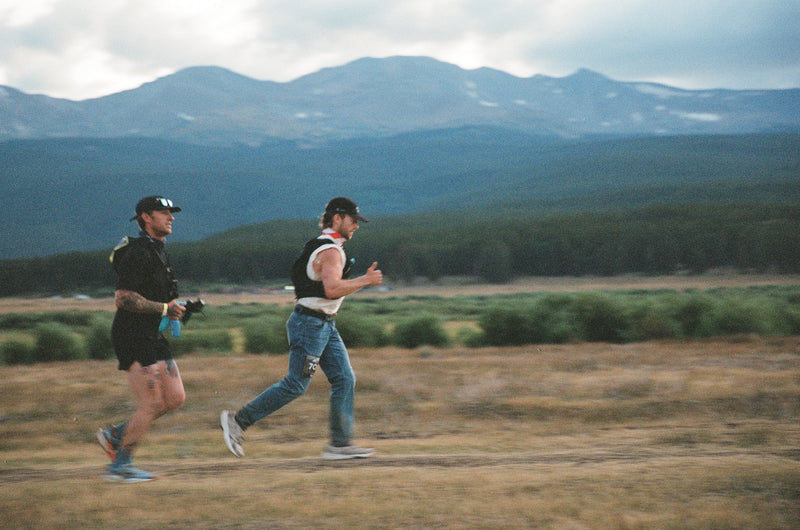
In many neighborhoods, the local high school running track is the most reliable source of safe and free outdoor cardio. There’s no need to fork over any gym memberships or association fees; you just step out onto the track, and as long as there are no physical education classes in session, you’ve got access to the same length of track that professional runners display their talents on.
Adding to a track’s appeal is the fact that it also happens to be an outdoor training environment that’s conducive to performance improvements that are easily tracked and measured. Yet, for reasons that are both understandable and unfortunate, many high schools now forbid public use of their running tracks in order to keep unauthorized persons away from school grounds. This forces many people to look elsewhere to find suitable outdoor running areas. So, if you can’t find a running track, what are your best alternatives?
The Semi-Abandoned City Block
If you’re searching for a place to run where your distance is easily measured, but where you also don’t have to wander too far from your home or vehicle, consider a low-traffic area in the heart of your city that is ideally the home to a building and parking lot that are bounded by sidewalks on all four sides. Many of these areas are on the outskirts of downtown areas and see little foot traffic or automotive traffic of any kind, making it a great place for you to run in peace, especially after hours.
Ideally, this area will be bounded by four streets and sidewalks between 100 to 200 meters in length, and if this area isn’t on the way to anything interesting, you probably won’t have to dodge many other people during your run. In fact, if it’s the right sort of public office building, it probably doesn’t get much traffic to speak of during business hours once all of the workers have reported for the day. In this setting, you can run along the square or rectangular pathway composed by the four sidewalks, and all without ever losing sight of your own vehicle.
The Corner Store
Not every corner store serves as an ideal base of operations for a running workout. The optimal location would sit at an intersection with sidewalks, from which roads extend into and intersect within a residential neighborhood from a point roughly a quarter of a mile away from the shop.
If you’re envisioning this properly, you’ll have a square-shaped running path consisting of quarter-mile sides, forming a running route that never places you more than half a mile from your means of travel. This is ideal if you need to bail out of your workout for any reason. The only downside might be that you’ll need to purchase something from the store in order to justify your car’s presence there for an extended period of time, but even this can work to your advantage if you need a quick source of hydration or running fuel.

The Housing Development with an Outer Sidewalk
This one is tricky, because you’re looking for something very specific in order to minimize your exposure to traffic. Many tightly packed housing developments — particularly developments with town homes — have exterior sidewalks that don’t intersect with the driveways of the individuals homes and units. In several cases, these uninterrupted stretches of sidewalk can extend for distances of a quarter of a mile or longer.
Ultimately, this should mean that you’ll be running through a community that is relatively safe and well trafficked, but also with enough of a human presence that you never feel completely alone. Also, while you may find yourself running in some atypical patterns, and possibly even running back and forth along the same quarter-mile path, the fact that the distance is relatively short also provides you with the convenient ability to return to your vehicle promptly if a problem arises.
Safe, Smooth, and Measureable
In case it wasn’t clear enough, in all of the listed scenarios you’ll be finding an outdoor environment that provides you with the core benefits of running on an outdoor track. Specifically, you’re identifying areas that will enable you to run outside along a paved path with minimal obstacles, and allow you to get back to your car quickly once the workout is over.
What’s more, all of these courses come with distances that are easy to measure, so you’ll know exactly how much distance you covered, just as you would on a high school track. Now, it’s possible that none of these suggested courses will be preferable to a high school track in your eyes, especially when it comes to opportunities to fraternize with your fellow runners and walkers, but if you enjoy privacy while you train, you might consider that to be a good thing in the long run.
Key Takeaways
-
Local safety concerns have eliminated several high school tracks as free public training courses for running and walking workouts.
-
One alternative to a running track might be a building and parking lot in your downtown area that is bounded by sidewalks on all four sides.
-
Another attractive option could be a corner store with sidewalks that is near a residential area, which provides you with four equal running sides and a source of post-workout hydration.
-
A possible third option might be a long stretch of uninterrupted sidewalk, which is often found near the entry ways of some modern housing developments.
-
All of these alternatives to high school tracks provide areas for you to train on that are presumably free to use and safe, while enabling you to quantify the distance covered in each workout with relative ease.
Featured Product


