


How to Build an Effective Post-Workout Stretch Routine
If you’re like plenty of people who exercise regularly, getting you to stretch after a workout is like pulling teeth. After all the hard work has been put in, your heart is set on showering, changing, and getting on with your day; the last thing you want to do is spend time in the gym doing something that isn’t actively contracting muscles or burning calories.
This is unfortunate, because stretching is one of the healthiest habits you can get into for the sake of preserving your physical health. The good news is that there are plenty of stretching routines and styles that are effective, but how do you go about designing an ambitious stretching regimen that you’ll actually do, and won’t avoid it like the plague?
Make it the final set of your workout
It’s not essential that you stretch every single muscle in your body each and every time you train. Nevertheless, it would be ideal for you to at least stretch the muscles that you targeted during your training. You can also use this to your mental advantage to make stretching seem less daunting; you’ll only have to do one or two stretches after every training session.
For example, if you just wrapped up an intense chest-and-triceps workout, you only have to engage in a few strategic stretches as the final step of your workout to achieve the benefits of post-workout stretching. The key is to make the process less daunting by committing yourself to only doing just a couple of stretches each day.
Make it easy to fall into
Once you settle into a workout routine, you know where your workout is likely to begin and end on that day. If you train at a gym, try to locate a safe, secure, and clean area that you can immediately slide into so that you actually have a pleasant environment that you don’t mind spending the necessary time in.

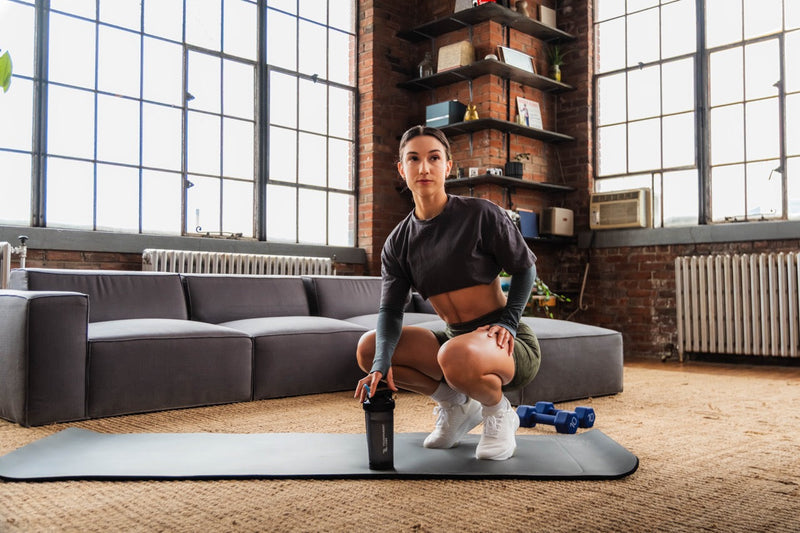
On the other hand, if you prefer to train at home, the wise choice is to prepare an area ahead of time to make it as conducive to stretching as possible. If you’re going to be stretching on the ground or against the wall, arrange the space for you to commence your full battery of stretches as soon as your workout ends. This may include preemptively spreading a mat on the floor, or making sure the mat is a permanent feature of your training space.
Choose a stretching routine that you will actually do
If the only form of stretching you’ve ever engaged in is the full battery of static stretches they forced you to do in your junior high gym class, you may have dreaded the process. As a further consequence of this, you may never have been informed that there are other types of post-workout stretches that you can indulge in.
For instance, passive stretching allows you to maintain a position and allow an external force to act against your body. This can mean that you have a workout partner manipulate your body and essentially stretch for you, or you can simply position your limbs at certain angles and wait as gravity slowly stretches your muscles. Regardless, stretching can be a relaxing process that also doesn’t mandate that you strain yourself to manually force the issue.
Healthy Muscle Maintenance
For as much effort as you’ve put into selecting your strength training exercises and coordinating your nutrition schedule, a healthy round of post-workout stretching can be just as vital to protecting your muscles and minimizing your risk of injury. Adding just three to five minutes of low-impact stretching to the tail end of training can have you reaping serious benefits while you ward off injuries. And when you get right down to it, the healthiest muscles you can have are muscles that still work.
Takeaways
-
Stretching is a healthy post-workout activity that many people avoid.
-
There’s no need to do a daily, full-body stretching routine; you can limit it to the muscles you targeted during your training.
-
You only need one or two stretches to effectively stretch a trained muscle.
-
It is helpful to prepare an area for stretching ahead of time to make it an easy activity to transition into once your workout is over.
-
Stretching does not need to be an active, arduous process; static stretching provides a stretching option that is far more passive and relaxing.
Featured Product


