


5 Athletic Skills to Improve Fitness, Strength, and Endurance
When it comes to cardiovascular training, walking and running are the baseline activities that most people engage in. Unless you’re contending with a physical issue that has hindered your basic capabilities of bipedal locomotion, it is expected that you can walk or run at a minimum, and that you can turn to these movement styles first when it’s time to elevate your heart rate.
Obviously, there’s nothing at all wrong with this, but there’s also no glory in unnecessarily limiting your training options, especially since there’s always something to be gained from learning another form of exercise. With this in mind, here are five athletic skills worth learning for the sake of improving your fitness.
Swimming
An American Red Cross poll states that 54 percent of Americans either can’t swim or lack the basic controls for water safety. The CDC states that 15 percent of U.S. adults — about 40 million people — can’t swim altogether. Obviously this is a shame for safety reasons, but if your swimming skills prevent you from swimming laps, it also deprives you of some valuable training options.
Compared to running, swimming is a vastly superior method for developing upper-body conditioning, while also serving as a low impact form of cardiovascular training. This means that even competitive runners can benefit from learning to swim, as it provides their joints with an opportunity to recover while still enabling them to raise their heart rate and maintain their conditioning.
Rock Climbing
Climbing the various ladders placed all over the playgrounds of your youth was all fun and games, but the act of climbing to higher peaks on less forgiving surfaces takes a tremendous amount of patience and training, not to mention the development of a unique type of strength… particularly in your hands.
Studies identify that rock climbers not only have superior grip and finger strength than non-climbing athletes, but they also have less variance in the strength levels between their dominant and non-dominant hands.
With this being the case, given the extent to which a lack of grip strength is often a limiting factor in many lifts, regular sessions of rock climbing can strengthen your grip to the point where the rest of your body can benefit as you become even stronger from your other resistance exercises.
Speed Skating
The dexterity with which many people’s feet move when they’re supported by wheels or blades, on either solid ground or ice, belies how challenging skating can be to learn. While it’s difficult to project with accuracy exactly how many people can skate, we know for a fact that the vast majority of people don’t. This is a shame, because of the unique physical benefits that skating provides.
Specifically, given the significance that developed gluteal muscles have taken in recent decades — particularly with women — speed skating is an ideal form of training to engage in. The push-off motion of skating extends, abducts, and externally rotates the hips in the exact pattern that sculpts and develops the glutes, making it a perfect form of training for people whose foremost aim is to craft an impressive backside.
Cycling

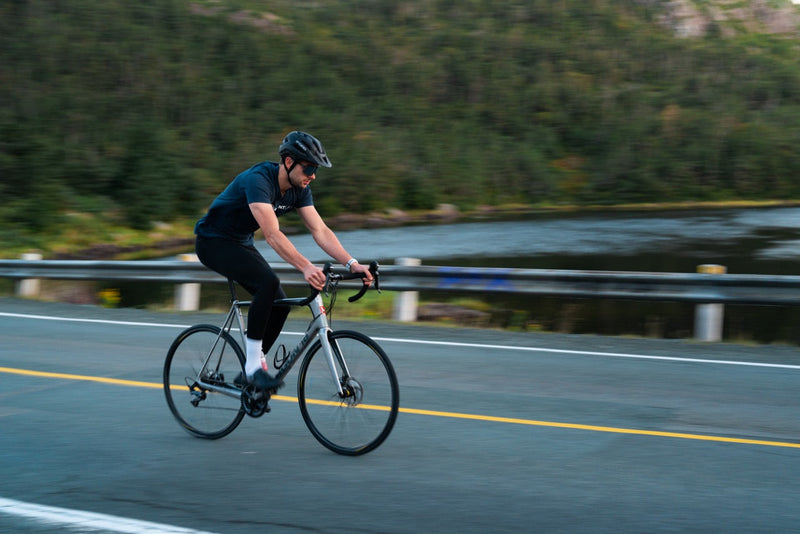
While the ability to ride a bike is often taken for granted, estimates of the percentage of U.S. adults that can’t ride a bike range from 6% to 24%. Yes, the ability to ride a stationary bike eliminates the balancing requirement, and makes the benefits of biking accessible to nearly everyone, but this process strips biking of some of its primary means of physically improving your anatomy.
Outdoor cycling requires greater muscle engagement throughout the abdominals, chest, back, and shoulders for the sake of maintaining a stable ride. This means that learning to ride an authentic bike through the great outdoors can provide you with a more durable upper body than you would attain from riding a stationary bike in an air-conditioned environment.
Cross-Country Skiing
According to reports, only 1.5% of the global population has any regular engagement with skiing. Obviously, the environment in which a person lives has a great deal to do with this, as access to snow is a minimum requirement to engage in skiing of any type.
Then again, if you’re hoping to get in better shape and happen to live in a region where it snows regularly, you might consider skiing to be a skill worth mastering if you knew how it could improve your fitness.
Learning to cross country ski on a high level combines elements of the upper body muscle engagement involved in a crawl or butterfly swimming stroke with the hip abduction and rotation involved in skating. Because of this, mastery of cross-country skiing can deliver the anatomical advantages associated with two very different sports.
A New Competitive Environment
As fun as it can be to learn a new physical skill, the underrated component to learning any of these abilities is that they’re associated with authentic sports that you can compete in well into late adulthood. This means that if you take the time to learn a new sport, you’ll not only claim the physical advantage associated with training for that sport, but you’ll probably enter into a new social circle and make some new friends as well.
Summary:
-
Learning new cardiovascular skills can upgrade your cardiovascular training capabilities.
-
Swimming provides superior upper-body conditioning to running and also offers a low-impact alternative.
-
Rock climbing grants its practitioners hand strength that translates very well to other lifts.
-
The movement pattern of speed skating is exceptional at sculpting the highly prized muscles of the glutes.
-
Cycling requires its riders to develop far greater upper body strength and endurance than they can acquire by riding on a stationary bike.
-
Cross country skiing combines some of the movement patterns of swimming and skating, granting skiers the physical advantages associated with both sports.
-
Learning the skills associated with a new sport can also grant you access to new social circles.
Featured Product


