


Creatine in the 21st Century: Beyond Muscle to Brain & Heart
As the 21st century dawned and then crept along, nearly all of the misinformation about creatine gradually faded away, having been disarmed by the deluge of research that has proven the benefits of supplemental creatine across the board. Over the course of approximately 30 years, creatine went from being a mysterious compound that people dismissed as a less-damaging equivalent to one of the most tested and trusted supplements in the world.
In fact, the benefits of creatine were ultimately proven so convincingly that it is now considered almost a foregone conclusion that all serious athletes over the age of 18 will consistently take supplemental creatine in order to reach their full potential.
Furthermore, additional advantages conferred by creatine have been unearthed in so many unexpected areas that there are now people who consume creatine to gain an upper hand in areas that have nothing to do with fitness.
Creatine and Mental Health
Many of the hidden benefits of creatine have surfaced during cognitive studies. This is owed to the fact that many processes rooted in the brain are fueled by ATP, which is the form creatine takes when it is stored in both skeletal muscle and major organs like the brain. As such, many chronic cognitive issues have been linked — at least in some people — to a reduction in brain energy caused by a shortage of ATP, which supplemental creatine offsets.
Aside from being beneficial in areas like information retention and mental acuity, creatine is also able to attenuate depressive symptoms, which is owed to the same problem posed by a reduction of mental energy leading to feelings of sadness. Consequently, creatine is now one of the first places that many depression sufferers are advised to turn in order to see if their depressive symptoms are primarily owed to a nutrition gap.
A meta-analysis of 16 separate randomized controlled trials concluded that creatine supplementation “may confer beneficial effects on cognitive function in adults, particularly in the domains of memory, attention time, and information processing speed.” [1]
Similarly, a review of creatine’s effects on mental health concluded with a statement that creatine’s ability to “alter brain energetics, promote neurogenesis, and improve brain function safely and effectively” has opened the door for creatine to be introduced as “a novel, natural strategy for the treatment of psychiatric disorders.” [2]
Creatine and Reproductive Health
Outside of the customary ways in which creatine can reinforce and buttress skeletal muscle and organs, which leads to muscle regeneration, easier access to a larger reservoir of energy, and enhanced mental and psychological processing, creatine has also proven capable of offering an assist when it comes to improving the reproductive health of women on multiple levels.
Studies have concluded that women who ingest creatine have a lower risk of reproductive disorders [3], while creatine metabolism has been proven to play a crucial role during pregnancy, both in terms of the function of the placenta and fetal development. [4]
During and after menopause, creatine has proven capable of slowing the decline of muscle mass and bone mass, which are problems that commonly plague women both during and after menopause. Beyond this, the ability of creatine to mitigate depressive symptoms is also referenced as a characteristic that can be helpful to women during this time. [5]
Capitalizing on Creatine
As creatine’s acceptance as a solution for an increasing number of physical maladies has multiplied since 2000, creatine has found its way into many places that would have seemed unthinkable in prior decades. Once characterized by its scarcity in the early 1990s, creatine is now included as just one of several ingredients in a multitude of concoctions, most of which are designed with the intention of delivering energy to the consumer.
For example, there are energy drinks that include creatine among the B vitamins and other healthy ingredients that are intended to increase the invigorating potential of the beverage. Similarly, many pre-workout powders include creatine in the formula, presuming that combining creatine with ingredients like caffeine, l-citrulline, and beta alanine will only enhance the effectiveness of the pre-workout formula felt during training.
Unfortunately, these applications of creatine are often limited in their usefulness because they usually venture into the realm of fairy-dusting. The phenomenon of fairy-dusting occurs when effective ingredients are included for the sake of listing them on the packaging, but they are not added in clinically-dosed quantities.
Specifically, most of these mixtures advertise one gram of creatine or less in their list of ingredients. This quantity of creatine is well below an advised supplemental dose of creatine, and this is before the shelf stability of the creatine contained within the liquid is examined. Ultimately, this has the net effect of misleading consumers into believing they are reaping the benefits of the creatine within the product, when it is incapable of delivering on its promises.
Creatine Diversified
With creatine now considered unimpeachable in terms of its effectiveness as an aid to physical, mental, and psychological health, one of the foremost challenges that supplement companies faced had to do with product differentiation.
The cause of this conundrum stemmed from the fact that creatine monohydrate is so potent in its pure form. This created a problem in as much as every version of ordinary creatine monohydrate on the market was essentially the same as long as it wasn’t contaminated in some way.
Moreover, efforts to modify creatine’s traditional method of delivery as a powdered supplement mixed into a drinkable liquid ran the risk of blunting its effectiveness. In light of this, pairing creatine with other supplements and compounds, or tinkering with its form of consumption and storage — even if the original intent was to transform creatine into an even more effective supplement — often did more to dilute the quantity and effectiveness of creatine.
Changing the form of creatine was one of the most logical places to turn in order to differentiate the product. This is owed to the fact that creatine is often perceived to have an offputting grittiness due to its poor solubility in water and other liquids. As such, creatine gummies surged into the marketplace in the early 2020s despite their failure to catch on in the late 1990s.
The problem that ultimately emerged with creatine gummies had to do with their ability to retain an effective dose of creatine from their time of creation straight through to the moment of their consumption. Whether it was a matter of inadequate shelf stability, or even potential dishonesty in the production process, the majority of creatine gummies proved to have little to no creatine content at all once they were pulled from the shelves and tested.
This also proved to be a problem with liquid creatine supplements, whose aim was to eliminate the inconvenience of having to carry creatine in a powdered form and mix it into water or another beverage. However, because creatine breaks down very quickly once it is mixed with water, tests conducted with liquid creatine would prove that little active creatine was contained within the supplements.
Furthermore, even though creatine’s initial surge in popularity had been punctuated by the release of seemingly every form of creatine imaginable — including creatine gummies, creatine bars, and even creatine gum — the costliness of many of these creatine products made them impractical to sustain.
With ordinary creatine monohydrate often selling for as little as 20 cents per 5-gram serving, and other versions of creatine frequently stretching to $4.00 per serving for 3 grams, the inflated price can be hard for consumers to justify despite the convenience.
Creatine Pairings Criticized
Efforts to improve upon creatine’s absorption rate have been mixed. To date, well over 80 different creatine compounds have been created, with several ultimately being marketed and sold as variations of creatine that are superior to creatine monohydrate. [6]
The introduction of creatine variations started very late in 2003 when Omaha-based Biovance Technologies “began marketing its first products, creatine ethyl ester and creatine hydrochloride,” and The Grand Island Independent was on hand to cover the introduction of the new modified creatine supplements.
“The new forms of creatine are readily absorbed into the body, reach cells in fairly high concentrations, and have few, if any, side effects,” reported The Independent. “Research indicates that it provides a more effective, safe alternative to creatine monohydrate, which is poorly absorbed and can cause gastrointestinal problems.”
Because all of these blends are composed of a separate compound that has been bonded to creatine, the actual percentage of creatine present in the mixtures can vary drastically from one blend to the next.
For example, creatine hydrochloride is estimated to contain 11 percent less creatine than creatine monohydrate, while creatine glutamate consists of only half as much creatine, requiring a doubling of the serving size to acquire the same creatine content as an ordinary serving of creatine monohydrate.
Beyond this, the bioavailability of creatine following the consumption of these compounds remains in doubt despite manufacturers’ claims. A meta-analysis of the many studies conducted that compare creatine monohydrate with the many variations that have sprouted up confirmed that none of these compounds, including creatine citrate, creatine pyruvate, creatine ethyl ester, creatine magnesium chelate, and several others, perform as well as creatine monohydrate with respect to “bioavailability, efficacy, and safety.” [6]
The majority of the aforementioned compounds were able to outperform placebo groups, but fell short of the overall performance of creatine monohydrate when competing head-to-head. Furthermore, the meta-analysis concluded that more than 30 of the tested compounds displayed “no evidence” of effectiveness whatsoever. [6]
Creatine Pairings Optimized
While most 21st century modifications to creatine’s proven formula have failed to deliver on their promises, there are some combinations of creatine and other supplements that have proven to be natural complements to one another.
Almost inarguably, creatine and protein have become the most popular supplement stack on the planet, due to the proven effectiveness of both supplements in helping muscles to grow and recover following workouts. It has become a common sight to see gymgoers and athletes mix creatine and protein powders into their shaker bottles immediately after their workouts to ensure that they maximize the growth potential unlocked through training.
This natural pairing has been further backed by research, as studies have demonstrated how creatine retention improves when it is consumed with protein as opposed to being ingested exclusively with carbohydrates. [7]
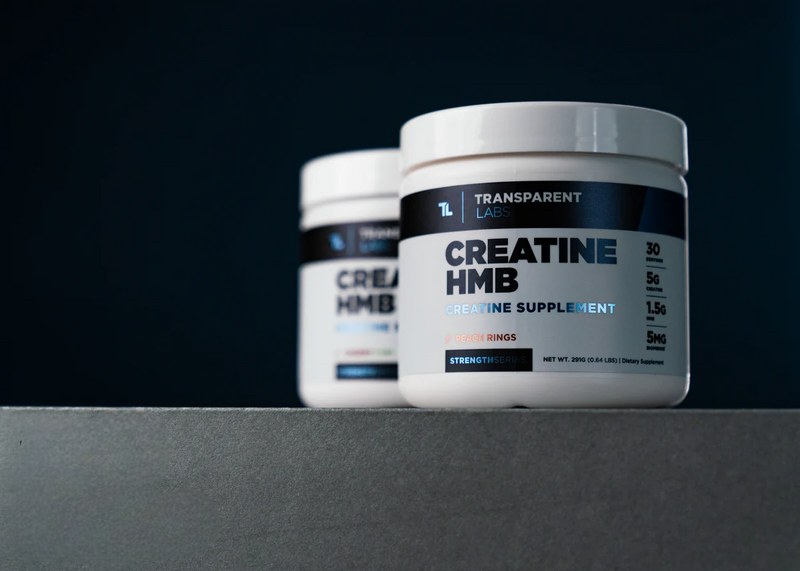
Beyond that, there are prepackaged pairings of creatine with other supplements that help to magnify creatine’s positive effects. The most effective of these is arguably the combination of creatine and HMB (Beta-Hydroxy Beta-Methylbutyrate), which combines the energy-enhancing capacity of creatine with the muscle preserving capabilities of HMB.
HMB developed its reputation in medical settings as an intervention intended to help patients maintain their muscle mass when diagnosed with conditions that often contributed to a dramatic reduction of body weight. [8] In short, the combination of creatine and HMB enables consumers to retain a larger portion of their gains as creatine helps them to grow new lean muscle tissue.
Creatine Continues
As much as the understanding of creatine’s capabilities has progressed in the nearly 200 years since its initial discovery, there’s a good chance that scientific comprehension of creatine’s potential for usefulness has merely scratched the surface. For example, more research is required to confirm the role creatine plays in preserving the health of the heart, where a lot of creatine is stored. At a minimum, creatine has proven capable of improving the heart health of chronic heart failure patients, and expanding patient capacity to tolerate exercise. [9]
In short, supplemental creatine has proven to improve the operation of nearly every piece of human anatomy that it touches, which also means it is more likely than not that there are more benefits of creatine that are waiting to be discovered.
Sources
-
Xu C, Bi S, Zhang W, Luo L. The effects of creatine supplementation on cognitive function in adults: a systematic review and meta-analysis. Front Nutr. 2024 Jul 12;11:1424972. doi: 10.3389/fnut.2024.1424972. Erratum in: Front Nutr. 2025 Feb 17;12:1570800. doi: 10.3389/fnut.2025.1570800. PMID: 39070254; PMCID: PMC11275561.
-
Allen PJ. Creatine metabolism and psychiatric disorders: Does creatine supplementation have therapeutic value? Neurosci Biobehav Rev. 2012 May;36(5):1442-62. doi: 10.1016/j.neubiorev.2012.03.005. Epub 2012 Mar 24. PMID: 22465051; PMCID: PMC3340488.
-
Ostojic SM, Stea TH, Ellery SJ, Smith-Ryan AE. Association between dietary intake of creatine and female reproductive health: Evidence from NHANES 2017-2020. Food Sci Nutr. 2024 Apr 30;12(7):4893-4898. doi: 10.1002/fsn3.4135. PMID: 39055234; PMCID: PMC11266896.
-
Muccini AM, Tran NT, de Guingand DL, Philip M, Della Gatta PA, Galinsky R, Sherman LS, Kelleher MA, Palmer KR, Berry MJ, Walker DW, Snow RJ, Ellery SJ. Creatine Metabolism in Female Reproduction, Pregnancy and Newborn Health. Nutrients. 2021 Feb 2;13(2):490. doi: 10.3390/nu13020490. PMID: 33540766; PMCID: PMC7912953.
-
Smith-Ryan AE, DelBiondo GM, Brown AF, Kleiner SM, Tran NT, Ellery SJ. Creatine in women's health: bridging the gap from menstruation through pregnancy to menopause. J Int Soc Sports Nutr. 2025 Dec;22(1):2502094. doi: 10.1080/15502783.2025.2502094. Epub 2025 May 15. PMID: 40371844; PMCID: PMC12086928.
-
Kreider RB, Jäger R, Purpura M. Bioavailability, Efficacy, Safety, and Regulatory Status of Creatine and Related Compounds: A Critical Review. Nutrients. 2022 Feb 28;14(5):1035. doi: 10.3390/nu14051035. PMID: 35268011; PMCID: PMC8912867.
-
Steenge GR, Simpson EJ, Greenhaff PL. Protein- and carbohydrate-induced augmentation of whole body creatine retention in humans. J Appl Physiol (1985). 2000 Sep;89(3):1165-71. doi: 10.1152/jappl.2000.89.3.1165. PMID: 10956365.
-
Holeček M. Beta-hydroxy-beta-methylbutyrate supplementation and skeletal muscle in healthy and muscle-wasting conditions. J Cachexia Sarcopenia Muscle. 2017 Aug;8(4):529-541. doi: 10.1002/jcsm.12208. Epub 2017 May 10. PMID: 28493406; PMCID: PMC5566641.
-
Creatine Supplementation in Heart Failure: A Systematic Review of Functional and Symptomatic Outcomes, Kamalanathan, H. et al. Heart, Lung and Circulation, Volume 34, S287
Featured Product


