


Does Pre-Workout Actually Help with Endurance Training?
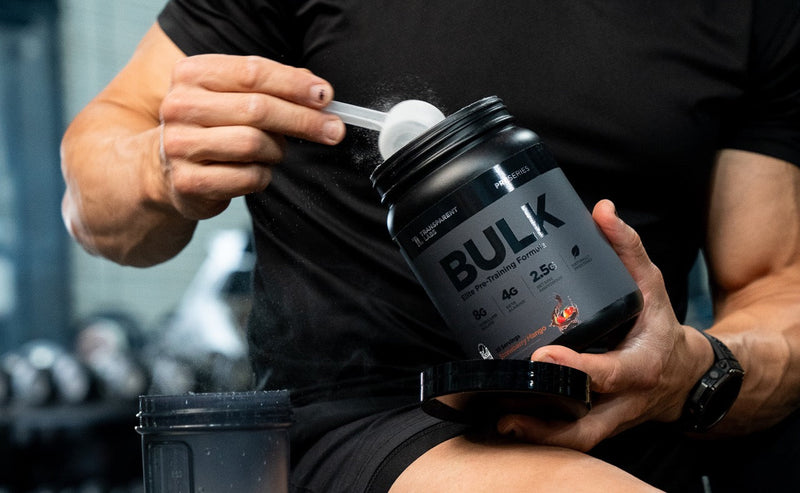
If you take pre-workout to support your resistance training workouts, you already know about how the strategic infusion of stimulants, amino acids, and other ergogenic aids into your body is able to delay fatigue and boost strength in ways that help you to move heavier weights in greater numbers of reps. You may even have noticed your body having a similar favorable response during high intensity interval training or other demanding workouts.
Now your attention has been rerouted toward endurance training, and you may be wondering if the same ingredients that make your fast-paced workouts so productive can be just as helpful when you’re engaged in exercise that is more aerobic in nature.
Well, if you’re wondering if pre-workout supplements improve endurance training, the answer to that question is “yes.” However, there are a few factors you’ll want to consider ahead of time so that you can tailor your pre-workout intake to grant you the maximum possible advantage.
The Unique Demands of Endurance Training
You may have noticed that not every athlete who specializes in power- and sprint-based training is able to maintain the impressive output they started with as their workouts grind on. This is because the forces at play within your body during endurance training are very different from those that take center stage during all-out efforts.
While sprint-based training is about maximizing the rapid generation and application of strength and power, endurance workouts require a bit more strategy with respect to managing muscle acidosis, glycogen depletion, and central fatigue. Delaying these effects and blunting their intensity goes a long way toward helping you to tolerate and extend long training sessions.

Energy systems involved (aerobic vs anaerobic crossover)
The two primary energy systems involved in endurance training are your aerobic and anaerobic systems, and their interplay is simultaneously very simple and highly complex. During an all-out effort, you will usually exhaust your anaerobic system in approximately one minute, which is the process your body utilizes to break down glucose for energy.
All the while, your body’s aerobic system will gradually increase its activity, and as your anaerobic system depletes itself, your energy production will dramatically slow down as the burden for producing nearly all of your energy shifts over to your aerobic system.
Your aerobic system uses oxygen to break down carbohydrates for energy far more slowly than your anaerobic system breaks down glucose, which means the maximum amount of power generated through aerobic activity is generally much lower than that which is created during anaerobic activity.
However, while you are operating primarily under the power of your aerobic system, it is possible for your anaerobic system to replenish itself, which can enable you to noticeably quicken your pacing — even to the point of engaging in full-blown sprints — well into your endurance training.
The role of pacing, fatigue management, and muscle pH
Muscle pH refers to the acidity or alkalinity of your muscles, which is considered to be neutral when your pH is around 7.2, or when it is leaning slightly into acidic territory. When you exercise, your muscle pH becomes more acidic, causing your muscles to feel increasingly more fatigued.
The more you engage in structured endurance training, the more efficient your body becomes at using oxygen, which delays the accumulation of lactic acid in your system. In essence, a great deal of your efficiency during endurance training is about the management of fatigue, which is accomplished through the control of muscle pH.
While some nutritional supplements can contribute to slowing or limiting the accumulation of acid and the lowering of your pH level, the inevitability of its production means that pacing plays a major role in helping you conserve energy during your endurance workouts.
In practice, this amounts to identifying a pace that is fast enough that you feel your body being challenged, but not a pace that is so rapid that you feel as if you can’t maintain it for the entirety of your workout.
Key Pre-Workout Ingredients That Support Endurance (Science Breakdown)
Nearly every popular pre-workout ingredient is able to play a valuable role in improving the efficiency of your endurance exercise. While each ingredient has a separate responsibility within your body, the net effect of these ingredients is to delay fatigue, boost energy, reduce perceived exertion, and lengthen the duration of your exercise.
Caffeine: Central fatigue resistance, dosing for steady stamina vs jitters
As the most common and trusted stimulant in the world, caffeine works by preventing adenosine from binding to the receptors in your brain, thereby reducing the extent to which you perceive fatigue. According to the International Society of Sports Nutrition (ISSN), the peak effects of caffeine supplementation are experienced when it is taken at rates of 2–3 milligrams per kilogram of body weight. (1)
Despite this recommendation, endurance athletes may prefer to ingest caffeine at a rate of 1–2 milligrams per kilogram to avoid an uncomfortable heart-rate spike, which can lead directly to a crash in energy levels that can be debilitating to your endurance training.
Beta-Alanine: CarnoSyn® research on lactate buffering for sustained output
Another common ingredient taken as a pre-workout enhancement is a trademarked form of beta-alanine known as CarnoSyn. Beta-alanine’s benefits on training are well-proven. In an endurance test of recreationally active men, beta-alanine supplementation was proven to delay the accumulation of blood lactate during extended training sessions, thereby reducing the discomfort of extended exercise. (2)
Moreover, beta-alanine was also proven to improve mean power production into the second and third efforts of multiple 30-second, high-intensity training efforts. (3) When its effects are viewed in totality, beta-alanine can be of benefit to both your anaerobic and aerobic energy systems, both of which are leaned on heavily during your endurance training.

Citrulline / NO Boosters: Improved oxygen delivery & “feel” of sustained effort
L-citrulline is a non-essential amino acid that benefits your body by naturally increasing its nitric oxide (NO) levels. This relaxes your blood vessels and improves blood flow, resulting in the optimized delivery of oxygen to your muscles during your endurance sessions, and a lessened feeling of exertion during your endurance training sessions.
In a metaanalysis of studies in which test subjects received L-citrulline prior to exercise training, the study participants who received L-citrulline felt less muscle soreness 24 and 48 hours after exercise compared to the control groups, with a notable reduction in their rate of perceived exertion. (4)
Electrolytes + Sodium: Cramp reduction, sweat-rate sustainability
Electrolyte intake is essential for the prevention of cramps during endurance exercise. This falls in line with the general function of electrolytes in maintaining optimal muscle functionality during exercise. Because electrolytes are lost during sweat, this requires hydration with electrolytes to maintain proper hydration as defined by the American College of Sports Medicine. (5)
Also, because sweat-rate increases due to the length and intensity of training, electrolyte support for endurance is necessary, and electrolytes are required to be consumed throughout endurance training to maintain your muscles functioning at a high rate. (6)
Carbohydrates (Cluster Dextrin): Fueling during longer training blocks
A fast-digesting carbohydrate source like Transparent Labs Cluster Dextrin — a form of highly-branched Cyclin Dextrin — can be used to fuel your body with a stable energy source that won’t cause your blood sugar to swing wildly during endurance training efforts. It is also easy on your digestive system, which means that you’ll be less likely to end your workout early due to gastrointestinal discomfort.
In a double blind study, test subjects who took Cyclin Dextrin had a far lower rate of perceived exertion 30 to 60 minutes into exercise than those who took maltodextrin. (7) This means supplements that include Cyclin Dextrin can be taken strategically during endurance training to make your efforts feel easier.
Therefore, the combination of electrolytes and easily digestible carbohydrates can be used to sustain your ability to produce power in the later stages of endurance training sessions, and can also be used alongside pre-workout to maximize your capacity to endure the workout in its entirety.
Endurance vs Strength Pre-Workouts — Key Formula Differences
When you’re on the lookout for a pre-workout to assist you with your endurance training, please keep in mind the formulaic differences between pre-workouts that are designed to boost endurance, and those that are better suited to enhance strength.
Pre-workouts that are intended to boost your strength and power require less consideration for how your body will be operating 30 to 60 minutes after you consume it. Because of this, many pre-workout supplements are designed to help you generate as much power as possible over a short period of time, under the presumption that the most productive period of your workout won’t need to last very long.
Things change when you transition the intent of your exercise to endurance. When this happens, an excessive amount of stimulants can work against you if they cause your heart-rate to spike, and your energy level to suddenly crash while you still have work to do.
For this reason, an endurance-focused pre-workout powder should contain lower levels of stimulants — and potentially none — along with more buffering agents to help you preserve the energy efficiency of your muscles long into your training.
In addition, the ideal pre-workout for endurance will also help you to preserve and amplify your hydration through the inclusion of electrolytes, while providing you with easily digestible carbohydrates to provide your body with a supply of stable, steady energy.

How to Use Pre-Workout for Endurance (Timing, Dosage, Stacking)
If you’ve purchased a pre-workout powder to aid your endurance training, congratulations on taking the crucial first step. Now, to get the most out of your purchase, you’ll need to ensure that you consume your pre-workout at the right time so that you can get the most out of it. Since the ingredients in your pre-workout take effect at a precise time, you’ll need to time your pre-workout intake with the beginning of your training in mind.
Running vs cycling vs hybrid training considerations
If you are preparing for a long endurance training session centered around an exercise like running, cycling, or swimming, the ideal time to take pre-workout is 45 minutes to one hour before the start of your workout. This is owed to the fact that several common ingredients in pre-workout formulas, including caffeine, L-citrulline, and easily digestible carbohydrates, take at least 30 minutes to take effect in a way that can help you.
When you engage hybrid training that combines strength training with a long endurance workout, the timing element becomes slightly trickier. In these scenarios, your entire body will probably be too exhausted from a lengthy cardio session to generate the power required for you to have an efficient resistance workout.

In this case, endurance training after your resistance session is advised because the endurance training is less dependent on the rapid generation of strength. Therefore, to capitalize on the timing of your pre-workout, you should consume it slightly before the beginning of the resistance-training segment of your workout so that it will be taking effect around the time you are set to begin the endurance portion of your exercise routine.
Pairing pre-workout with Hydrate or cluster carbs
If you’re combining your pre-workout with an electrolyte supplement like Hydrate, or a cluster carb supplement like Cluster Dextrin, you have to consider the optimal timing of each supplement. For example, while pre-workout usually takes nearly an hour to achieve a state of full effectiveness, cluster carbs often begin to work in 30 minutes, while electrolytes begin to work in as little as 15 minutes.
Taking all of this into consideration, if you are timing the beginning of your endurance workouts so that each of these supplements is fully operational when your exercise commences, you’ll want to take your pre-workout one hour in advance, your cluster carbs 30 minutes prior, and then your electrolytes just 15 minutes before your training session begins.
Safety, Tolerance, and Cycling Considerations
Pre-workout supplements have been proven to boost the exercise quality of many people. With this being said, even when pre-workout is consumed as recommended, there can be undesirable side-effects to its use.
This is especially true in the case of pre-workout powders with large amounts of caffeine. Therefore, there are a few things you’ll need to consider in determining what type of pre-workout to use, and how long you intend to take it without a break.
Signs of over-reliance
There are several signs that you may be becoming overreliant on pre-workout. One of the most obvious signs is a plateauing of your progress, which is an indication that your body now requires pre-workout simply to produce a normal effort. In these situations, you may find yourself increasing the amount of pre-workout required to produce the same effect, which is not advised.
Even more troubling is when your performance seems to be declining after reaching a peak, which could be an indication that the use of pre-workout is preventing your body from achieving the adequate state of rest and recovery that is required to repair your muscles and prepare them for future efforts.
Finally, you may find yourself beset by the belief that a pre-workout supplement is necessary before you initiate exercise of any kind. In this case, you have made yourself psychologically reliant on pre-workout to even engage in training, which is an unhealthy mindset to adopt.
To reduce the likelihood of becoming overreliant of a pre-workout supplement containing caffeine, you should consider cycling off of pre-workout for one to two weeks at a time after every four to eight weeks of use.
When to reduce caffeine or stim-load
Caffeine is a highly effective stimulant that can absolutely energize your workout when taken as advised. All the same, there are a number of downsides linked to the intake of caffeine, some of which vary based on individual sensitivity. One of the most obvious negative consequences of consuming large quantities of caffeine is a feeling of anxiety or jitteriness.
Equally as common, if not more so, is declining sleep length, or diminished sleep quality, as a result of regular caffeine consumption. While this is often the result of taking caffeine late in the afternoon or evening, since caffeine can remain in your body up to nine hours after it is consumed, it can be a symptom that persists due to individual sensitivity to caffeine.
Under these circumstances, if you find that you are unable to adjust your training time to achieve more sleep, or that changing your training time does little to solve the problem, it is suggested that you transition to a low-stim or stim-free pre-workout option to avoid the setbacks associated with high caffeine intake.
Bottom Line: When Pre-Workout Makes Sense for Endurance Athletes
Most endurance athletes will enjoy clear and obvious benefits from taking a pre-workout supplement, provided that the pre-workout they’re taking is tailored to address the necessities of endurance workouts.
Remember, pre-workout can boost all of the operable energy systems of endurance training while delaying muscle fatigue and reducing the perceived rate of exertion. That means it can be a valuable resource for endurance athletes who are looking to maximize the value they receive from their training time, as long as they use is strategically, and carefully.
Sources:
-
Guest NS, VanDusseldorp TA, Nelson MT, Grgic J, Schoenfeld BJ, Jenkins NDM, Arent SM, Antonio J, Stout JR, Trexler ET, Smith-Ryan AE, Goldstein ER, Kalman DS, Campbell BI. International society of sports nutrition position stand: caffeine and exercise performance. J Int Soc Sports Nutr. 2021 Jan 2;18(1):1. doi: 10.1186/s12970-020-00383-4. PMID: 33388079; PMCID: PMC7777221.
-
Jordan T, Lukaszuk J, Misic M, Umoren J. Effect of beta-alanine supplementation on the onset of blood lactate accumulation (OBLA) during treadmill running: Pre/post 2 treatment experimental design. J Int Soc Sports Nutr. 2010 May 19;7:20. doi: 10.1186/1550-2783-7-20. PMID: 20482881; PMCID: PMC2887393.
-
Tobias G, Benatti FB, de Salles Painelli V, Roschel H, Gualano B, Sale C, Harris RC, Lancha AH Jr, Artioli GG. Additive effects of beta-alanine and sodium bicarbonate on upper-body intermittent performance. Amino Acids. 2013 Aug;45(2):309-17. doi: 10.1007/s00726-013-1495-z. Epub 2013 Apr 18. PMID: 23595205; PMCID: PMC3714561.
-
Rhim HC, Kim SJ, Park J, Jang KM. Effect of citrulline on post-exercise rating of perceived exertion, muscle soreness, and blood lactate levels: A systematic review and meta-analysis. J Sport Health Sci. 2020 Dec;9(6):553-561. doi: 10.1016/j.jshs.2020.02.003. Epub 2020 Feb 8. PMID: 33308806; PMCID: PMC7749242.
-
American College of Sports Medicine; Sawka MN, Burke LM, Eichner ER, Maughan RJ, Montain SJ, Stachenfeld NS. American College of Sports Medicine position stand. Exercise and fluid replacement. Med Sci Sports Exerc. 2007 Feb;39(2):377-90. doi: 10.1249/mss.0b013e31802ca597. PMID: 17277604.
-
Baker LB, De Chavez PJD, Ungaro CT, Sopeña BC, Nuccio RP, Reimel AJ, Barnes KA. Exercise intensity effects on total sweat electrolyte losses and regional vs. whole-body sweat [Na+], [Cl-], and [K+]. Eur J Appl Physiol. 2019 Feb;119(2):361-375. doi: 10.1007/s00421-018-4048-z. Epub 2018 Dec 6. PMID: 30523403; PMCID: PMC6373370.
-
Furuyashiki T, Tanimoto H, Yokoyama Y, Kitaura Y, Kuriki T, Shimomura Y. Effects of ingesting highly branched cyclic dextrin during endurance exercise on rating of perceived exertion and blood components associated with energy metabolism. Biosci Biotechnol Biochem. 2014;78(12):2117-9. doi: 10.1080/09168451.2014.943654. Epub 2014 Jul 31. PMID: 25080121.
Featured Product


