What Clean Label Means in the Pre-Workout World
There are many fitness supplements that make claims about their cleanliness, but third-party tests of these companies’ claims have found that they often leave much to be desired. For starters, without a clear definition of what “clean” means in a supplement context, a claim of cleanliness is absolutely meaningless.
Of all supplement types, pre-workout powders are perhaps the most in need of definitional clarity when it comes to their cleanliness because of the multitude of ingredients that go into them. That raises logical questions. For instance, is there even such a thing as a clean-label pre-workout powder? If so, has the process of making it “clean” somehow stripped it of its effectiveness?
What “Clean Label” Actually Means
Because no one else would step forward and provide a rational definition for what a clean label on a fitness supplement actually means, Transparent Labs took the initiative for this task, and also made it an essential part of its business practices to abide by the standards imposed by that definition. As such, we established standards for clean-label supplements that may seem challenging to abide by, but they are respectful to the desires of our customers, and also to their bodies.
Clear, readable ingredient lists
The ingredient lists of fitness products can be messy in several ways. Behind vague terms or complex names, the lists can mask what’s truly included in the supplements, and trick unsuspecting customers into putting ingredients in their bodies that they would otherwise prefer not to if they had clear, unambiguous information.
No proprietary blends
The term “proprietary blend” makes it sound like a supplement company is protecting a carefully crafted, top-secret blend of secret ingredients that it wants to keep out of the hands of its competitors. In reality, these blends often conceal the fact that the ingredients present in the supplement are not included at the levels that are necessary for the supplement to be of any real benefit to you.
Tested for purity and contaminants
An absolutely staggering number of fitness supplements contain heavy metals like lead, or other potentially toxic substances that are unaccounted for on labels, and are plainly harmful to your body. Of course, because these contaminants are not intended to be added or consumed, they are also not listed on the labels with the other ingredients. This is why you want your supplements to carry one or more certifications indicating that it has been tested for purity, and is free of contaminants.
How Budget vs. Premium Pre-Workouts Differ
The price difference between premium and non-premium pre-workouts may only be a few dollars, but the difference in their cleanliness, effectiveness, and caliber of functional ingredients may be enormous. This is because the practice of prioritizing cheapness in creating the pre-workout is often reflected in the value of what goes into your body, and also in the way your body ultimately responds to it.

Ingredient Sourcing (cheap synthetic vs higher-purity ingredients)
Premium pre-workouts — like other supplements — are made with ingredients that are of higher quality and higher purity, and are more likely to be natural. This means your body is more likely to respond favorably to them, with fewer side effects than you would expect from cheap, synthetic ingredients.
Dosing Levels (label dressing vs clinical effectiveness)
The question of dosing levels is a critical one when it comes to differentiating between effective and ineffective pre-workouts, as it is with many other supplements. Due to dosing-level differences, two pre-workouts may appear to be superficially the same because they technically contain many of the same ingredients. However, the low-budget protein powder is probably engaging in “label dressing” — including active ingredients on the list in far lower quantities than necessary to obtain the desired physiological outcome in your body.
Flavors, sweeteners, and fillers (why some blends cost less to make)
In place of effective ingredients, many pre-workout brands fill their products with additional flavors and sweeteners — many of which are artificial — along with fillers that contribute nothing positive to your workout, or your digestive system.
By filling these pre-workouts with non-effective ingredients, or overloading them with cheap stimulants beyond what is actually useful, many supplement-makers are able to blend and sell pre-workouts that are relatively inexpensive, but they may also be far less helpful than products that have benefitted from premium engineering.
The Problem With Proprietary Blends
Understanding proprietary blends is important, because underdosing is a major problem when it comes to the hidden inadequacies of pre-workout powders, and one of the ways in which underdosing is masked is by obscuring the active ingredients within an impenetrable proprietary blend with a fancy name.
By revealing the ingredients contained within the proprietary blend without disclosing the quantities or ratios of the included ingredients, many of these supplement-makers effectively engage in the practice of “fairy dusting.” This is when they sprinkle in enough of the desired ingredient that it qualifies for inclusion on the label, but not enough of it that it contributes significantly to your training.
For this reason, label transparency matters more than price, because a difference of $5 to $10 on a pre-workout powder may be the difference between a product that is completely effective, and a product that is far less valuable where it counts. In this case, the true value of some low-budget pre-workout powders may be closer to $0 if they are incapable of functioning as assumed or advertised.
The Role of Clinical Dosing in Performance
Pre-workouts can contain a seemingly endless list of ingredients, but these ingredients may be nothing other than a name on a label if they aren’t present in qualities that result in tangible improvements to your training. In order to help you identify the pre-workouts that can actually perform as advertised, here is a breakdown of common pre-workout ingredients along with the clinical doses needed to boost your productivity.
Citrulline: 6–8g
The primary benefit of the non-essential amino acid citrulline is found in its ability to improve blood flow by relaxing blood vessels. This helps to improve the efficiency of oxygen flow into your muscles while you train. This has the effect of increasing the time it takes for your muscles to become fatigued, enabling you to train longer and harder.
In one study, resistance-trained athletes who consumed 8 grams of citrulline outperformed the placebo group in five consecutive sets of lower body strength exercises that were performed with 60 percent of each subject’s one-rep maximum. (1)
In order for your pre-workout to help you achieve this benefit from citrulline, it will need to supply you with at least 6-8 grams of it in each dose. If your pre-workout supplies you with a lower dose of citrulline than this, it’s unlikely that it can help you as desired.
Beta-alanine: 3.2–6.4g/day
Another non-essential amino acid, beta-alanine works to slow the accumulation of lactic acid in your body, which is a very useful tool for delaying the feeling of fatigue that builds up throughout your workouts. Beta-alanine’s minimum effective dose has been verified at 3.2 to 6.4 grams, which means your pre-workout will be unable to confer this benefit to you if the beta-alanine content doesn’t reach these levels.
In a study of recreational cyclists who consumed 6.4 grams of beta-alanine per day for four weeks and then completed four cycling capacity tests at 110 percent of power max, the cyclists who received supplemental beta-alanine enjoyed a longer time to exhaustion across all tested markers. (2)
Caffeine: 200–350mg depending on tolerance
Not everyone can handle a pre-workout powder that includes stimulants, and this is because not everyone has the same tolerance for caffeine. When it comes to caffeine’s ability to improve your workout beyond nudging you into a state of greater mental alertness, the required dose is in the 200 to 350 milligram range depending on both your weight and tolerance.
This is a lot of caffeine for some people, and it’s important to be aware of just how much caffeine is necessary to achieve the boosted outcome. If ou’re not acquiring a high-enough level of caffeine from your pre-workout powder, then you may be ingesting just enough caffeine to make yourself jittery without any of the training benefits.
Officially, the International Society of Sports Nutrition (ISSN) position on caffeine is that caffeine has consistently been shown to improve exercise performance when consumed in doses of 3–6 mg/kg body mass. (3) These include improvements to “muscular endurance, movement velocity and muscular strength, sprinting, jumping, and throwing performance, as well as a wide range of aerobic and anaerobic sport-specific actions.”
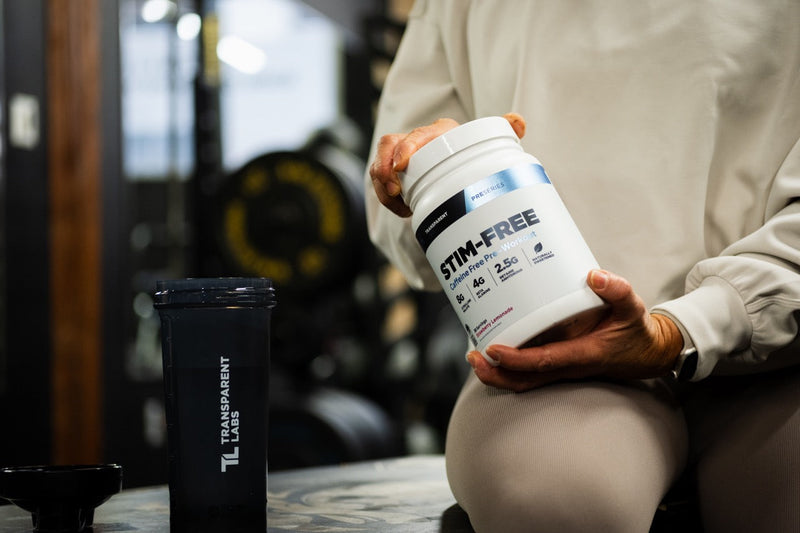
If you find that you’re sensitive to caffeine or suffering from negative side effects from consuming it in large quantities, you are advised to switch to a stimulant-free option for late-night training.

Creatine (if included): 3–5g/day
Your preferred time to consume creatine may not be right before your workout, but if it is, and it happens to be included in your pre-workout powder, your body needs a dose of creatine that is between 3 to 5 grams if you want it to actually play a role in improving strength and aiding muscle recovery.
According to the ISSN, creatine is one of the most tested supplements in history, and when consumed in the recommended doses, it is “the most effective ergogenic nutritional supplement currently available to athletes in terms of increasing high-intensity exercise capacity and lean body mass during training.” (4)
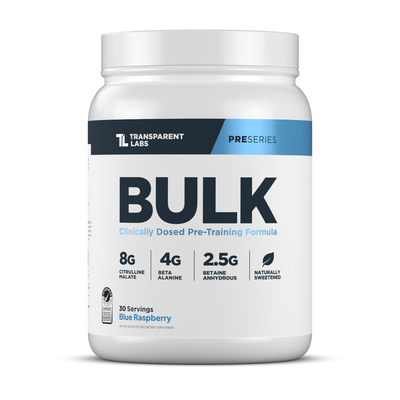
Once you’ve seen an example of a clinically dosed formula on a real product label, you’ll be able to see the distinction between that and a proprietary blend that conceals a fairy dusting strategy.
Testing, Certification, and Manufacturing Standards
The reason that evidence of product testing and third-party certifications matters is because without them you have no proof that the ingredients contained within your supplements are everything they claim to be. In addition, different supplement companies apply different standards of cleanliness to the creation of their products, and this is often reflected in the credentials and oversight of the manufacturers they choose to use.
Because most manufacturers produce several products for a variety of customers and brands, these facilities may handle hundreds of different ingredients. Without strict supervision and standards, it is very easy for unintended substances to leak into fitness supplements, resulting in the ingestion of ingredients that are totally unaccounted for.
Organizations like NSF and Informed Choice, along with supplement testing programs like the Clean Label Project that test for heavy metals, provide confirmation that the ingredients that are promoted on the labels of supplements are present in their listed quantities, and that the products are clean of contaminants and toxic materials. Moreover, NSF and Informed Choice also provide certifications for product labels so that you can know at a glance that the supplement you’re holding was produced safely and honestly.
How to Read a Pre-Workout Label (Practical Buyer Checklist)
Need a little help reading a pre-workout label to determine how clean it is? No problem. Here’s a quick checklist to help you identify whether or not your pre-workout is clean enough to live up to your standards.
✔ No artificial sweeteners
✔ No artificial colors or fillers
✔ Natural ingredients
✔ 100% label transparency
✔ No proprietary blends
✔ Clinically-relevant dosing
✔ Third-party lab tested
✔ Screened for banned substances (Informed Choice)
When a Budget Formula Is Good Enough — And When It Isn’t
Whether or not a budget pre-workout formula is good enough for you depends on your personal preferences and tolerances for certain things, and what your fundamental demands of a pre-workout powder are.
For instance, if you don’t mind a heavy-stim pre-workout powder, and you can tolerate a large quantity of caffeine, your only priority may be a caffeine dose capable of boosting your strength during training.
On the other hand, if you’re looking for a quality blend of pre-workout ingredients that collectively stimulate your muscles, strategically boost your blood flow, reduce fatigue, lower lactic acid production, and offset potential jitters, you won’t want to compromise on your ingredients.
Closing Guidance
At its core, your ability to evaluable the cleanliness of a pre-workout product label is about your knowledge of the ingredients that should be there, including what quantities of those ingredients should be present, along with what shouldn’t be there. If you establish your expectations for a pre-workout supplement up-front before you consider which product to purchase, you’ll be able to make the decision that is best for the effectiveness of your workout, and also best for your long-term health.
Sources
-
Wax B, Kavazis AN, Weldon K, Sperlak J. Effects of supplemental citrulline malate ingestion during repeated bouts of lower-body exercise in advanced weightlifters. J Strength Cond Res. 2015 Mar;29(3):786-92. doi: 10.1519/JSC.0000000000000670. PMID: 25226311.
-
Sale C, Saunders B, Hudson S, Wise JA, Harris RC, Sunderland CD. Effect of β-alanine plus sodium bicarbonate on high-intensity cycling capacity. Med Sci Sports Exerc. 2011 Oct;43(10):1972-8. doi: 10.1249/MSS.0b013e3182188501. PMID: 21407127.
-
Guest NS, VanDusseldorp TA, Nelson MT, Grgic J, Schoenfeld BJ, Jenkins NDM, Arent SM, Antonio J, Stout JR, Trexler ET, Smith-Ryan AE, Goldstein ER, Kalman DS, Campbell BI. International society of sports nutrition position stand: caffeine and exercise performance. J Int Soc Sports Nutr. 2021 Jan 2;18(1):1. doi: 10.1186/s12970-020-00383-4. PMID: 33388079; PMCID: PMC7777221.
-
Buford TW, Kreider RB, Stout JR, Greenwood M, Campbell B, Spano M, Ziegenfuss T, Lopez H, Landis J, Antonio J. International Society of Sports Nutrition position stand: creatine supplementation and exercise. J Int Soc Sports Nutr. 2007 Aug 30;4:6. doi: 10.1186/1550-2783-4-6. PMID: 17908288; PMCID: PMC2048496.
Featured Product