


Why Nike’s “Illegal” Running Shoes Were Banned
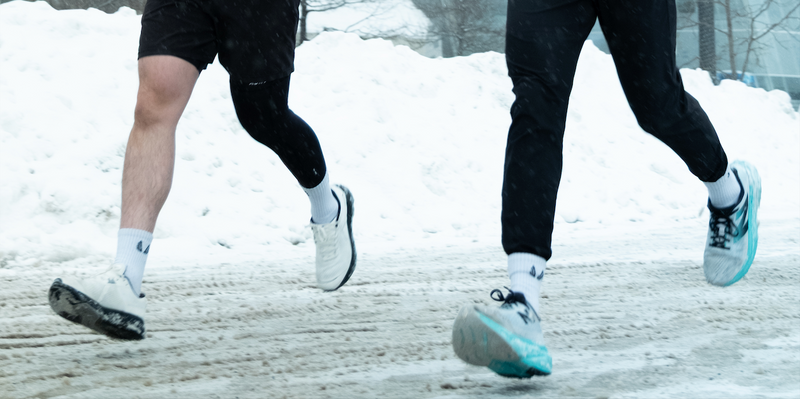
If there’s one lesson that Nike learned from the early sales of Air Jordans, it’s that controversy creates cash. When the introductory line of the famous brand that became synonymous with all-time basketball legend Michael Jordan made its debut, it was banned from the league at first, only to have the ban lifted in favor of a per-game fine of $5,000 that Nike gladly opted to pay.

Photo Credit: Wired
The reasoning behind the initial ban and subsequent fines was harmless enough; Air Jordan basketball shoes violated the NBA’s mandate on sneakers being specific colors in accordance with the teams’ uniforms. The implication that Nike masterfully exploited was the notion that the ban was owed to the perception of an unfair advantage that the shoes afforded the company spokesman — a skywalking rookie averaging nearly 30 points per game on better than 50 percent shooting from the field.
While the technical advantage the Air Jordan provided basketball players in 1984 was almost entirely imaginary, footwear innovation had progressed to such an extent that the conferred advantages became obvious and measurable. Such was the case with the Nike AlphaFLY Next% and its brethren.
Why were the Nike AlphaFLY and its offspring banned from running?
The short answer to the question “Why was the Nike AlphaFLY banned?” is because Eliod Kipchoge ran a marathon in under two hours on October 12, 2019. At the time, he was wearing a customized prototype called the Nike AlphaFLY NEXT%, and he crossed the finish line of the personal challenge event — in which he was the only participant — in an astonishing 1:59:40.
Kipchoge was already the official world record holder in the marathon, having covered the 26.2-mile distance in 2:01:39 during the 2018 Berlin Marathon. In the process of completing that legitimate race, he had shattered the prior four-year-old record by nearly a full minute and 20 seconds.
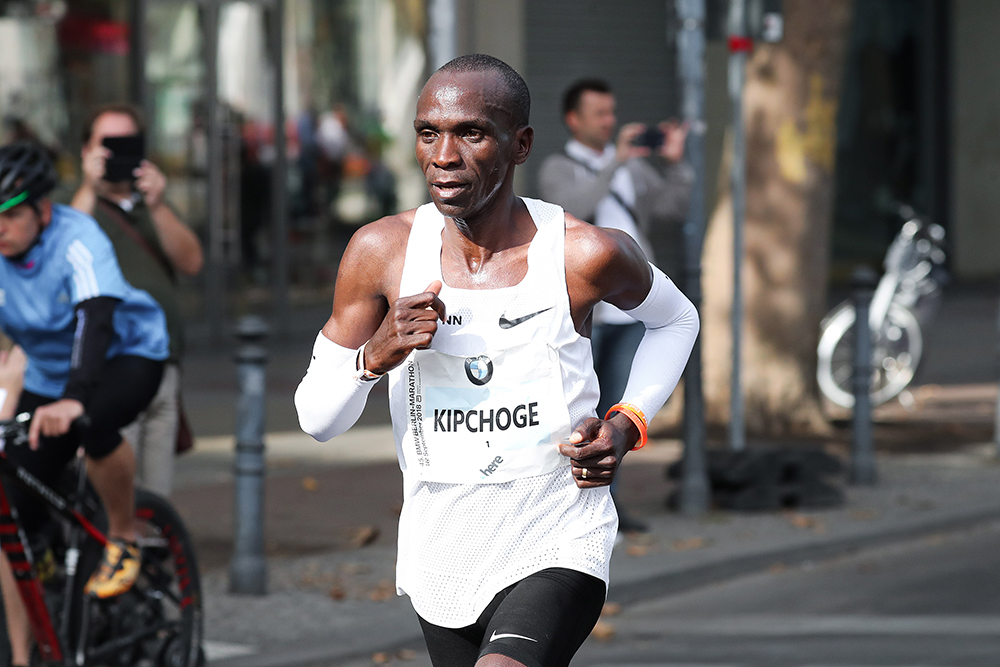
Photo Credit: Victor Sailer/Photo Run
Even if Kipchoge’s 2019 event was largely a publicity stunt staged by Nike, the fact that a human being could legitimately run a marathon and surpass his own mark by a further two minutes — a record many pundits already considered to be unbreakable — was astonishing.
A previously released version of the shoe — the Nike Vaporfly Next% — was worn the following day by all of the top-10 finishers of the Chicago Marathon, and this was a shoe that Nike said granted runners a four-percent increase in running efficiency and at least three-percent increase in speed.
The idea that the sustained surge in Kipchoge’s marathon pace could be attributed to an improved version of a shoe that already conferred a seemingly unfair advantage to its wearers was all it took to get World Athletics to scrutinize the shoe’s construction.
What made the shoes illegal?
The Nike AlphaFLY model worn by Kipchoge — in the words of Postmedia Network syndicated sports feature writer Dan Barnes — was “rumored to have three carbon plates and a heel stack of 50 mm,” which presumably administered a stronger rebound to the feet of their elite wearer. World Athletics quickly moved to set rules limiting the number of carbon-fiber plates that can be hidden beneath a shoe’s sole to only one, while also limiting the thickness of a running shoe’s midsole to only 40 millimeters.
As a result, the Nike Vaporfly, which was worn by 31 of the 36 athletes who took podium positions at major marathons in 2019, was banned, and subsequent models were forced to abide by the limitations set forth by World Athletics.
For what it’s worth, Kipchoge did manage to better his marathon world record by a further 30 seconds on September 25th, 2022 in Berlin, but to date, no marathon runner has ever broken the two-hour barrier in a legitimate competition.
What does this mean to you?
What this story indicates is how every element of your preparation can influence your athletic performance, right down to the shoes and other attire you choose to wear. If a choice of shoes can have such a profound influence on the performances of elite athletes, then it’s also possible that what you wear could at least be influencing your comfort level during your training, which can subsequently affect your motivation.
At the same time, if what you’re wearing can influence the quality of your exercise so dramatically, just imagine how much of a role your nutrition and recovery can play in enhancing or impairing your physical performance. The benefit of apparel is only the icing on a brilliantly baked cake when it comes to preparing your body to operate at an optimal level, so make sure that you’re making the best of every opportunity to fuel your body properly before you insist that “It’s gotta be the shoes.”
Takeaways
-
Eliod Kipchoge ran a marathon in under two hours while wearing shoes rumored to contain several carbon plates and a 50mm midsole.
-
World Athletics passed a resolution that banned shoes with a midsole thicker than 40mm or containing multiple carbon plates, which did result in the banning and remodeling of the Nike Vaporfly running shoe.
-
Since that time, no runner has completed a marathon in under two hours under ordinary racing conditions.
-
While shoes can have a tangible result on your athletic performance, and should be purchased to ease training discomfort, their effects are minor in comparison to the advantages that can be gained by improving the functionality of your body.
Featured Product


