


How to Choose a Pre-Workout If You’re Sensitive to Stimulants
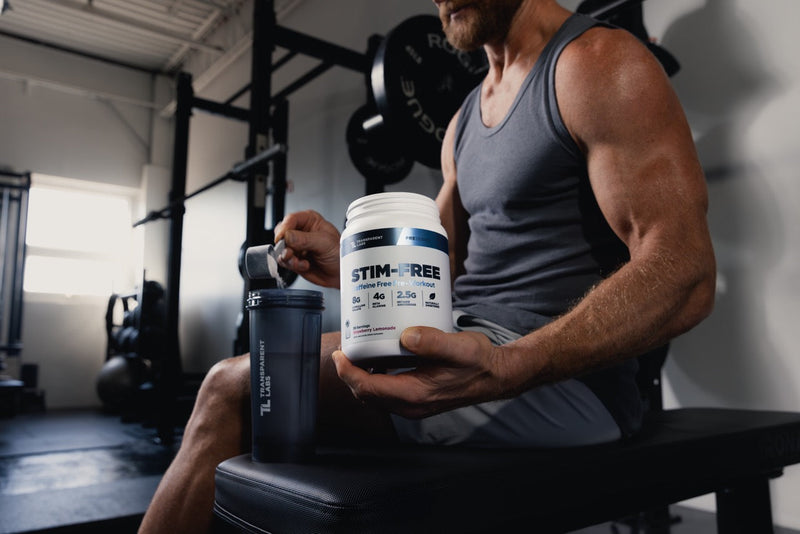
The classic form taken by pre-workout supplements is one that comes with a high quantity of stimulants — usually in the form of caffeine — that are included due to their capacity to boost your strength, endurance, focus, and fat-burning potential
The downside to consuming large amounts of stimulants can be far-reaching, even if you don’t have a specific sensitivity to them. However, if you do happen to be noticeably sensitive to stimulants, the question will persist as to whether or not you can even take a pre-workout supplement in the first place.
So that’s the best place to start: If you are sensitive to stimulants, what is the best way to go about choosing a pre-workout? In fact, can you even use pre-workout?
Quick Answer — Yes, You Can Use Pre-Workout (Here’s How)
No matter what the alarmists say, there’s no reason for you to be discouraged or misled into believing that you’re not permitted to take a pre-workout under any circumstances. The fact is, there are now several different types of pre-workout formulas that you can take, at least one of which is probably perfect for your body, and that will align well with your preferred training style.
Awaiting you in the modern fitness supplement aisles are pre-workout formulas that are low-stim, stim-free, or pump-only in their creation and intent. In practice, this enables you to choose a formula that will gel with both your goals and your personal tolerance for stimulants.

What It Means to Be Sensitive to Stimulants
Sensitivity to stimulants can manifest itself in many disruptive ways throughout the day, and all of them create a net result of discomfort and a level of life quality that is unnecessarily low.
Common signs of stimulant sensitivity include jitters, racing heart, anxiety, nausea, energy crashes, and sleep disruption. These symptoms are surely problematic, interfering with your ability to focus on work during the day, making your workout sessions less productive, and also stripping away hours of restfulness that your body sorely needs for adequate repair and recovery.
When you hear about stimulant sensitivity, you should avoid the misconception that sensitivity is a one-size-fits-all proposition. Individual sensitivity to the stimulants in pre-workout supplements varies widely, and is based on a number of factors. These include body size, genetics, developed tolerance, timing of consumption, and the presence of other stimulants in your body.
Key Ingredients to Watch on a Pre-Workout Label
If you’re reviewing your pre-workout’s label for stimulants, they shouldn’t be too hard to find. Most pre-workout supplements rely on the same tried-and-true ingredients, and that rings especially true of the stimulants included in those formulas.
Alongside those stimulants, there are also other ingredients that increase the potency of the stimulants, and those should be acknowledged and factored into the potency of your pre-workout as well.
Caffeine (Dose Ranges and Red Flags)
Caffeine is a very interesting stimulant, in as much as it confers obvious benefits to its users at most serving levels, but it needs to be consumed in rather large and precise quantities to unlock the peak benefits associated with workout productivity.
The range of caffeine consumption required for achieving these benefits has been identified to be 3-6 mg per kilogram of body weight, and is prescribed as such by the International Society of Sports Nutrition. (1)
This means that even a very light person who weighs just over 100 pounds would need to consume a little under 140 mg of caffeine to achieve the required level of stimulation to produce these effects, while a 200 pound person would require about 270 mg of caffeine to achieve the same result.
There’s no question that this is a lot of caffeine, but it is also important to acknowledge how much caffeine is truly required for you to achieve your goals. For example, if you simply desire a small amount of caffeine for some additional focus and alertness, this can be achieved through a much smaller dose in a low-stim pre-workout formula.
It’s also essential that you consider how much caffeine is already in your body at the time you consume caffeine in the form of pre-workout powder. The half-life of caffeine in most people’s bodies is three to six hours, which means that your caffeine remains active in your body for quite some time after it is consumed.
Hypothetically, if you were to consume a cup of coffee containing 120 mg of caffeine early in the morning, and then you arrived at the gym just two hours later, most of that caffeine will still be highly active in your body at the moment you drink your pre-workout supplement, which could lead to one or more the negative consequences linked to caffeine sensitivity.
“Hidden” or Strong Stimulants
Pre-workout stimulants other than caffeine may be hiding behind names that you're far less likely to recognize, but the fact that they’re hiding in plain sight doesn’t mean that they aren’t potent.
Yohimbine
Originally designed to treat erectile dysfunction, yohimbine is an alkaloid that is extracted from the bark of a tree, and it has shown the ability to promote the expression of norepinephrine, which is a hormone released by your body during stressful scenarios. This can result in a sudden escalation of blood pressure, along with elevated focus and alertness.
While yohimbine requires further study, its results thus far indicate that it may have some value in its ability to produce fat loss (2), but the fact that it seems to achieve its results by essentially coaxing a fight-or-flight stress response out of the body is concerning.
Synephrine
Another popular alternative stimulant is synephrine, which is yet another plant-derived alkaloid, and it has demonstrated the capacity to increase the rate of fat oxidation during exercise at the expense of carbohydrate oxidation. (3)
However, supplements containing synephrine have been called out for their potential to produce irregular heart rates, especially when synephrine is combined with other stimulants. It is also important to note that synephrine is currently on the list of supplements banned by the National Collegiate Athletic Association.
Non-Stimulant Performance Ingredients (Pump, Focus, Endurance)
While many pre-workout formulas are packed with stimulants, it is rather easy to get many of the most consequential performance benefits from pre-workouts — or from other supplements consumed prior to training — even if they contain no stimulants whatsoever.

This is because many non-stimulant ingredients consist of amino acids and other ordinary food compounds that are highly beneficial to your body, and that usually go unaccounted for when consumed in non-supplemental quantities. Yet, when they’re isolated and administered in clinically-dosed volumes, they are usually very helpful, and rarely produce any side effects.
L-citrulline
A non-essential amino acid, L-citrulline increases your body’s production of nitric oxide, which increases blood flow and expedites the flow of oxygen and nutrients to the muscles that need them. This increase in blood flow has been proven to improve resistance training output in several studies.
In just one study, the number of bench-press repetitions that resistance-trained males were able to complete to failure increased by more than 50 percent following l-citrulline consumption prior to training. (4) In the same study, subjects who consumed l-citrulline reported 40 percent less muscle soreness in the days following its consumption.
Beta-alanine
Another non-essential amino acid is beta-alanine, which helps to slow the production of lactic acid during exercise, thereby lowering fatigue felt during exercise, and then reducing the progression of the burning sensation that often accompanies hard training. This makes beta-alanine highly beneficial as a pre-workout ingredient, particularly during extended bouts of fast-paced movement.
A meta-analysis of studies involving supplementation with beta-alanine confirmed that beta-alanine was able to extend the duration and quality of exercise rounds lasting longer than 60 seconds and less than 240 seconds, with a median improvement of nearly three percent. (5)
Electrolytes
When it comes to keeping your body functioning during extended bouts of exercise, and especially during aerobic activity, electrolytes are absolutely crucial. This is because they are required for your body to remain adequately hydrated during training, in addition to the fact that they are responsible for the optimal delivery of signals from your brain to your muscles.
The International Society of Sports Nutrition’s stand on nutrition timing includes guidance stating that electrolytes are essential for optimal muscle functioning in workouts lasting longer than 60 minutes. It is advised that a beverage containing electrolytes should be consumed every 10-15 minutes throughout the entirety of such workouts, especially if they are going to extend beyond 70 minutes. (6)
Nootropics
Nootropics are commonly found in compounds that support focus, memory, and mental clarity. The definition of a nootropic can extend to anything from a prescription medicine to supplements like caffeine or creatine when consumed for the purpose of cognitive enhancement.
However, where you are most likely to encounter nootropics in the form of herbs like ashwagandha and ginkgo biloba, which have been demonstrated to potentially have benefits on markers of physical performance in addition to their capacity to assist with focus.
In two separate studies ashwagandha showed the potential to elevate VO2 max in healthy adults and athletes (7), while also displaying the ability to boost the average squat power and peak bench press power in recreationally active men. (8)
A study of ginkgo biloba supplementation showed that consuming 160 mg per day of ginkgo biloba resulted in physically active men experiencing marginal improvements in their endurance performance expressed as VO2max and blood antioxidant capacity. (9)
Cyclin Dextrin (Carbs)
Carbohydrates often receive a bad rap in fitness circles because of the rate at which abundant sources of carbohydrates — especially simple carbs like sugar — can be rapidly converted into body fat. This is a serious matter of painting with too broad of a brush; carbohydrates are essential for the replenishment of muscle glycogen, which is your body’s immediate source of stand-by energy.
Moreover, complex carbohydrates are a reliable source of sustained energy. Preemptively consuming a carbohydrate source like cluster dextrin that breaks down easily can provide you with a source of sustained, natural, food-derived energy that can keep you energized throughout your workouts.
Cluster dextrin was proven in one study to significantly reduce the rate of perceived exertion of test subjects during endurance exercise in comparison to maltodextrin, another carbohydrate consumed for its easy digestibility and energy potential during training. (10)
Choosing Between Low-Stim vs Stim-Free vs Pump-Only
If you know that you’re sensitive to stimulants, but you’re not entirely sure where that should lead you in your search for an alternative pre-workout supplement, here is a simple comparison to help you find the ideal pre-workout for caffeine-sensitive trainees like yourself, or someone you know.
The first step down from a fully-loaded pre-workout is a lean, low-stim pre-workout. This form of pre-workout contains a caffeine dose that is significantly smaller than that of most pre-workouts, with none of the additional stimulants that may be harder to account for in the aftermath of consumption.
A stim-free pre-workout is exactly what it sounds like; the concoction contains no caffeine whatsoever, and certainly none of the less-regulated stimulants. Furthermore, all of the stimulating effects, including enhancements to focus, alertness, blood flow, and a superior “pump,” are achieved through other healthy ingredients.

Finally, stimulant-free pump-only pre-workout stacks usually contain ingredients like citrulline, nitrates, and electrolytes that help your body achieve the superior blood flow and hydration necessary to achieve the feeling of muscle fullness during resistance training. However, the ingredients in these stacks contribute little to feelings of mental alertness.
If you train early in the morning and you can tolerate some level of caffeine, a low-stim pre-workout might be the right fit for your schedule, because you gain some of the advantages of caffeine while also giving the caffeine enough time to exit your system before you settle down to sleep.
Once your training schedule shifts closer to the evening, it is advisable for you to opt for either a no-stim or pump-only pre-workout formula, because this will negate any possibility that caffeine can interfere with your sleep schedule.
Regardless of the potential for sleep disruption, if your general temperament can be classified as anxiety-prone, or if you are often under a great deal of stress, either at home or at work, your best bet is probably to avoid any pre-workout formulas with caffeine.
How to Test Your Tolerance Safely
If you’re not sure of exactly what your tolerance level is to pre-workouts with stimulants, there are a few ways that you can test your threshold for stimulants without placing your safety at risk.
During your first workout with a high-stim pre-workout — or even with a low-stim pre-workout — it might be wise for you to consume only half of the recommended dose of pre-workout so that you can monitor your body’s response to it. If your body tolerates the half dose well, you can then proceed with a full dose and then reassess your situation.
Also, if you’re going to take any form of pre-workout with stimulants, you should avoid any sort of stacking, whether intentionally or inadvertently, with coffee, energy drinks, or other high-caffeine concoctions.
Finally, if you’re about to participate in an important event requiring an all-out effort, like a powerlifting competition, a 5K run, or a masters swimming meet, then you probably shouldn’t use that as an opportunity to start experimenting with pre-workouts you’re unfamiliar with. This is because you don’t know how your body is going to respond to the new formulation.
In all cases, you should factor in how long it takes pre-workout to kick in, since every ingredient may have a different length of time it is required to be present in your body before it takes effect. Under most circumstances, pre-workout ingredients will be active in your body approximately one hour after they are consumed.
Practical Checklist for Buying a Pre-Workout If You’re Stim-Sensitive
Are you trying to decide whether you’d be better served by a low-stim or stimulant-free pre-workout? Here is a helpful checklist that can walk you through the process of determining which pre-workout option is the best for you.
- Do I feel anxious or jittery after consuming 100 mg of caffeine or more?
- Does this pre-workout contain any stimulants other than caffeine?
- Does my pre-workout have proprietary blends that might hide harmful ingredients?
- Is my pre-workout third-party tested to ensure its safety?
- Does my pre-workout have a transparent label that plainly shows all of the information that is important to me?
Transparent Labs has crafted multiple pre-workout powders for people at all levels of tolerance to stimulants, and with many different fitness goals. All of our products are third-party tested for safety and ingredient verification, and our labels clearly communicate all of the relevant information to help you compare the Transparent Labs pre-workout options and make a well-informed decision about which pre-workout to use.
Bottom Line — You Don’t Need to Feel “Cracked Out” to Have a Good Workout
Contrary to what you may have been led to believe by some of your fellow gym attendees, you don’t need to feel like a volcano teetering on the brink of eruption in order to have a rewarding workout. You don’t need massive amounts of stimulants. In fact, there’s a good chance you don’t need any stimulants at all, even if they might be helpful from time to time.
Please review the provided checklist to identify what sort of pre-workout is best for you, and consider reviewing Transparent Labs stim-free and low-stim pre-workout options to find clinically-dosed versions of these pre-workout variations that are third-party verified and safe.
Sources
-
Guest NS, VanDusseldorp TA, Nelson MT, Grgic J, Schoenfeld BJ, Jenkins NDM, Arent SM, Antonio J, Stout JR, Trexler ET, Smith-Ryan AE, Goldstein ER, Kalman DS, Campbell BI. International society of sports nutrition position stand: caffeine and exercise performance. J Int Soc Sports Nutr. 2021 Jan 2;18(1):1. doi: 10.1186/s12970-020-00383-4. PMID: 33388079; PMCID: PMC7777221.
-
Ostojic SM. Yohimbine: the effects on body composition and exercise performance in soccer players. Res Sports Med. 2006 Oct-Dec;14(4):289-99. doi: 10.1080/15438620600987106. PMID: 17214405.
-
Gutiérrez-Hellín J, Del Coso J. Acute p-synephrine ingestion increases fat oxidation rate during exercise. Br J Clin Pharmacol. 2016 Aug;82(2):362-8. doi: 10.1111/bcp.12952. Epub 2016 May 7. PMID: 27038225; PMCID: PMC4972152.
-
Pérez-Guisado J, Jakeman PM. Citrulline malate enhances athletic anaerobic performance and relieves muscle soreness. J Strength Cond Res. 2010 May;24(5):1215-22. doi: 10.1519/JSC.0b013e3181cb28e0. PMID: 20386132.
-
Hobson RM, Saunders B, Ball G, Harris RC, Sale C. Effects of β-alanine supplementation on exercise performance: a meta-analysis. Amino Acids. 2012 Jul;43(1):25-37. doi: 10.1007/s00726-011-1200-z. Epub 2012 Jan 24. PMID: 22270875; PMCID: PMC3374095.
-
Kerksick, C. M., Arent, S., Schoenfeld, B. J., Stout, J. R., Campbell, B., Wilborn, C. D., … Antonio, J. (2017). International society of sports nutrition position stand: nutrient timing. Journal of the International Society of Sports Nutrition, 14(1). https://doi.org/10.1186/s12970-017-0189-4
-
Pérez-Gómez J, Villafaina S, Adsuar JC, Merellano-Navarro E, Collado-Mateo D. Effects of Ashwagandha (Withania somnifera) on VO2max: A Systematic Review and Meta-Analysis. Nutrients. 2020 Apr 17;12(4):1119. doi: 10.3390/nu12041119. PMID: 32316411; PMCID: PMC7230697.
-
Ziegenfuss TN, Kedia AW, Sandrock JE, Raub BJ, Kerksick CM, Lopez HL. Effects of an Aqueous Extract of Withania somnifera on Strength Training Adaptations and Recovery: The STAR Trial. Nutrients. 2018 Nov 20;10(11):1807. doi: 10.3390/nu10111807. PMID: 30463324; PMCID: PMC6266766.
-
Sadowska-Krępa E, Kłapcińska B, Pokora I, Domaszewski P, Kempa K, Podgórski T. Effects of Six-Week Ginkgo biloba Supplementation on Aerobic Performance, Blood Pro/Antioxidant Balance, and Serum Brain-Derived Neurotrophic Factor in Physically Active Men. Nutrients. 2017 Jul 26;9(8):803. doi: 10.3390/nu9080803. PMID: 28933745; PMCID: PMC5579597.
-
Furuyashiki T, Tanimoto H, Yokoyama Y, Kitaura Y, Kuriki T, Shimomura Y. Effects of ingesting highly branched cyclic dextrin during endurance exercise on rating of perceived exertion and blood components associated with energy metabolism. Biosci Biotechnol Biochem. 2014;78(12):2117-9. doi: 10.1080/09168451.2014.943654. Epub 2014 Jul 31. PMID: 25080121.
Featured Product


