


Should You Cycle Off Pre Workout? (Key Signs to Watch)
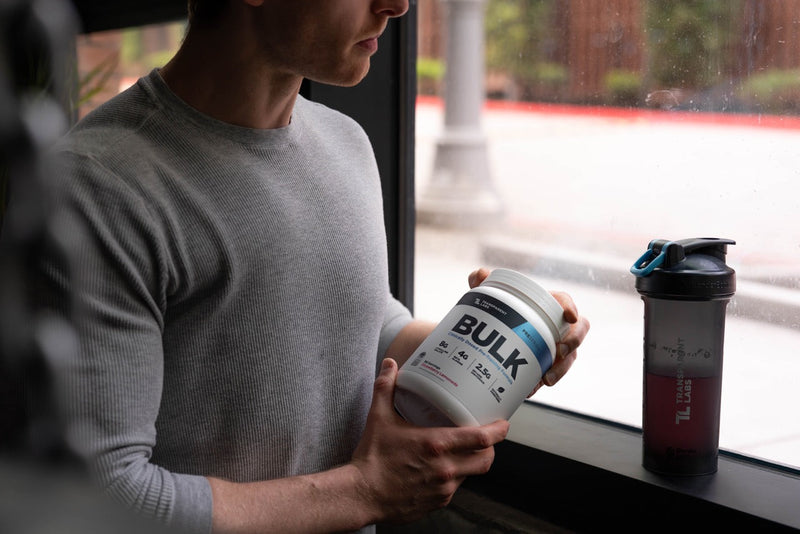
If you regularly take pre-workout supplements, there’s a good chance that you were motivated to begin your use of pre-workout because you needed a little something to kickstart your mind and body into a prepared state, rather than waiting for your muscles to wake up.
You made that initial investment in a pre-workout supplement, and promptly cruised through one of the most productive workouts of your life. Believing that you had essentially stumbled upon a magic potion, you decided right then and there that you would never train without pre-workout in your body again… at least not if you could help it.
Much time has passed since that first training session with the aid of pre-workout, and it remains a staple of your daily supplement rotation. Yet, nowadays you feel like you’re taking pre-workout simply to feel normal, and because you never stopped taking pre-workout, you can no longer tell if it’s actually improving your exercise quality in any discernible way.
So that begs the question, do you really need a pre-workout supplement every day? Or should you train without pre-workout sometimes for the sake of establishing an unstimulated training baseline?
Why Cycling Off Pre-Workout Matters
Due to your body’s fantastic ability to adapt to stimuli for the sake of helping you maintain a sense of physical normalcy, you can expect to develop a tolerance for high doses of caffeine and other common pre-workout stimulants as your body grows accustomed to their presence.
As a consequence of this, your body will require increasingly larger doses of caffeine in order to achieve the same levels of mental alertness and muscular preparedness that you enjoyed during your first weeks of exercise using pre-workout.
A simple caffeine tolerance explanation is that your body’s resistance to caffeine builds over time due to upregulation of your adenosine receptors. Specifically, caffeine inhibits the effects of adenosine, which causes your mind and body to perceive fatigue.
Recognizing that its signals to respond to fatigue are going unheeded, your body will consistently produce more adenosine receptors over time to ensure that its signals are being received as intended.
Two different scenarios may result from this. First, you may continue to take the same amount of pre-workout daily, only to feel no effect as far as caffeine-enhanced workout is concerned. In essence, you will find yourself consuming pre-workout just so that you can work your way through what used to be a normal workout.
On the other hand, you can quickly experience burnout if you attempt to counter this by consuming escalating quantities of pre-workout before training, elevating your tolerance to caffeine with each successive dose, and placing your body in a scenario where it’s required to consume unhealthy amounts of caffeine simply to not feel the effects of caffeine’s absence.
Until now, we have only evaluated how the overconsumption of high-stim pre-workout can hinder your workouts. Away from fitness settings, all of that caffeine can increase the amount of time it takes you to fall asleep, reduce that quality and depth of your sleep, and increase your heart rate variability even while you’re awake.
|
Pre-Workout Usage: Healthy Use vs. Overreliance Indicators |
||
|
Healthy Use |
Overreliance |
|
|
Dosage Size |
Recommended size |
Gradually increasing beyond the recommended size |
|
Alertness |
Consistent readiness |
More pre-workout required to feel alert |
|
Workout Quality |
Steady improvement |
Plateaued or Declining Quality |
|
Sleep Quality |
Little to no difficulty falling asleep |
Obvious reduction of sleep length and quality |
Signs It’s Time to Take a Break
Because of its stimulating ingredients, pre-workout is simply not the same as other supplements — like vitamins, minerals, protein, and creatine — that are either offering your body essential nutrients that it needs for ordinary maintenance and repair, or that are concentrations of amino acids that your body often produces naturally.
The stimulating nature of pre-workout makes it a supplement that comes with unique tradeoffs that can have negative consequences on your body and quality of life. Because of this, you may experience one or more indicators that you should either scale back your pre-workout usage, or take a break from it altogether.

You need increasing doses for the same effect
The first time you took a pre-workout supplement, the workout that followed was one of the best you’ve ever had. As the weeks went on, the perception that you were exercising in an enhanced state faded, and you no longer perceive there to be much of a benefit to taking the recommended pre-workout dose.
Realizing that you had total control over the amount of pre-workout you consumed, you decided to double up on your pre-workout scoop. This brought back the original feeling, but now it’s taking twice the pre-workout to give you the same feeling of energy as when your relationship with pre-workout began.
The fact that your body has developed such a tolerance to pre-workout is a telltale sign that you should cycle off of it and allow your body to reset itself. In addition, the fact that you’ve been taking so large a dose of stimulants before each training session means that you’re probably seeing the downsides of consuming large quantities of stimulants in other areas of your life.
You feel anxious, jittery, or overstimulated
Most pre-workout formulas include large doses of stimulants, with caffeine often being the primary stimulant included in the mix. This common stimulant has a series of well-known side effects that have physical and mental downsides. Among these side effects are elevated feelings of anxiousness, jitteriness, and overstimulation.
In a gym setting, these symptoms of caffeine overreliance may be less noticeable since you’re in an ideal setting for expending some of that intensified energy. However, when these feelings persist in environments where you would be better served to remain calm and focused, they can be inherently counterproductive.
You crash hard post-workout or feel mentally flat
If you train with pre-workout for long enough, you may find yourself falling into the category of people whose workouts remain at an optimal level thanks to the effects of pre-workout, but once the workout is over, you feel wracked by fatigue and need to spend an unusually long time recovering from the experience.
These feelings of total enervation may not be limited to your post-workout physical capabilities. In many cases, these feelings of energy deprivation present themselves through symptoms of mental flatness, which can be defined as feeling like you’re unfocused, unmotivated, or otherwise drained.
Your sleep quality has noticeably declined
One of the most common and obvious downsides to pre-workout supplementation is a decline in sleep quality. The primary cause of this is the caffeine contained in pre-workout, which usually remains in your body for up to nine hours after it’s consumed. Due to the lingering presence of a stimulant in your bloodstream, you may find it far more difficult to fall asleep at your desired time than you would without taking pre-workout.
In fact, even if you are fortunate enough to fall asleep without much of a challenge even after taking pre-workout, the caffeine in your system may still lessen your sleep quality in ways that you won’t feel until you wake up. For instance, you may awaken to a sense of grogginess and fatigue even though you slept for the desired number of hours.
Workouts feel harder *without* a clear physical reason
One of the most counterintuitive consequences to long-term pre-workout consumption is that your workouts may feel harder than ever without an obvious reason for it. When this occurs, you probably won’t be able to pinpoint a clear physical reason for your fatigue. Instead, workouts that once felt like they had been made effortless through your use of preworkout now feel harder than ever, even though you're still taking pre-workout as recommended.

How Long Should You Cycle Off?
If you’re regularly taking a pre-workout supplement that contains stimulants, it will take more than a few days to reset your body to a state in which it is not constantly craving the presence of caffeine.
In a study in which test subjects ingested 150 milligrams of caffeine three times each day before being required to discontinue their usage cold turkey, levels of paraxanthine, gray matter intensity, and cerebral blood flow all remained elevated even after three days. (1)
In light of this, you should expect your body to take between one to two weeks to fully reset itself from a dependency on caffeine, and consider cycling off of high-stim pre-workout or other high-caffeine sources every four to eight weeks in order to keep your body healthy, and in a state where it can effectively to respond to later pre-workout supplementation.
During your reset period, you should expect to experience many of the symptoms that are commonly associated with caffeine withdrawal, which include irritability, fatigue, grogginess, headaches, and even muscle stiffness. If you stay the course, the worst of these symptoms should subside within a few days, and disappear altogether within a week or two.
Should You Train Without Pre-Workout Sometimes?
As much fun as you had feeling superhuman while training with pre-workout coursing through your body, there are benefits to training “raw,” or in an unstimulated state.
First of all, it’s beneficial to use a set number of unenhanced training days or sessions to recalibrate your sense of perceived exertion. That way, you’ll be able to feel the clear differences in your body when you train on or off pre-workout.
Second, from a psychological standpoint, it’s beneficial for you to know that you can face a workout without any form of aid from an outside stimulant. As enjoyable as the benefits of pre-workout can be, it can be psychologically crippling to convince yourself that you require a stimulant every time you train, or that you can’t possibly face exercise without some form of added advantage.
Do You Really Need Pre-Workout Every Day?
Keeping in mind the purpose of pre-workout, which is to improve the quality of your workouts, it should be understood within that definition that pre-workout is probably best utilized only in a training situation. Therefore, if you’re not about to engage in a training session, there is probably no need to take pre-workout, especially if a comparatively smaller dose of caffeine alone, like that contained within a single cup of coffee, will do.
Beyond that, there is seldom a need for you to take pre-workout prior to absolutely every workout; it can be a safety measure that you reserve for occasions when you are particularly tired, or unmotivated, but you know that you need to get through your gym session, and you’d like to give it your all.
If you find any of the signs of pre-workout dependency creeping into your life, there are several steps you can take to counter this. For starters, you can take a formal approach of cycling off of pre-workout for a week or more while consuming caffeine from other sources if you need them, like caffeinated sodas or coffee, which contain far less caffeine than pre-workout.
Another method you could use would be to only reserve pre-workout for one workout per week — like leg day, or your most challenging day of cardio — so that it becomes a scheduled training treat rather than a necessity.
Smart Alternatives While Cycling Off (Stimulant-Free Options)
At the heart of the pre-workout dependency issue is a mental or physical overreliance on stimulants to improve your workout, or to motivate yourself into initiating a workout. Fortunately, there exists a wide array of beneficial supplements that you can consume to improve your training output without tossing stimulants into the mix.

If you’re looking for a little something to amplify your progress without compromising your body on the back end, here is a list of supplements you can take — some of which are frequently found in pre-workout formulas — that can help you without forcing you to monitor yourself for the downsides of stimulant intake.
L-Citrulline / N.O. boosters
L-citrulline is a non-essential amino acid that is a common ingredient in pre-workout supplements. It benefits your body by naturally increasing your level of nitric oxide (NO), which relaxes your blood vessels and improves blood flow. This results in optimized delivery of oxygen to your muscles when they most need it.
In one study, resistance-trained athletes who consumed 8 grams of citrulline outperformed the placebo group in five consecutive sets of lower body strength exercises that were performed with 60 percent of each subject’s one-rep maximum. (2)
Beta-Alanine
Like L-citrulline, beta-alanine is also a non-essential amino acid, and it has a net effect of acting as a buffer in your muscles. This buffering effect slows the buildup of lactic acid in your blood during training. This means that beta-alanine benefits both strength athletes and endurance athletes, as the latter group often finds itself slowed down by the eventual increase in lactic acid.
A coordinated study of recreational cyclists who consumed 6.4 grams of beta-alanine per day for four weeks and then completed four cycling capacity tests at 110 percent of power max revealed that the cyclists who received supplemental beta-alanine enjoyed a longer time to exhaustion across all tested markers. (3)
Electrolytes (e.g., Hydrate)
Electrolytes are vital minerals like sodium, magnesium, calcium, and potassium, that are absolutely critical in maintaining the proper muscle function of your body during exercise. Electrolytes are often lost through sweat, and are essential to attaining a state of full hydration, but much of the discussion about electrolytes assumes that your body already possessed them at adequate levels to begin with.
Much of the decline in workout efficiency, particularly in long aerobic training sessions, can be attributed to electrolyte loss. This is why the American College of Sports Medicine position stand on exercise and fluid replacement is that hydration “should be initiated when needed at least several hours before the activity to enable fluid absorption and allow urine output to return to normal levels.” (4)
The ACSM position stand further elaborates that the goal of hydration during and after exercise “is to replace any fluid electrolyte deficit,” as a hydration deficit of even 2% has been shown to drastically diminish performance quality. (5) Accordingly, many athletes required additional electrolyte support for training.
Proper carb timing for training days
Another common cause of fatigue during workouts is a lack of carbohydrate intake. While carbohydrates are often vilified as a source of unnecessary body fat — particularly when they are overconsumed — they are absolutely necessary for regenerating muscle glycogen. This is a trusted repository of energy stored in your muscles for easy use.
Depending on the time of day in which you are training, you will probably want to minimally consume a snack containing carbohydrates at least 30 minutes before exercise in order to ensure that your body has an easy energy source to draw upon, along with post-exercise carbohydrate consumption to quickly replenish your muscle glycogen.
If you have the luxury of waiting longer before your workout begins, it is advantageous to consume carbohydrates with a full meal anywhere from one to four hours prior to training, in addition to a separate ration of easily digestible carbs 30 to 60 minutes prior to exercise.
Bottom Line: Reset Sensitivity, Don’t Quit Training
Daily pre-workout intake is fun when it’s working in your favor, but there may come a point in time when your quality of life is noticeably declining due to your continued use of the supplement.
If you’re able to coast through life without any consequences from your pre-workout use, that’s great. However, if you see any of the signs that pre-workout is negatively influencing your life, you would be well served to either reduce its intake, cycle off of it, or switch a stimulant-free pre-workout option.
Sources:
-
Lin YS, Weibel J, Landolt HP, Santini F, Garbazza C, Kistler J, Rehm S, Rentsch K, Borgwardt S, Cajochen C, Reichert CF. Time to Recover From Daily Caffeine Intake. Front Nutr. 2022 Feb 2;8:787225. doi: 10.3389/fnut.2021.787225. PMID: 35187019; PMCID: PMC8849224.
-
Wax B, Kavazis AN, Weldon K, Sperlak J. Effects of supplemental citrulline malate ingestion during repeated bouts of lower-body exercise in advanced weightlifters. J Strength Cond Res. 2015 Mar;29(3):786-92. doi: 10.1519/JSC.0000000000000670. PMID: 25226311.
-
Sale C, Saunders B, Hudson S, Wise JA, Harris RC, Sunderland CD. Effect of β-alanine plus sodium bicarbonate on high-intensity cycling capacity. Med Sci Sports Exerc. 2011 Oct;43(10):1972-8. doi: 10.1249/MSS.0b013e3182188501. PMID: 21407127.
-
American College of Sports Medicine; Sawka MN, Burke LM, Eichner ER, Maughan RJ, Montain SJ, Stachenfeld NS. American College of Sports Medicine position stand. Exercise and fluid replacement. Med Sci Sports Exerc. 2007 Feb;39(2):377-90. doi: 10.1249/mss.0b013e31802ca597. PMID: 17277604.
-
Cheuvront SN, Kenefick RW. Dehydration: physiology, assessment, and performance effects. Compr Physiol. 2014 Jan;4(1):257-85. doi: 10.1002/cphy.c130017. PMID: 24692140.
Featured Product


