Combining Pre-Workout and Protein: Smart or Overkill?

There are a lot of different supplements floating around the fitness ecosystem, and if you’ve been spending a decent amount of time in a commercial gym these days, you’re probably no longer surprised when you see someone pulling four or more supplements out of their bag, either before or after their workout, mixing them all together in a shaker bottle, and drinking them all down.
Among the most popular supplements are pre-workout and protein, and while it isn’t uncommon to see these supplements mixed together in the same shaker bottle, it can be helpful to actually do some research to decide if it’s actually a good idea to do so. So first of all, can you mix pre-workout and protein together to produce a healthy outcome? And if so, is it actually the best way to consume these supplements?
What Each Supplement Is Designed to Do
Every supplement you consume should be taken with a specific objective in mind that you are attempting to achieve, and protein and pre-workout are no different. In fact, because of the way the use of these supplements is usually strategized, the question of whether or not it is ideal to take them together is an important one, because few supplements have had more written about when to optimally time their intake than pre-workout and protein.
Pre-Workout = Energy, focus, blood flow
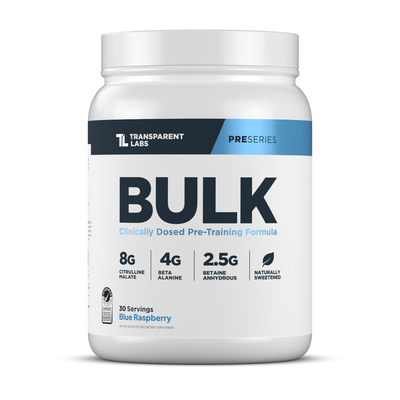
The clue to the purpose behind pre-workout is conveniently contained within its name: You take it before your workout begins, and your workout improves as a result. The common ingredients of pre-workout usually include caffeine, citrulline, and beta-alanine, which collectively assist your body with energy production, fatigue delay, mental focus, and blood flow maximization.
The usual dose of caffeine in pre-workout supplements is between 200 and 350 milligrams, because 3–6 mg of caffeine per/kg of body mass has been scientifically proven to improve muscle strength, endurance, and movement velocity. (1)
In doses of 6-8 milligrams, the ability of citrulline to increase blood flow and relax blood vessels has been demonstrated to preserve muscle strength and endurance across multiple efforts through the improvement of oxygen delivery. (2) Similarly, when consumed in doses of 3.2 to 6.4 grams, beta-alanine has been proven to delay time to exhaustion across several markers of fatigue. (3)

If your pre-workout is clinically dosed, which means that it contains the aforementioned ingredients, or similar workout aids at their effective levels,
By availing your body of the combined effects of these supplements by taking pre-workout, you are preemptively upgrading your body’s ability to engage in intense exercise and hopefully improving the overall quality of your training.
Protein = Muscle repair and recovery
Protein is one of the three macronutrients that compose all common food items, and it’s the macronutrient that is most frequently cited in relation to the development of strength. In this case, the bulk of the strength protein offers to the body is on the back end, due to protein's role in supplying the body with amino acids, which are the building blocks to muscles.
When you exercise, you are strategically damaging your muscles in ways that will result in their growth and improvement, but protein is the key to that improvement. Once your muscles have been exhausted by an intense workout, protein intake floods your muscles with amino acids that rebuild your muscle tissue and allows you to come back stronger.
Because of this, protein is absolutely vital to muscle repair, and supplemental protein doses — usually consumed in quantities of 20 to 40 grams per serving — supply you with the assurance that your muscles are receiving all of the amino acids they need in between workouts. P
Can You Take Them Together?
The answer to the question of whether or not you can take pre-workout and protein together is “Of course you can!” However, the real question you’re probably asking is whether or not there are unique benefits to combining pre-workout and protein that make the act of combining them better than keeping them separate. The answer to this question, as is often the case, is dependent upon your specific goals and your lifestyle.
When combining is useful (morning training, convenience, insufficient protein intake)
If you’re taking a pre-workout that contains a stimulant, the best time to take will almost always be during a morning workout so that the presence of the stimulants doesn’t interfere with your sleep. As such, if you’re taking pre-workout with protein prior to an early-morning workout, your protein is essentially functioning as a form of a morning meal, and providing you with an initial boost of protein, which is something your body would require regardless, even if you’re not regularly working out.
In this sense, the consumption of protein with pre-workout is about convenience more than anything, and it can also be a way to offset a general insufficiency of your protein intake. Nevertheless, it is critical to remember that protein is such an essential nutrient that there is seldom a bad time to take protein.
Situations where separating is better (fasted training effects, digestion sensitivity)
There are clear instances when separating your intake of pre-workout and protein is a wise course of action, and one of the clearest cases of this is if you happen to be looking to achieve benefits through fasted training.
Often, this takes the form of fasted cardio, which is usually a strategy to burn additional body fat without supplying your body with additional fuel from food to use as energy. In these scenarios, dumping 100 to 200 calories worth of protein into your body right when you’re preparing for your training session can be counterproductive.
Another reason to keep your pre-workout and protein separate is identical to the problem created by eating a meal immediately before training; if you have a sensitive digestive system, you may make yourself quite uncomfortable during your workout in ways that can be distracting at a minimum, or that may derail your workout altogether.

Timing Guidelines
Pre-workout is commonly advised to be consumed prior to a workout, but its consumption often continues after a workout is already underway. Because of the time required for the ingredients in your pre-workout to take effect, it is usually advised that you take pre-workout between 20-45 minutes before training in order to experience the full benefits of those ingredients while you exercise.
While there are some benefits to consuming protein prior to training, the majority of the benefits linked to protein intake are experienced after training. For example, there is a prevailing belief that protein is demonstrably more effective at repairing damaged muscle fibers and promoting muscle growth when it is consumed within 30 minutes of a workout’s conclusion.
Studies that directly explored the potential for a 30-minute “protein window” seem to refute this belief. In one study, resistance trained men separated into pre- and post-workout protein-intake groups had similar effects in all measures included in the study, including muscle thickness, body composition, and maximum strength. (4)
The small caveat to this study is that the length between the pre-workout intake of protein and the conclusion of the workout may influence the efficiency of the protein in adequately repairing muscle tissue. However, for short workouts, the guidance for protein intake timing seems to indicate that you should expect little to no difference in your results if you consume protein with your pre-workout supplement prior to training.
|
Pre Workout and Protein Intake Guide |
|
|
Workout Type |
When to Take |
|
AM Workouts |
Regular pre-workout and protein shake 30-60 minutes before |
|
Post-work shifts |
Low-stim pre-workout before training and protein shake after |
|
Two-a-days |
Regular pre-workout and protein shake 30-60 minutes before first workout; another protein shake after second workout |
Can They Be Mixed in the Same Shake?
Certainly, you can mix your pre-workout and protein powder together in the same shake. The answer is more a matter of your enjoyment of the shake than anything else. Some flavor combinations may not appeal to you, so if you intend to combine your pre-workout and protein powder together on a regular basis, please consider whether or not you can tolerate the flavors of chocolate and peanut butter mixed together with tropical fruits and watermelons.
Digestive considerations
You’ll need to take different digestive concerns into account when you consume protein with pre-workout. For starters, you may be sensitive to the ingredients in pre-workout to begin with, and adding protein into the mix won’t do you any favors. Second, these sensitivities may add an unwelcome level of complexity to your training, as you contend with digestive discomfort while simultaneously trying to push your body to the limit.
It’s also helpful to recognize that protein powders that have been made with ingredients that are unnatural, artificial, or poorly sourced, are able to cause digestive discomfort even without being combined with a pre-workouts supplement. Because of this, you are encouraged to make use of a clean protein powder that your body can digest with comparative ease.
When to add carbs
Carbohydrates are the first place your body turns for energy, and it can be quite taxing for your body to endure sustained exercise without them. Prior to most short workouts, a snack containing some form of simple sugar, like the sort you would get from fruit, is an ideal form of fuel for your body, and can be useful to blend into a pre-workout shake.
On the other hand, if you plan to engage in sustained exercise, and you only have time for one pre-workout shake, adding a complex carbohydrate like oats, or a specialized carbohydrate powder like cluster dextrin, can provide you with the energy you need to sustain your training for more than an hour without preemptively spiking your insulin level with a massive serving of sugar.

Who Benefits Most from Combining Them?
If you’re still deciding whether or not you should make it a point to combine pre-workout and protein, you should decide if you fall into one of these categories of people who might genuinely benefit from making it a regular habit.
Beginners who under-consume protein
People who are new to training are prone to under-consuming protein because they don’t fully grasp just how much protein can benefit them, and aren’t in the habit of prioritizing protein consumption during every meal. Therefore, adding a scoop or two of protein powder to your pre-workout shake may dramatically boost your overall daily protein consumption, and make up for a critical shortfall of protein in your body.
High-volume or competitive athletes
People who participate in competitive sports that require a high volume of training, like runners and swimmers who may complete multi-hour workouts in both the morning and evening, your body may be running desperately low on protein during the day, and will probably be in a position where your muscles are constantly craving it. As such, it will be beneficial to supply your muscles with protein at any available opportunity, and early in the morning, even before you begin training, is as good a time as any.
Time-constrained lifters
While protein consumption prior to a workout isn’t necessarily the absolute best time to take protein when all of the science is taken into consideration, your body will still make use of the protein for muscle repair and replenishment. Therefore, there is no such thing as a bad time to take protein.
As such, even though a post-workout protein shake means that you are consuming protein at a time when your muscles are at their greatest need of repair, the protein you ingest right before your workout begins doesn’t go to waste by any means. So if you are pressed for time and need to ensure that there is at least some protein in your system before you lift weights, get out of the gym, and get on with your day, there is no harm in taking your early morning ration of protein with your pre-workout shake.
Quick Decision Framework (Simple Checklist)
If you’re weighing the pros and cons of combining your pre-workout with protein powder, here is a quick checklist of questions you should ask yourself before you make that decision:
-
Is my pre-workout made with clinically-dosed ingredients?
-
Am I making use of a clean protein powder?
-
What time of the day is my workout?
-
How long will my workout last?
-
Would my body respond better to a low-stim pre-workout supplement?
- Would I receive greater benefits from my protein powder if I took it after my workout?
Sources:
-
Guest NS, VanDusseldorp TA, Nelson MT, Grgic J, Schoenfeld BJ, Jenkins NDM, Arent SM, Antonio J, Stout JR, Trexler ET, Smith-Ryan AE, Goldstein ER, Kalman DS, Campbell BI. International society of sports nutrition position stand: caffeine and exercise performance. J Int Soc Sports Nutr. 2021 Jan 2;18(1):1. doi: 10.1186/s12970-020-00383-4. PMID: 33388079; PMCID: PMC7777221.
-
Wax B, Kavazis AN, Weldon K, Sperlak J. Effects of supplemental citrulline malate ingestion during repeated bouts of lower-body exercise in advanced weightlifters. J Strength Cond Res. 2015 Mar;29(3):786-92. doi: 10.1519/JSC.0000000000000670. PMID: 25226311.
-
Sale C, Saunders B, Hudson S, Wise JA, Harris RC, Sunderland CD. Effect of β-alanine plus sodium bicarbonate on high-intensity cycling capacity. Med Sci Sports Exerc. 2011 Oct;43(10):1972-8. doi: 10.1249/MSS.0b013e3182188501. PMID: 21407127.
-
Schoenfeld BJ, Aragon A, Wilborn C, Urbina SL, Hayward SE, Krieger J. Pre- versus post-exercise protein intake has similar effects on muscular adaptations. PeerJ. 2017 Jan 3;5:e2825. doi: 10.7717/peerj.2825. Erratum in: PeerJ. 2017 Aug 1;5:e2825/correction-1. doi: 10.7717/peerj.2825/correction-1. PMID: 28070459; PMCID: PMC5214805.
Featured Product