


Creatine Before vs After Workout: Does Timing Actually Matter?
Although creatine is one of the most widely taken supplements, you’ll still hear a debate on when to take it. It often comes with conflicting advice such as: take it before your workout for better performance, take it after for optimal recovery, or the timing doesn't matter at all. A mix of marketing claims, personal anecdotes, and selective interpretation of research make it hard to know truth from myth. So what does the science actually say?
Creatine monohydrate ranks among the most studied supplements in sports nutrition, with decades of research confirming its benefits for strength, muscle growth, and athletic performance. Yet despite this extensive body of evidence, the question of when to take creatine for best results remains surprisingly contentious.
Why Timing Matters (or Doesn't) When Taking Creatine
Creatine works by increasing phosphocreatine stores in your muscles, which helps regenerate adenosine triphosphate (ATP)—the primary energy currency your cells use during high-intensity exercise. This process happens gradually as you build up creatine levels in your muscle tissue over days and weeks.
Creatine is naturally occurring and is also obtained through consumption of red meat and fish. Unlike caffeine or other stimulants that provide immediate effects, creatine saturates your muscles through consistent daily intake.
Your muscles don't suddenly empty their creatine stores during a single workout session. Instead, they maintain elevated levels as long as you're taking the supplement regularly. The real question then becomes whether taking creatine at a specific time offers any additional advantage on top of this baseline effect.
Many gym-goers assume creatine functions like a pre-workout stimulant, providing an immediate energy boost when taken before training. This misconception leads to overthinking supplement timing rather than focusing on the factor that actually drives results: consistent daily intake.
What the Research Says About Creatine Timing
One of the greatest questions among gym enthusiasts and athletes is does creatine timing matter? A 2013 study published in the Journal of the International Society of Sports Nutrition compared pre-workout versus post-workout creatine supplementation in trained bodybuilders. Over four weeks, participants taking creatine after their workouts showed slightly greater improvements in lean body mass and strength compared to those taking it before. The differences were small but statistically significant, suggesting a marginal advantage for post-workout timing.
Before vs After: Study Comparison Table: Antonio & Ciccone 2013 Study Results
|
Measure |
Pre-Workout |
Post-Workout |
Difference |
|
Study Duration |
4 weeks |
4 Weeks |
- |
|
Dosage |
5g immediately before training |
5g immediately after training |
- |
|
Training Frequency |
5 days/week |
5 days/week |
- |
|
Fat Free Mass |
+2.0lbs |
+4.4 lbs |
+2.4 lbs |
|
Body Weight |
+0.9lbs |
+1.8lbs |
+.09 lbs |
|
Fat Mass |
-0.2 lbs |
-2.6lbs |
-2.4lbs |
|
Bench Press 1-RM |
+14.6 lbs |
+16.8 lbs |
+2.2 lbs |
|
Fat Free Muscle Increase % |
~1.3% |
~3.0% |
+1.7% advantage |
|
Strength Increase % |
~6.8% |
~7.5% |
+.07% advantage |
However, other research paints a less definitive picture. A 2021 analysis found that differences between pre- and post-workout supplementation became statistically insignificant when viewed across longer timeframes and larger sample sizes. The research found that total daily creatine intake mattered far more than the specific timing of doses.
One study found that resistance-trained males supplementing with creatine monohydrate plus protein-carbohydrate during 10 weeks of resistance training showed significantly greater improvements in strength, lean body mass, muscle fiber size, and contractile protein compared to groups receiving protein alone or protein-carbohydrate without creatine. These benefits were evident across multiple physiological levels, demonstrating creatine's superior effectiveness for muscle hypertrophy beyond equivalent nitrogen and energy intake.
Taking Creatine Before a Workout
One of the major questions around creatine timing is whether to take creatine before or after a workout. Some athletes prefer taking their creatine as a pre-workout supplement because it gives them peace of mind knowing their muscles have immediate access to the supplement during training. While creatine doesn't provide acute performance benefits like caffeine or vasodilators do, this psychological factor shouldn't be dismissed entirely—confidence in your routine can influence how hard you push yourself.
Pre-workout creatine can be conveniently mixed with other supplements you're already taking. Pairing it with carbohydrates may help with absorption, making it a logical addition to a pre-workout shake or meal. Products like Transparent Labs BULK or PUMP already contain complementary ingredients that work well alongside creatine supplementation.
The main consideration with pre-workout timing involves digestion. Some people experience mild stomach discomfort when taking creatine close to training, particularly if they're using doses higher than five grams. If this happens, splitting your dose or taking it earlier in the day might be worth trying.

Taking Creatine After a Workout
Post-workout creatine timing aligns well with recovery nutrition strategies. Since you're likely already consuming protein and carbohydrates after training to support muscle repair and glycogen replenishment, creatine absorption post-workout makes practical sense. The elevated insulin levels during this period could theoretically enhance creatine uptake, though again, this advantage matters most during the initial loading phase rather than during long-term maintenance.
Many people find post-workout supplementation fits naturally into their routine. After training, you're already preparing a shake or meal, so adding creatine becomes automatic.
Enhanced recovery is another potential benefit of post-workout creatine. While most research focuses on strength and muscle growth, some evidence suggests creatine may help reduce muscle damage and inflammation following intense training sessions. Taking it alongside your recovery nutrition could theoretically amplify these protective effects.
The Real Answer: Consistency Beats Timing
The bottom line is that taking three to five grams of creatine daily, every day is going to give you the best outcome. Whether you choose morning, pre-workout, post-workout, or bedtime makes minimal difference compared to simply maintaining consistent supplementation. Your muscles need time to saturate with creatine—typically three to four weeks at standard doses—and they maintain these elevated levels as long as you keep taking it regularly.
Loading protocols, which involve taking 20 grams daily for five to seven days, can accelerate saturation but aren't necessary. Standard five gram daily doses achieve the same endpoint, just over a longer timeframe. Once your muscles reach saturation, timing becomes even less relevant since you're simply maintaining existing stores rather than building them up. Taking creatine on rest days will help you keep saturation.
The debate over creatine timing often distracts from more important factors. Total daily intake, hydration, and patience are the key influencers in effective outcomes. Creatine works, but it works gradually. Focus on the habits you can sustain, build it into your routine, and watch the gains grow.
|
Myth |
Fact |
|
Creatine works like a pre-workout stimulant and gives you an immediate energy boost during your workout |
Creatine saturates your muscles gradually over weeks through consistent daily intake. It doesn't provide the same stimulant effects, as caffeine Benefits come from elevated muscle stores built up over time, not from a single dose |
|
You must take creatine within a 30-minute anabolic window after training or you'll miss out on gains |
While post-workout timing may offer marginal benefits (2-4 lbs difference over 4 weeks), the post-workout "window" is far less critical than once believed. Consistent daily intake at any time matters far more than precise timing |
|
Timing is the most important factor for creatine effectiveness |
Total daily intake is exponentially more important than timing. Your muscles maintain elevated creatine stores no matter when you take it, as long as you take it. |
Types of Creatine
While creatine monohydrate is the most widely used type of creatine, there are other types to consider. When it comes to Creatine HCl vs. Monohydrate, HCl (hydrochloride) offers better solubility. Manufacturers claim this improved absorption reduces bloating, though monohydrate remains significantly cheaper with far more research supporting its effectiveness.
Creatine ethyl ester has been marketed as having superior absorption due to its ester bond, but there needs to be more studies for a definitive conclusion to be made. The ester breaks down into creatinine before reaching muscles, making it an inferior choice despite higher costs.
Buffered creatine (Kre-Alkalka) claims a higher pH reduces conversion to creatinine in the stomach, supposedly improving stability and reducing side effects. However, research comparing buffered creatine to monohydrate found no significant differences in muscle creatine uptake, strength gains, or body composition changes.

Best Practices for Creatine Supplementation
Start with three to five grams of creatine daily and stick with it. Choose a timing that fits naturally into your routine, whether that's with breakfast, in your pre-workout, or mixed into a post-training shake. The best protocol is the one you'll actually follow consistently.
Hydration matters when supplementing with creatine since it pulls water into muscle cells. Aim to drink plenty of water throughout the day, especially if you train intensely or live in a hot climate. This won't "dilute" the effects—it simply supports the way creatine functions at the cellular level.
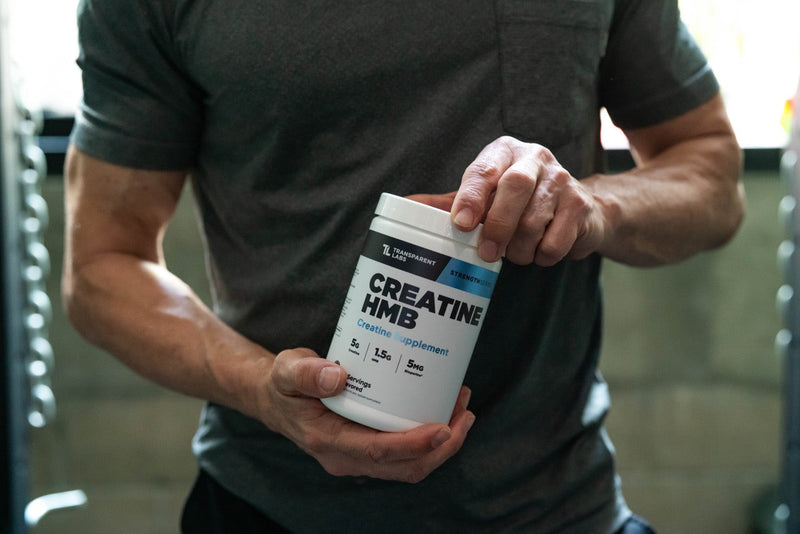
Consider combining creatine with HMB (beta-hydroxy beta-methylbutyrate) for potentially enhanced muscle-building effects. Some research suggests this combination may offer additive benefits for strength and lean mass gains. Transparent Labs Creatine HMB provides both compounds in a single, convenient product.
Conclusion
Supplement timing questions often reveal our desire for optimization and control over results. We want to believe that perfect execution—taking the right dose at exactly the right moment—will unlock superior gains. But creatine doesn't work that way. The compound builds up gradually in your system through daily consistency, which is why taking it regularly matters more than when.
This doesn't mean the research on timing is worthless or that you shouldn't think about when you take your supplements. Small advantages do exist, particularly during the initial weeks of supplementation when you're building up muscle creatine stores. But these marginal differences pale in comparison to simply showing up, training hard, and taking your creatine every single day. The supplement that works is the one you actually take, and the best time to take it is whenever fits your life.
People Also Ask
When is the best time to take creatine?
The best time to take creatine is when it fits best in your schedule to become a part of your routine. Studies have found that it is less important when you take it, and matters most that you take it every day to keep saturation.
Does creatine timing affect results?
Many people are curious if you should take creatine before or after a workout. The best time to take creatine is when it makes the most sense in your schedule, as consistency is more important than timing. While timing may make a slightly significant difference, research has shown that consistency is what makes the greatest difference in improved results.
Should I take creatine on non-training days?
Yes! You should take creatine every day consistently in order to reap the best results from creatine supplementation. Regardless of loading phase or maintenance phase, you should take creatine daily.
Featured Product


