


Joint Supplements: What Works and What Doesn't (According to Science)
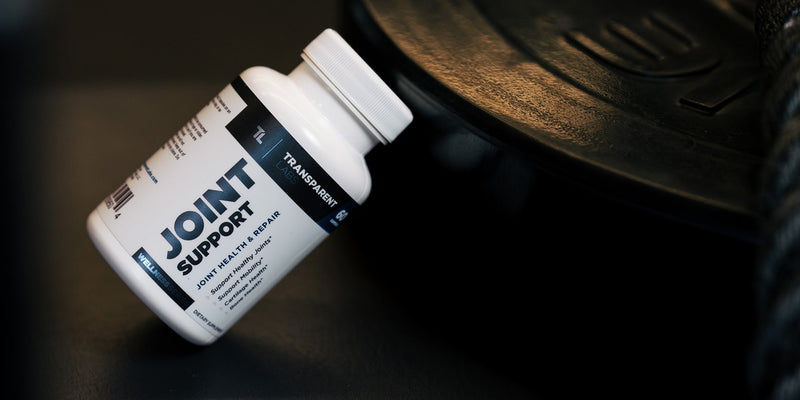
If you're an active gym-goer or athlete who trains regularly, joint stiffness probably isn't something you worried about in your twenties.
But now?
That familiar ache after leg day or the creaky knees during box jumps are starting to impact your workouts. You've likely seen dozens of joint supplements at your local supplement store, most promising quick relief with glucosamine and chondroitin.
Here's the problem: the most popular joint supplement ingredients have weak clinical support, while the compounds that actually reduce inflammation and support joint function are often overlooked.
This guide will show you which ingredients to avoid and which science-backed alternatives deserve a spot in your supplement stack.
Why Joint Health Matters for Athletes and Active Adults
A joint is where two bones meet, cushioned by cartilage that allows smooth, pain-free movement. Whether you're squatting, running, or landing a box jump, healthy joints are non-negotiable for sustained athletic performance.
Over time, however, joints naturally deteriorate. Chronic inflammation can erode cartilage, leading to conditions like osteoarthritis, which causes pain, stiffness, and reduced range of motion. For athletes, this isn't just uncomfortable—it's performance-limiting. Arthritis and joint degeneration worsen with age, making proactive joint care essential if you want to keep training into your forties, fifties, and beyond.
The good news? You can protect your joints through smart training choices, weight management, mobility work, and targeted supplementation. But you need to know which supplements actually work.
How To Maintain Healthy Joints: The Foundation
Before diving into supplements, let's establish the lifestyle habits that form the foundation of joint health. According to guidelines from the American College of Rheumatology and Arthritis Foundation, diet, exercise, and weight management should always come first.
1. Choose Low-Impact Training When Appropriate
Contrary to popular belief, exercise doesn't cause arthritis. In fact, strength training and controlled movement can improve joint function and reduce pain. However, high-impact activities like running on concrete can stress joints over time. Consider alternating with low-impact alternatives like swimming, cycling, or resistance training on padded surfaces.
2. Maintain a Healthy Weight
Every pound of body weight places approximately 1.5 times the force on your knee joints during walking. If you weigh 200 pounds, your knees absorb 300 pounds of force with each step. Even modest weight loss can significantly reduce joint stress and inflammation.
3. Prioritize Mobility Work
Flexibility stretches muscles; mobility increases the range of motion in your joints. Regular mobility exercises improve joint function, enhance squat depth, and reduce injury risk. Add 10-15 minutes of mobility drills to your warm-up or active recovery sessions.
4. Supplement Strategically
When lifestyle changes aren't enough, evidence-based supplementation can reduce inflammation, support cartilage health, and improve joint comfort. But most people are taking the wrong supplements.

Where Most Joint Supplements Go Wrong
Walk into any supplement store and you'll find shelves lined with joint formulas featuring two ingredients: glucosamine and chondroitin. Both are naturally occurring compounds in human cartilage, and both have been marketed as joint-health essentials for decades.
The problem? The evidence is mixed at best.
The Glucosamine and Chondroitin Controversy
Some studies suggest that glucosamine and chondroitin may provide modest pain relief for moderate-to-severe osteoarthritis, potentially comparable to NSAIDs in certain cases. However, other research shows inconsistent results, with many trials finding no significant benefit over placebo.
In fact, the American College of Rheumatology has recommended against using glucosamine or chondroitin for osteoarthritis treatment, citing insufficient evidence of efficacy.
So why are they still everywhere? Momentum. These ingredients gained popularity in the 1990s and remain staples in joint formulas despite evolving research. Meanwhile, compounds with stronger clinical support are often sidelined.
What Actually Works: Evidence-Backed Joint Supplement Ingredients
If you're ready to move beyond outdated formulas, here are the ingredients with legitimate clinical support for joint health.
1. Turmeric (Curcumin)
Turmeric has been used for centuries in traditional medicine, but modern research validates its anti-inflammatory and antioxidant effects. The active compound, curcumin, has been shown to reduce joint pain and inflammation in multiple clinical trials.
According to Johns Hopkins Medicine, curcumin can help manage arthritis symptoms and exercise-induced inflammation. A review in Phytotherapy Research found that curcumin was as effective as ibuprofen for reducing osteoarthritis pain, but with fewer side effects.
The catch: Curcumin has poor bioavailability. Your body struggles to absorb it unless it's paired with piperine (black pepper extract), which can increase absorption by up to 2,000%. Look for formulas featuring standardized curcumin extracts like Curcumin C3 Complex combined with BioPerine for maximum effectiveness. Learn more about turmeric curcumin benefits for joint pain and inflammation.
2. Boswellia Serrata (Indian Frankincense)
Boswellia extract contains alpha-keto acids that inhibit enzymes responsible for joint inflammation. Clinical studies have shown that Boswellia can reduce joint pain and improve mobility in people with osteoarthritis and rheumatoid arthritis.
A study published in Phytomedicine found that participants taking Boswellia extract experienced significant reductions in pain and improved joint function within eight weeks. Because Boswellia isn't commonly found in food, supplementation is the most practical way to obtain therapeutic doses.
3. Omega-3 Fatty Acids
Omega-3s—particularly EPA and DHA—are well-known for cardiovascular benefits, but they also possess potent anti-inflammatory properties that support joint health. Research suggests that omega-3 fatty acids for joint health and recovery may reduce morning stiffness, joint swelling, and pain in people with rheumatoid arthritis.
While fish oil is the most common source, krill oil offers superior bioavailability due to its phospholipid structure, which enhances absorption and reduces the "fishy burp" side effect common with traditional fish oil.
4. Type II Collagen (UC-II)
Undenatured type II collagen works differently than other joint supplements. Rather than simply reducing inflammation, it modulates the immune response to prevent cartilage breakdown. Clinical trials have shown that UC-II can reduce joint pain and improve flexibility in active adults and athletes.
5. Vitamin D
Vitamin D plays a critical role in bone density, cartilage health, and muscle function. Emerging research suggests a connection between vitamin D deficiency and increased risk of osteoarthritis. A five-year study found that individuals with low vitamin D levels were more likely to develop hip and knee osteoarthritis.
For active adults, maintaining optimal vitamin D levels may also support magnesium supplementation for muscle recovery and bone health, as these nutrients work synergistically to protect musculoskeletal health.
How To Choose a Joint Supplement: Decision Criteria
Not all joint supplements are created equal. Here's what to look for:
Key Decision Criteria (Ranked by Importance)
- Clinically-validated ingredients – Does the formula include compounds with published research supporting joint health?
- Absorption enhancers – Are bioavailability boosters like BioPerine or phospholipids included?
- Dosage accuracy – Do ingredient amounts match clinically effective doses used in studies?
- Third-party testing – Is the product tested for purity and label accuracy by independent labs (USP, NSF, ConsumerLab)?
- Transparency – Are all ingredients and dosages clearly disclosed (no proprietary blends)?
- Value – Does the cost-per-serving justify the quality and efficacy?
Joint Supplement Comparison Table
| Ingredient | Who It's For | Key Benefits | Trade-offs | Notable Evidence |
|---|---|---|---|---|
| Curcumin (Turmeric) | Athletes with inflammation or post-workout soreness | Reduces joint pain, supports recovery, antioxidant effects | Requires piperine for absorption | Johns Hopkins, Phytotherapy Research |
| Boswellia Serrata | Active adults with stiffness or chronic joint discomfort | Inhibits inflammatory enzymes, improves mobility | Limited dietary sources (supplement necessary) | Phytomedicine, Indian Journal of Pharmaceutical Science |
| Omega-3 Fatty Acids | Lifters or runners seeking systemic anti-inflammatory support | Reduces morning stiffness, supports cardiovascular health | Variable quality in fish oil; krill oil preferred | Arthritis Research & Therapy |
| Type II Collagen (UC-II) | Individuals with early-stage cartilage wear | Modulates immune response, protects cartilage | Works preventively (less effective for advanced degeneration) | International Journal of Medical Sciences |
| Vitamin D | Anyone with limited sun exposure or deficiency risk | Supports bone density, muscle function, reduces inflammation | Requires consistent daily intake | Osteoarthritis and Cartilage |
| Glucosamine + Chondroitin | Some may find modest symptom relief | Possible cartilage support over 3+ years (inconsistent evidence) | Mixed clinical results; ACR recommends against | Mayo Clinic, Arthritis Foundation |
Pros and Cons of Leading Ingredients
Curcumin
Pros:
- Strong anti-inflammatory and antioxidant effects
- Comparable efficacy to NSAIDs without side effects
- Supports post-exercise recovery
Cons:
- Poor absorption without piperine
- May require consistent use for 8+ weeks to see results
Boswellia
Pros:
- Clinically shown to reduce pain and improve function
- Works synergistically with curcumin
Cons:
- Human studies are still limited compared to curcumin
- Not available through diet
Omega-3s
Pros:
- Broad health benefits (heart, brain, joints)
- Reduces systemic inflammation
Cons:
- Evidence for joint-specific benefits is mixed
- Quality varies widely (krill oil > fish oil)
Glucosamine + Chondroitin
Pros:
- Some studies show modest pain relief for moderate-to-severe OA
Cons:
- Inconsistent clinical results
- ACR advises against use
- Often used as filler in low-quality formulas
How To Choose the Right Joint Supplement for You
Use this checklist before purchasing:
- Check the ingredient list: Look for curcumin, Boswellia, omega-3s, type II collagen, or vitamin D.
- Verify dosages: Compare amounts to those used in clinical studies (e.g., 1,000 mg curcumin, 100-250 mg Boswellia extract).
- Look for absorption boosters: Ensure curcumin is paired with piperine.
- Confirm third-party testing: Choose brands certified by USP, NSF, or ConsumerLab.
- Read reviews and ask your doctor: Especially if you have existing health conditions or take medications.
- Set realistic expectations: Supplements support joint health—they don't reverse advanced degeneration.
Frequently Asked Questions
What is the most effective supplement for joint pain?
Curcumin (turmeric extract) has the strongest evidence for reducing joint pain and inflammation, especially when combined with piperine for better absorption. Boswellia and omega-3s also show promise.
Do glucosamine and chondroitin actually work?
The evidence is inconsistent. Some studies suggest modest benefits for moderate-to-severe osteoarthritis, but the American College of Rheumatology recommends against their use due to insufficient proof of efficacy.
How long does it take for joint supplements to work?
Most studies show noticeable improvements within 8-12 weeks of consistent use. Joint supplements work gradually by reducing inflammation and supporting cartilage health over time.
Can joint supplements replace physical therapy or medication?
No. Supplements are meant to complement—not replace—other treatments like physical therapy, weight management, and prescribed medications. Always consult your doctor before stopping any treatment.
Are joint supplements safe to take daily?
Yes, when taken as directed. Ingredients like curcumin, Boswellia, and omega-3s are generally well-tolerated with few side effects. However, check with your doctor if you're on blood thinners or other medications.
Which is better for joint health: fish oil or krill oil?
Krill oil is more bioavailable due to its phospholipid structure, which means your body absorbs EPA and DHA more efficiently. It's also gentler on the stomach than traditional fish oil.
The Bottom Line: Smarter Choices for Long-Term Joint Health
Joint pain doesn't have to sideline your training. By prioritizing foundational habits like weight management, mobility work, and low-impact exercise, you can protect your joints for years to come. And when you're ready to add supplementation, skip the outdated glucosamine-chondroitin formulas and choose ingredients with real clinical support.
Curcumin, Boswellia, omega-3s, type II collagen, and vitamin D all offer evidence-backed benefits for reducing inflammation and supporting joint function. The key is choosing a high-quality formula that delivers clinically effective doses with transparent labeling and third-party testing.
For athletes and active adults who value science over hype, Transparent Labs Joint Support combines Curcumin C3 Complex, Boswellin Super, UC-II collagen, FruiteX-B calcium fructoborate, and BioPerine in one comprehensive formula. No proprietary blends. No underdosed ingredients. Just clean, effective support for the joints that keep you moving.

Featured Product


